
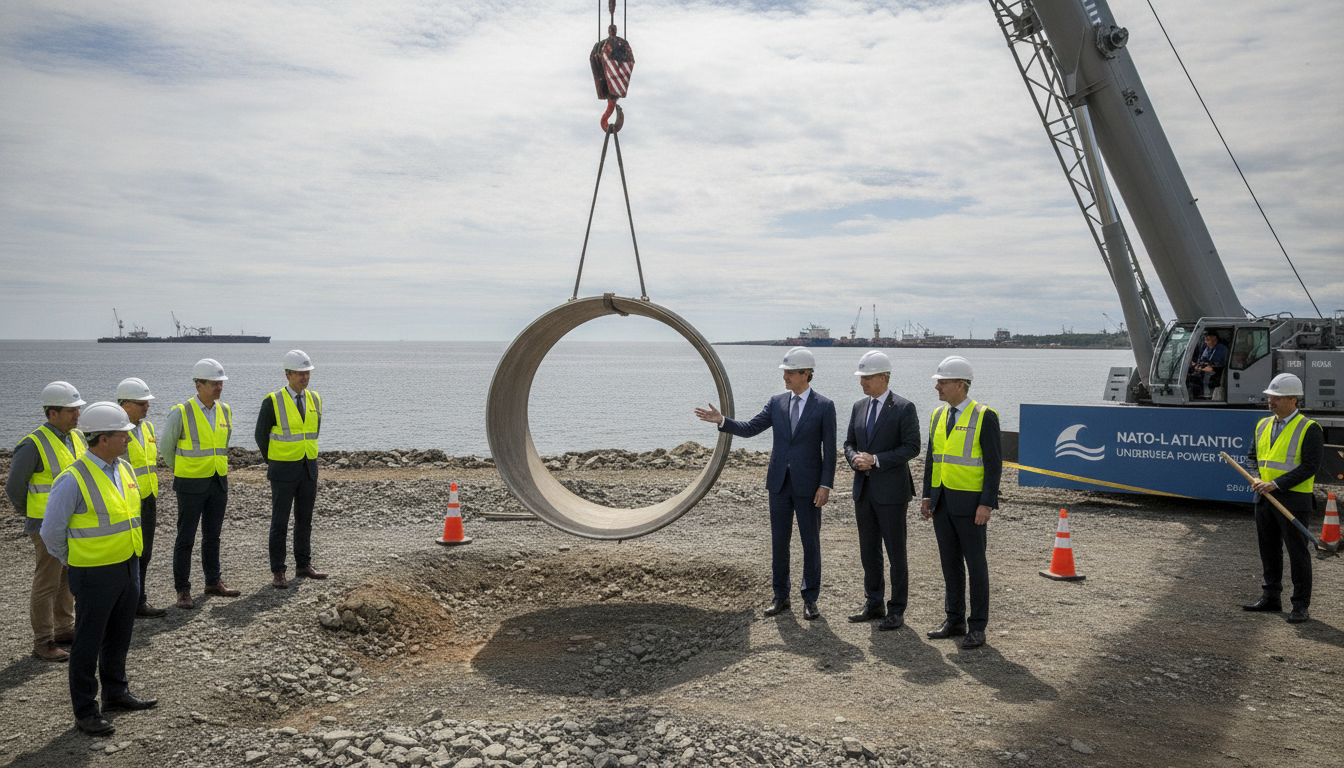
North Atlantic transmission project NATO‑L proposes 4,000‑km undersea power link with Sept‑Îles under consideration
NATO‑L’s North Atlantic transmission project plans a $30 billion, 4,000 km undersea electricity link to connect North America and Europe, with Sept‑Îles in play.
The North Atlantic transmission project known as NATO‑L has proposed running roughly 4,000 kilometres of undersea electrical cable to link North America and Europe, a plan that names Sept‑Îles as a potential landing point. The initiative, led by co‑founder Laurent Segalen and private partners, envisions a transatlantic corridor intended to move electricity across continents and could add about 6,000 MW of transfer capacity. Municipal officials in Sept‑Îles and leaders of the Uashat mak Mani‑utenam band council said they were unaware of the proposal until recently, underscoring how preliminary the plans remain.
Planned route and technical outline
A prefeasibility review commissioned by project backers identified a possible cable route that would stretch some 4,000 kilometres beneath the North Atlantic, linking transmission systems between continents. Project proponents have discussed an intermediate connection to a proposed artificial facility dubbed Princess Elisabeth Island, which would act as a junction in the open ocean. Engineers say deep‑water port access and existing transmission lines from hydroelectric sites could make eastern Quebec an attractive landing zone for the system.
Local officials say they were not consulted
Sept‑Îles Mayor Benoit Méthot told municipal staff he had not been informed about the NATO‑L proposal prior to media reports, and band council representatives at Uashat mak Mani‑utenam only learned of the plans through recent coverage. Both municipal and Indigenous leaders stressed that any major infrastructure proposal affecting coastal areas requires timely engagement and consultation. Local officials signalled a cautious openness to exploring details, while also emphasising the need for environmental assessments and Indigenous consent.
Cost, timeline and capacity estimates
Project proponents have estimated the capital cost at roughly $30 billion and tentatively placed construction toward 2040, reflecting the long lead times associated with large undersea transmission projects. The NATO‑L concept asserts it could increase power transfer capacity by about 6,000 megawatts, a level proponents argue would help balance demand peaks across time zones. Backers characterise the timeline as preliminary and say further technical, regulatory and commercial studies would be required before any firm commitments.
Stakeholder engagement and confidential talks
Laurent Segalen, one of NATO‑L’s co‑founders, confirmed private, confidential discussions with Hydro‑Québec and some exchanges with the Quebec government, though he has not yet visited Sept‑Îles. Project organizers say those conversations are intended to explore whether the province’s generation assets and transmission network could integrate with a transatlantic corridor. Hydro‑Québec had not publicly responded to detailed questions at the time of reporting, and officials say any future involvement would depend on rigorous technical and economic analysis.
Economic and strategic arguments for the link
Proponents argue the link would let producers and consumers exploit time‑zone differences and seasonal demand shifts, potentially exporting surplus Quebec hydroelectricity to European markets during periods of high European demand. Supporters also point to Sept‑Îles’ deep‑water port and existing high‑capacity lines fed from Churchill Falls as logistical advantages. Some analysts note a geopolitical dimension, saying increased intercontinental electricity connectivity could bolster energy security for Europe while creating new export markets for Canadian generation.
Skepticism and unanswered questions
Energy academics and policy experts have urged caution, noting uncertainties about who would benefit most and how costs would be allocated among jurisdictions and customers. Some observers suggest initial flows could favour European buyers, provoking debate over domestic reliability and pricing in Quebec. Environmental concerns, the technical challenges of maintaining very long subsea cables, Indigenous rights and regulatory approvals all remain unresolved and will shape whether the proposal advances.
The NATO‑L proponents describe the project as an idea that demands rigorous scientific and economic study rather than a near‑term construction plan, and they say further prefeasibility work will be required to test assumptions about costs, routing and market demand. Municipal and Indigenous leaders in Sept‑Îles have indicated they will seek more information and formal consultation before taking a position, while provincial and utility authorities weigh whether such a large‑scale transatlantic link fits public policy and grid planning priorities.
