
Drone and missile strikes kill at least 16 as massive attacks strike Moscow and Kyiv
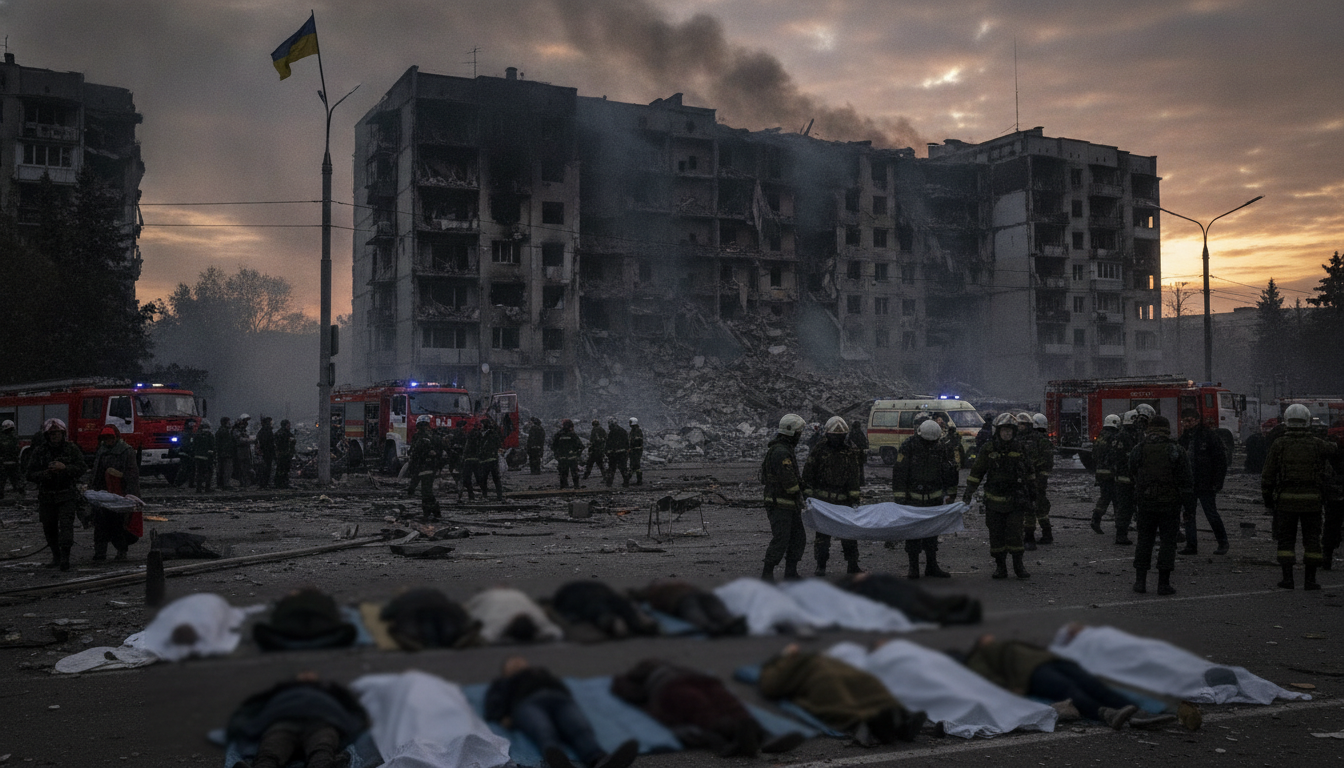
Drone and missile strikes on August 16, 2026 killed at least 16 people in Russia and Ukraine, destroying Kyiv’s Potchaïna book market and striking Moscow.
A wave of drone and missile strikes on Sunday, August 16, 2026, killed at least 16 people across Russia and Ukraine and sparked fires that consumed Kyiv’s famous Potchaïna book market. The attacks included one of the largest drone barrages on Moscow in recent memory and strikes on industrial and civilian infrastructure on both sides of the front.
Massive drone barrage over Moscow and surrounding region
Russian officials reported that hundreds of drones targeted multiple regions overnight, prompting widespread air-defence responses in the capital and its suburbs. The governor of Moscow region, Andrei Vorobyov, described the operation as "one of the most massive in recent memory," while the Russian Defence Ministry said it had shot down 822 drones nationwide during the night.
Local authorities reported multiple fatalities and property damage from the strikes, including a new Wildberries warehouse at Podolsk, where workers evacuated as fires broke out. Eyewitnesses said employees left workplaces amid explosions and subsequent evacuations, and some businesses in the logistics complex were left temporarily paralysed.
Kyiv market destroyed and civilians among the dead
In Kyiv, the Potchaïna outdoor book market, known for rare and secondhand volumes, was engulfed in flames after a strike, destroying dozens of stalls and personal inventories. Owners and shopkeepers described watching books, flags and decades of inventory turn to ash, and rescue crews worked through the day to extinguish remaining hotspots.
Officials said the strikes in and around the capital contributed to the civilian toll reported across the country on Sunday, underscoring the growing cost to non-combatants as long-range attacks increase. President Volodymyr Zelensky condemned attacks on civilian infrastructure and reiterated appeals for more Western air-defence systems to protect population centres.
Industry and transport targets hit in both countries
The day’s strikes also struck industrial facilities, including an ArcelorMittal steel plant in Kryvyi Rih, where two people were killed and 14 others wounded, prompting a partial suspension of operations. Ukrainian officials said that attacks on refineries, depots and grain-handling infrastructure have continued to disrupt supply chains and exports, contributing to a domestic fuel shortage this summer.
In Russia, officials reported deaths in the Rostov region after drones struck residential areas, and additional fatalities in Belgorod, Kursk and other territories under Russian control. The list of targeted economic sites includes warehouses, ports and logistics hubs that both sides say are being used to support opposing military operations.
Shortage of interceptors raises alarm in Kyiv
Ukrainian leaders and military officials renewed urgent pleas for advanced air-defence interceptors, citing a deficit of systems capable of stopping the most capable ballistic and cruise missiles. President Zelensky said his country recorded a high volume of incoming weapons over the prior week — numbering in the thousands of attack drones and guided aerial bombs — and called on allies to accelerate deliveries of Patriots and other long-range interceptors.
The gap in high-end interceptors has forced Ukrainian air defences to rely on a patchwork of systems and hampered the ability to guarantee protection of key cities, ports and energy infrastructure. Military analysts warn that without improved layers of defence, both civilian and military facilities will remain vulnerable to increasingly long-range strikes.
NATO shoots down drone over Romania as regional risks rise
NATO forces operating in Romania shot down a drone that entered Romanian airspace near the borders with Ukraine and Moldova, the Romanian defence ministry reported. A Spanish fighter jet engaged the target, an event that underlines the spillover risks for NATO countries monitoring airspace near the conflict zone.
Officials said the incident did not result in casualties on Romanian soil, but it prompted renewed diplomatic consultations and heightened alert levels among neighbouring states. NATO officials reiterated their commitment to territorial defence while warning of the risks posed by expanded drone usage in the conflict.
Moscow-Pyongyang ties and allegations of troop deployments
At the same time as the strikes, Kyiv renewed accusations that North Korea may be preparing further personnel deployments to assist Russian forces, an allegation Pyongyang has not publicly confirmed. Southbound reports and Ukrainian statements allege that tens of thousands of North Korean troops could be sent to support operations, following a 2024 defence agreement between Moscow and Pyongyang and prior deployments reported in 2024–2025.
North Korea’s state media meanwhile published a letter from Kim Jong-un expressing pride in relations with Russia, signalling a closer political alignment that Western capitals say complicates the conflict’s dynamics. The possible involvement of additional foreign combatants would risk widening the war and further complicate diplomatic efforts to reduce hostilities.
Diplomacy remains stalled even as both sides exchange longer-range strikes that increasingly target civilian infrastructure, aid distribution points and key logistics hubs. International calls for restraint and renewed negotiations have not so far produced an immediate de‑escalation, and Kyiv says the only immediate remedy to protect civilians is an influx of modern air-defence systems from Western partners.
