
Maurice Duplessis’s 1936 Triumph: How Trois‑Rivières Launched a Political Shift
Maurice Duplessis’s decisive 1936 victory in Trois‑Rivières ended 39 years of Liberal rule and set the Union nationale on a path that reshaped Quebec’s political landscape and regional identity.
Maurice Duplessis’s 1936 victory in Trois‑Rivières marked a dramatic turning point in Quebec politics and remains a touchstone in the province’s modern history. The August 17, 1936 election produced a rout for the Liberals, handing Duplessis and his Union nationale an overwhelming majority and propelling a local politician to the provincial premiership. As municipalities and historians note the 90th anniversary on August 17, 2026, the outcome still prompts debate about reform promises, authoritarian governance and regional pride.
Duplessis’s landslide, August 1936
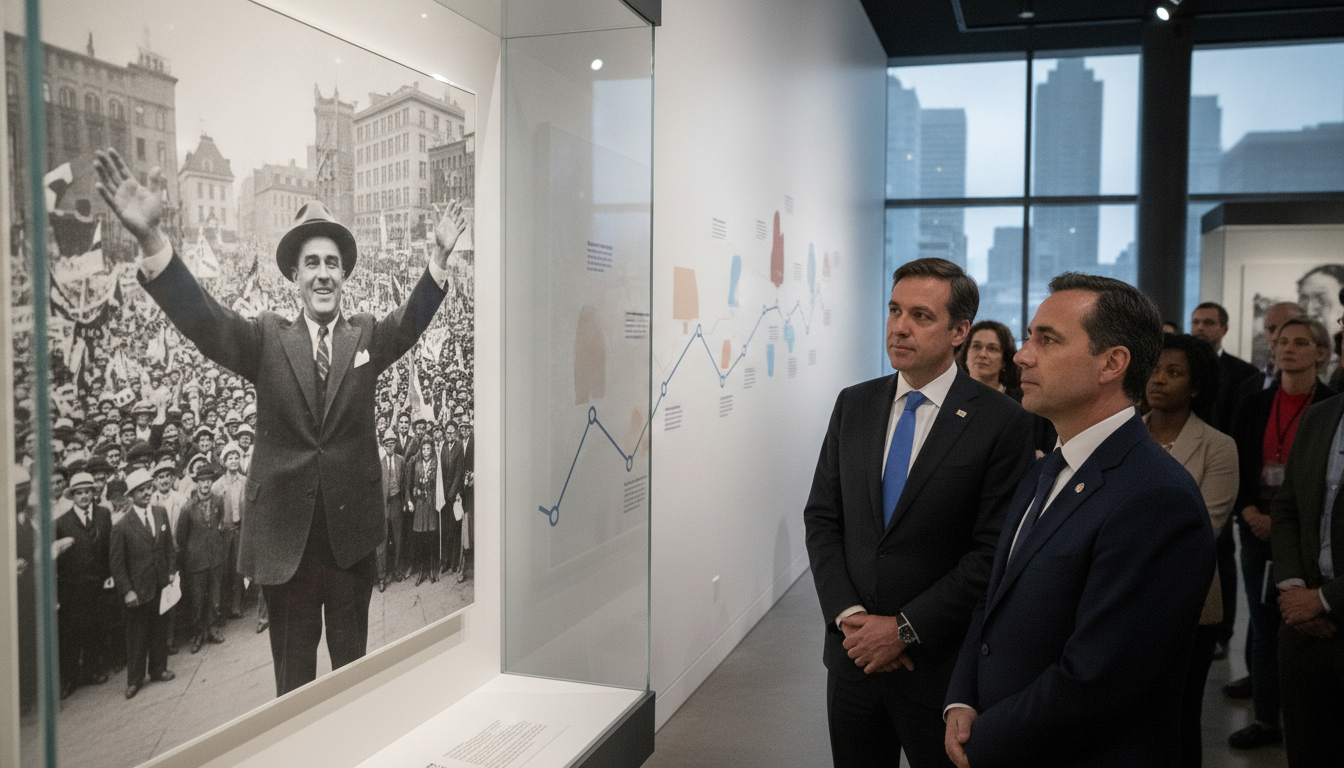
Duplessis captured 76 seats in the provincial legislature, while Adélard Godbout’s Liberals were reduced to 14 seats, a result that ended nearly four decades of continuous Liberal administration. The scale of the victory stunned contemporaries and produced scenes of mass celebration in Trois‑Rivières, where tens of thousands gathered to hail the newly installed premier.
The magnitude of the win was unmatched at the time and signalled a swift reordering of political power across Quebec. Analysts point to the vote as both a rejection of the incumbent party’s handling of the Great Depression and an endorsement of the Union nationale’s promise of change.
Alliance and the birth of the Union nationale
Duplessis achieved his breakthrough by forging an alliance with dissident Liberals from the Action libérale nationale, transforming his Conservative base into a new political vehicle. That rebranding allowed him to present the Union nationale as a fresh alternative capable of upending the established order.
The coalition was as much strategic as ideological; Duplessis used the merger to attract supporters disenchanted with the Liberals while maintaining key conservative commitments. The arrangement proved electorally powerful even as it masked internal tensions and competing policy expectations.
Scandal, resignation and the Liberal collapse
The immediate cause of the Liberal collapse was mounting public anger over administrative scandals exposed by the Committee of Public Accounts, which eroded confidence in long‑serving premier Louis‑Alexandre Taschereau. Taschereau resigned in June 1936 and was succeeded by Adélard Godbout, who had little time to overcome the party’s damaged reputation before the election.
Public frustration was intensified by the harsh social effects of the Depression, especially in working‑class neighbourhoods where families faced cold winters and chronic unemployment. Those conditions created fertile ground for Duplessis’s attack on governmental management and his promise of decisive action.
Campaign promises abandoned
During the campaign, Duplessis and the Union nationale promised a range of reforms, including the nationalization of privately held hydroelectric companies. Key figures who championed such reforms, like Dr. Philippe Hamel, were recruited to the cause but later sidelined once Duplessis assumed power.
The early months of his administration saw a marked retreat from several electoral pledges, frustrating reformers within his own ranks. Observers later noted that the rhetoric of change served to secure electoral support even as practical governance often followed a more conservative trajectory.
Authoritarian style and Church influence
Once in office, Duplessis cultivated a commanding style of leadership that earned him the nickname "le Chef," reflecting both personal authority and centralized control over party affairs. His tenure combined traditionalist social views with selective acceptance of modernizing projects, producing a paradoxical blend of conservatism and pragmatic development.
The premier also maintained a close relationship with the Catholic Church, a partnership that shaped policy and public perception in a province where ecclesiastical authority remained influential. Critics and supporters alike observed that Duplessis drew on religious networks to bolster his political standing while preserving political autonomy when convenient.
Trois‑Rivières’ pride and Duplessis’s public persona
Duplessis’s roots in Trois‑Rivières amplified his local appeal and made the city a focal point of regional pride when he became premier. His family’s civic standing in the region and his knack for personal contact with voters helped him project an image of a leader who understood the concerns of ordinary constituents.
He cultivated a parochial, accessible persona—down to a plain hat and familiar topics like hockey—that resonated with many voters. That ability to connect on the ground, paired with disciplined organization, underpinned his enduring hold on provincial politics.
The 1936 election and the subsequent conduct of Duplessis’s government left a mixed legacy: sweeping political realignment and concrete investments in rural electrification and infrastructure, alongside unmet reform promises and a concentration of authority. As Trois‑Rivières and Quebec mark the 90th anniversary of that pivotal vote, the episode endures as a study in how crisis, coalition‑building and political style can combine to reshape a province’s course.
