
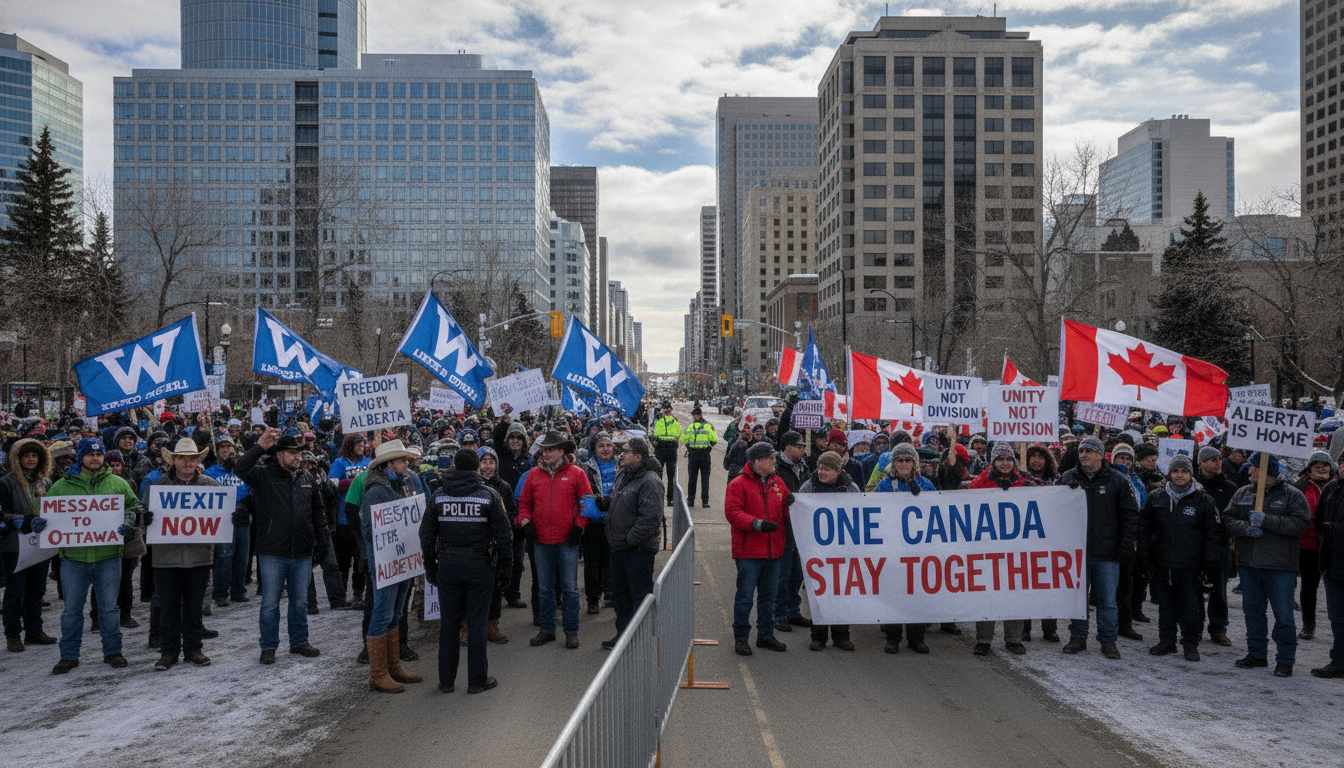
Alberta separation referendum: Poll shows many supporters want to send a message to Ottawa
Angus Reid poll finds two in five Albertans would back an Alberta separation referendum to send a message to Ottawa, while most still prefer to remain in Canada.
Nearly two-thirds of Albertans surveyed say they would vote to stay in Canada, but a significant minority continues to back an Alberta separation referendum as a way to express discontent with federal policies.
The Angus Reid survey of 1,017 Alberta residents, conducted between Aug. 10 and 13, found 33 per cent of respondents favoured a binding referendum option on separation, though many of those respondents reported their motive was signaling frustration with Ottawa rather than pursuing secession.
Poll finds symbolic motive among many referendum backers
Three in five of those who said they would support a referendum indicated they genuinely want the province to leave Canada, while the remaining supporters said their choice was intended largely to send a message to federal authorities.
When the question was framed explicitly as part of a binding referendum, support for separation declined to about 30 per cent and backing for remaining in Canada rose to 65 per cent from 61 per cent.
Five per cent of respondents said they remained undecided, underscoring a persistent pocket of uncertainty even as the fall vote approaches.
Voter certainty high on both sides but turnout will decide outcome
The poll found high levels of certainty about voting: 88 per cent of those favouring separation and 81 per cent of federalists said they were certain to participate in the referendum.
Analysts stress that such stated certainty will be decisive only if it translates into turnout on referendum day, given that older voters historically turn out at higher rates than younger cohorts.
Angus Reid researcher Jonathan Roe noted the elevated attention to the plebiscite this early in the campaign, saying the level of declared certainty is unusually high compared with typical early-stage contests.
Age and gender shape support for separation
Support for a binding referendum was strongest among men older than 34 and weakest among younger voters of both sexes, according to the poll’s cross-tabulations.
This age skew dovetails with broader electoral patterns in Canada where older demographics are demonstrably more likely to vote, raising concerns that rhetorical support for remaining in Canada among younger voters may not be reflected in the actual electorate.
Roe cautioned that historical turnout differences could amplify the influence of older, pro-referendum voters unless efforts are made to mobilize younger and under-represented groups.
Regional and racial turnout gaps highlighted by complementary survey
A separate survey cited by Alberta NDP MLA Shannon Phillips, conducted by Pollara, projects substantial turnout disparities across demographics that could shape the referendum result.
Pollara’s numbers predict a turnout near 90 per cent among seniors, but just 46 per cent among Albertans under 35, and estimated likelihoods of 75 per cent for white voters and 71 per cent for rural residents.
By contrast, likelihood to vote among non-white Albertans trails by nearly 30 percentage points in that study, a gap Phillips suggested can be narrowed through targeted outreach by trusted community organizations.
Motivation gap underscores differing stakes for voters
The Angus Reid poll also showed a motivation gap: those who back a referendum were more likely to describe the vote as “very important” than federalists were.
Only about 60 per cent of those preferring to remain in Canada rated the plebiscite as “very important,” and a quarter of federalist respondents described it as merely important rather than urgent.
That difference in perceived stakes could affect campaign intensity and resource allocation in the weeks before the vote.
Political implications for Alberta and Ottawa
The poll’s findings create political implications for both provincial leaders seeking to channel discontent and federal officials aiming to blunt separatist momentum.
If the referendum becomes a focal point for expressing grievances, Ottawa may face increased pressure to engage substantively on fiscal or jurisdictional demands even without a change in formal status.
Provincial campaigns on both sides will likely concentrate on turnout strategies, messaging to younger and non-white voters, and efforts to clarify whether the referendum is intended as a binding instrument or a political signal.
The next two months will be critical as parties and grassroots groups translate stated intentions into votes at the ballot box, and as campaign messaging clarifies whether the Alberta separation referendum is presented as a pathway to secession or a mechanism for signaling frustration to Ottawa.
