
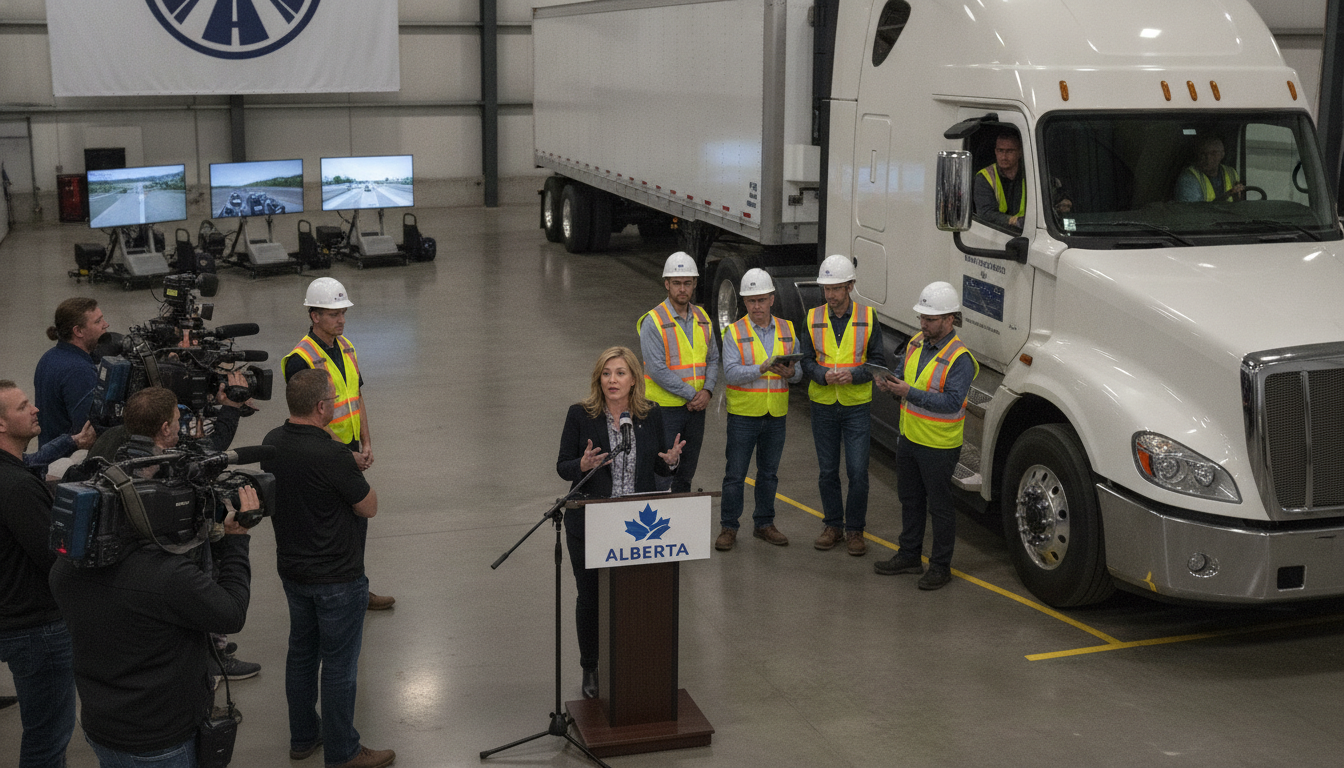
Alberta rolls out competency-based Class 1 training for commercial drivers
Alberta launches competency-based Class 1 training to address terrain, weather and cargo risks; curriculum adds wellness and incident response for drivers.
Alberta has introduced a new competency-based Class 1 training program designed specifically for the province’s commercial driving sector, the government announced in a March 2025 media release. The updated Alberta Class 1 training emphasizes skills and knowledge tied to the province’s unique terrain, weather and cargo types while placing new emphasis on safety, wellness and personal responsibility. Officials say the curriculum adds modules on personal health, workplace safety and incident response to better prepare drivers for on-road and workplace hazards. The change marks a shift toward assessment of demonstrated ability rather than time-based instruction.
Alberta unveils competency-based Class 1 curriculum
The government described the curriculum as competency-based, meaning drivers must show they can perform critical tasks under realistic conditions before certification. Training content was developed to reflect the operational realities of Alberta’s highways, secondary roads and resource-sector sites. The approach is intended to produce drivers who can adapt to changing load types, vehicle configurations and environmental conditions. Regulators argue that measurable competencies will make assessments more consistent and relevant to employer needs.
Health, wellness and incident response added to core training
The revised program integrates content on personal health, fatigue management and mental well-being alongside traditional technical skills. Trainees will receive instruction on recognizing and managing fatigue, maintaining physical health during long shifts and accessing workplace supports. New incident response training covers on-scene safety, initial reporting and coordination with emergency services to reduce harm after crashes or workplace events. Officials framed these additions as a way to reduce preventable incidents and support a sustainable workforce.
Training tailored to Alberta’s terrain, weather and equipment
Coursework was designed with Alberta’s particular challenges in mind, including long winter seasons, mountain and foothills driving, gravel and resource roads, and heavy-haul operations. Instructors will teach load securement, winter handling techniques and equipment-specific procedures relevant to oilfield, forestry and agricultural transports. The curriculum also addresses cargo types that carry unique risks and require specific handling, such as oversized loads and hazardous materials. By aligning training with local conditions, authorities aim to narrow the gap between classroom instruction and day-to-day operations.
Regulatory and certification changes explained
Under the competency model, assessment will focus on observable performance rather than solely on hours behind the wheel, officials said in their release. Licensing authorities will adopt standardized evaluation checklists and practical scenarios to verify required skills. The change may alter how training hours are logged and how third-party evaluators are accredited, though the government has indicated a phased approach to implementation. Current Class 1 holders and training providers will be given transition guidance to meet the new standards.
Industry training providers prepare to adapt courses
Post-secondary institutions and private driving schools that deliver Class 1 programs will need to revise syllabuses, assessment tools and instructor certification to comply with competency requirements. The shift will require investment in scenario-based training resources, updated simulators and instructor upskilling to assess competencies accurately. Employers may also revise in-house orientation and mentorship to align with the more skills-focused certification. Training providers have the opportunity to work with regulators to ensure assessments are practical and scalable for the province’s workforce.
Expected effects on road safety and workforce capacity
Proponents argue that competency-based Alberta Class 1 training could improve road safety by ensuring drivers have demonstrable ability to manage high-risk situations and heavy machinery. Enhanced wellness and incident-response instruction is intended to lower fatigue-related crashes and improve outcomes after collisions. The redesign may also support recruitment and retention by presenting a clearer skills pathway into commercial driving careers. However, stakeholders have noted that successful outcomes will depend on consistent assessment practices and sufficient capacity in approved training programs.
The Alberta government has positioned the new Class 1 curriculum as a modernized, practical response to the province’s driving and industrial conditions, and it says further implementation details will be released to training providers and licensing bodies. Drivers, employers and trainers are encouraged to review official guidance as the rollout proceeds and to prepare for changes to assessment and certification processes under the competency-based model.
