
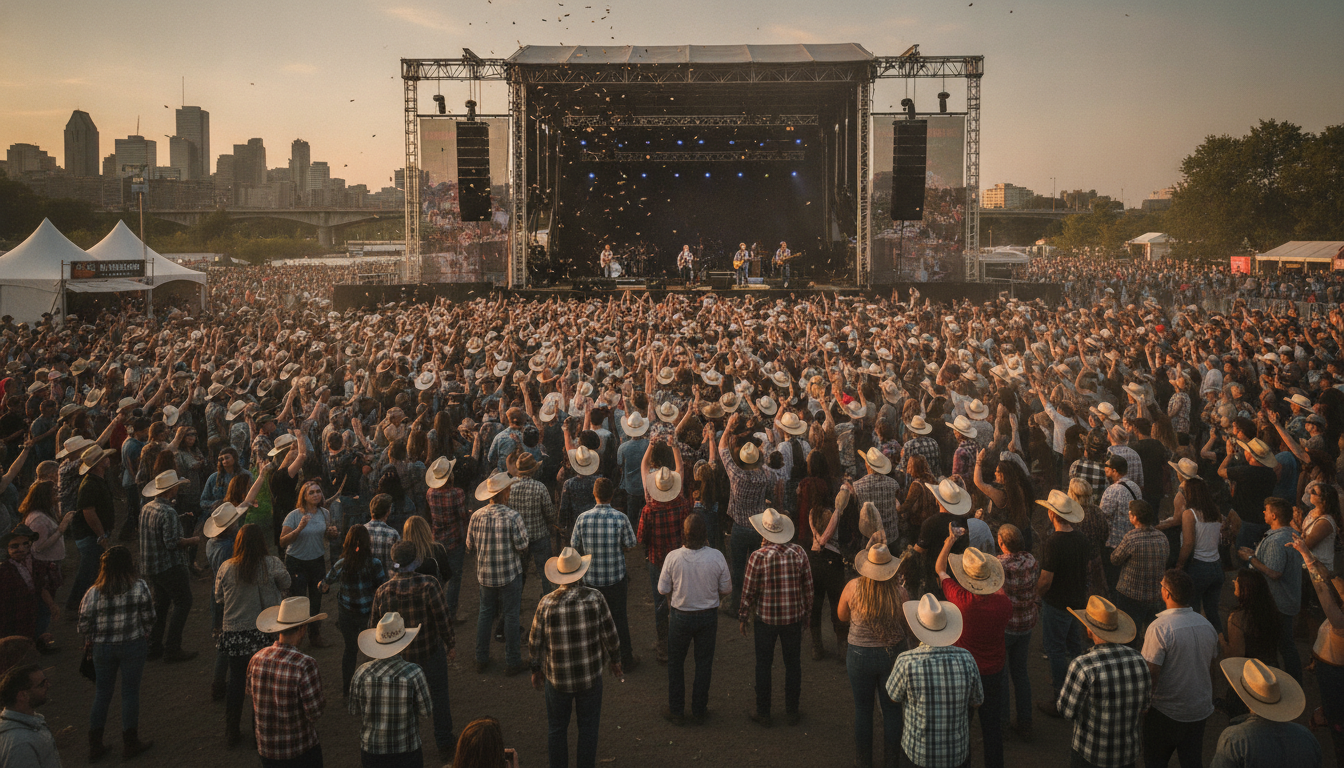
Lasso festival draws broader crowds as country music cements place in Montreal
Lasso festival in Montreal draws new audiences as country music goes mainstream; program director cites changing crowds and a diverse 2026 lineup this year.
Montreal’s Lasso festival has evolved into a focal point for the city’s growing appetite for country music, organizers say, with the 2026 edition blending established headliners and emerging local talent. Program director Audray Johnson of evenko describes a marked shift in the audience over the festival’s five-year run, from longtime country loyalists to a younger, more varied crowd that comes for atmosphere as much as for the music. The weekend lineup, topped by Thomas Rhett and Mumford & Sons, reflects that crossover appeal and the genre’s widening reach in the metropolis.
Shifting audience profile since Lasso launched
Audray Johnson says the festival initially attracted attendees who were already devoted country fans, at a time when the genre carried less mainstream cachet in Montreal. In recent seasons, she has noticed friends and festivalgoers who were not previously engaged with country music turning out in large numbers, drawn by the social scene and the broader cultural moment.
That change has altered festival programming choices and marketing, with organizers programming acts that straddle country, pop and folk to reflect audience tastes. The result is a weekend that aims to feel like an event for both enthusiasts and newcomers.
Centre Bell sellout in 2016 signaled market potential
Organizers point to a watershed moment in February 2016 when Luke Bryan sold out the Centre Bell, performing to roughly 16,000 people and catching promoters’ attention. Before that period, Montreal’s country market was less visible, with only a handful of high-profile country concerts stopping in the city.
Evenko’s experience with that sold-out show convinced agents and venues there was a demand beyond what industry watchers had assumed, prompting more bookings and a reevaluation of Montreal as a viable stop on country tours. That commercial signal has helped pave the way for larger, city-based events like Lasso.
Rural roots remain strong: Saint-Tite example
Quebec’s connection to country music has long been rooted in regional festivals, with the Festival western de Saint-Tite serving as a prominent example. Founded in 1967, the Saint-Tite event transforms a small town into a major destination and reported a record attendance of 727,608 visitors in 2023, underscoring the genre’s deep provincial reach.
Those regional traditions have supplied a steady base of artists and audiences, even as country’s profile has shifted toward urban centres. Organizers say the blend of rural authenticity and metropolitan glamour is now part of the genre’s renewed commercial appeal.
Crossover trends and cultural influences driving growth
Industry observers attribute part of country’s expanded audience to crossover moves by high-profile artists and the democratizing effect of streaming platforms. Recent years have seen musicians from pop, hip-hop and alternative scenes incorporate country elements, exposing new listeners to the genre’s sound and aesthetics.
Fashion and visual trends have also played a role, with cowboy boots, hats and fringe becoming more visible in mainstream style, helping position country as culturally relevant. The convergence of these trends has made country more accessible to listeners who might not have engaged with it a decade ago.
Lineup balance: headliners and new voices at Lasso 2026
The 2026 program reflects that blend, pairing stadium-level names with emerging performers from Quebec and beyond. Headliners include Thomas Rhett on Saturday night and Mumford & Sons on Sunday, while younger artists such as Max McNown are billed as genre-fluid acts who can appeal to diverse crowds.
Local performers have been prominently featured, with Quebec artists Arpin Lépine, Léa Jarry, Gab Bouchard, Krystel Mongeau and others scheduled across stages. Organizers say spotlighting homegrown talent is central to Lasso’s mission of connecting regional country traditions with the city’s broader cultural scene.
Festival experience beyond the music
Beyond artist selection, evenko emphasizes the event’s atmosphere as a draw, describing Lasso as more than a concert series and more like a communal happening. Attendees often cite the social environment, festival production and staged areas such as the Scène de la prairie Coors Original as part of the appeal.
Producers hope that by mixing traditional country sounds with neo-country, pop and folk influences, the festival will retain core fans while encouraging repeated attendance from newcomers. That approach aims to sustain growth without abandoning the genre’s roots.
Lasso’s expanding appeal illustrates a broader shift in Quebec’s musical landscape: country is no longer confined to regional scenes but has become a fixture in urban cultural life. As the 2026 edition unfolds, organizers will be watching ticket sales, crowd composition and media attention for signs that the city’s relationship with country is moving from momentary trend to lasting change.
