
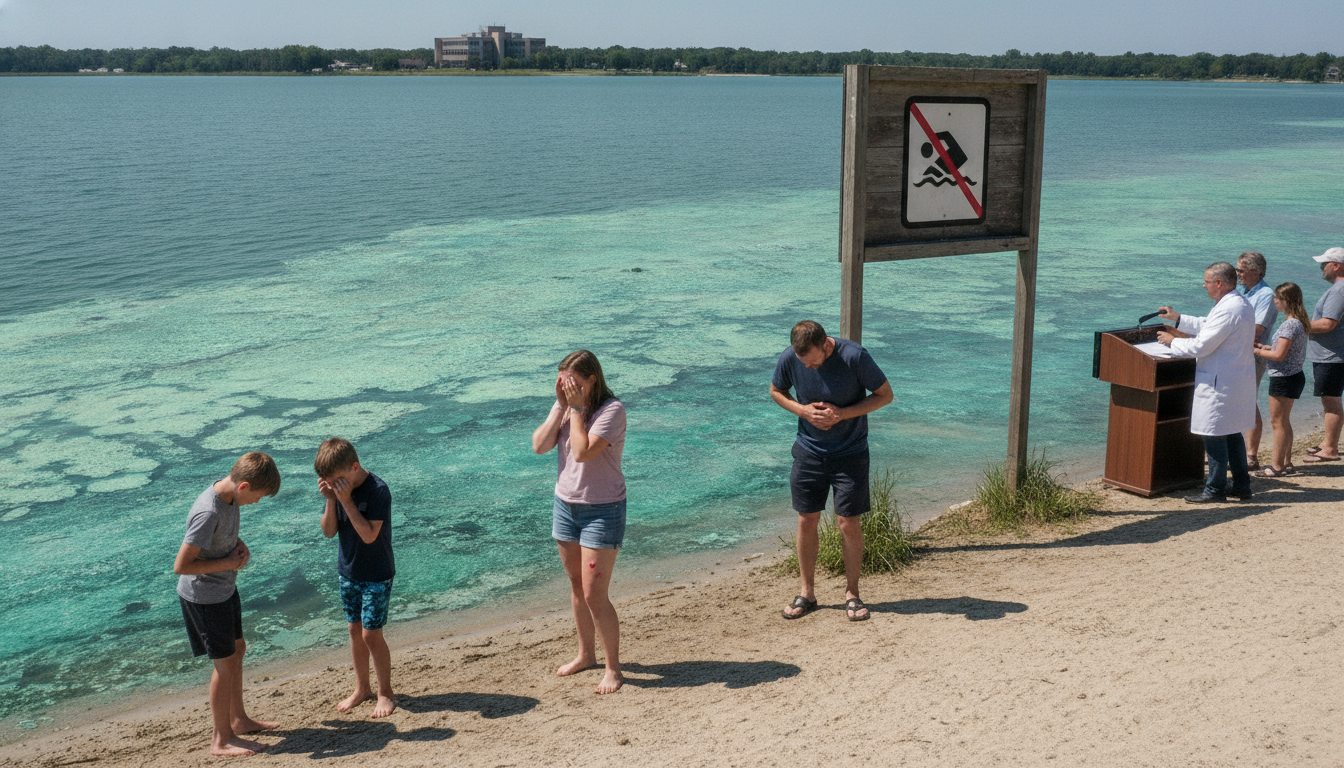
Cyanobacterial bloom prompts health warning from Alberta officials
Alberta Health Services warns that exposure to a cyanobacterial bloom can cause skin irritation, fever and gastrointestinal illness; avoid contact with affected water.
Alberta Health Services (AHS) has issued a public health advisory after detecting a cyanobacterial bloom that can cause skin, eye and gastrointestinal symptoms in people and animals. Health officials say anyone who comes into contact with or ingests water containing cyanobacteria may develop irritation, inflamed eyes, sore throat, fever or digestive upset. Residents are being urged to heed local advisories and to keep children and pets away from discolored or scummy water.
Symptoms linked to cyanobacterial bloom exposure
AHS described a range of possible reactions that can follow exposure to cyanobacteria, commonly known as blue‑green algae, including skin rashes and swelling around the lips.
The advisory also warns of systemic effects such as fever, nausea, vomiting and diarrhea when contaminated water is swallowed, and notes that eye and throat irritation are commonly reported after recreational contact.
Public health advice and immediate precautions
Officials recommend avoiding swimming, wading, or letting pets enter water that is discoloured, frothy or has mats of algae on the surface.
People who believe they have been exposed should wash thoroughly with clean water and soap, and seek medical advice if symptoms develop or persist.
Guidance for pet owners and caregivers
AHS specifically cautions that animals are vulnerable because they may lick algae from fur or drink directly from affected water, which can lead to rapid illness.
Pet owners are advised to provide fresh drinking water, prevent access to suspicious water bodies, and to contact a veterinarian promptly if their animal becomes lethargic, vomits, or shows other concerning signs.
Testing, monitoring and advisory procedures
Local authorities and environmental agencies typically sample and test suspected blooms to determine toxin levels, and issue recreation or drinking‑water advisories based on results.
Where tests indicate elevated risk, beaches or water access points may be closed and municipal water operators will take steps to protect treated drinking supplies and notify residents if any intake is affected.
Environmental drivers behind cyanobacterial blooms
Warm surface temperatures, nutrient runoff from agriculture and urban areas, and stagnant conditions combine to favour cyanobacterial growth during summer months.
Scientists and resource managers also point to changing precipitation patterns and longer warm seasons as factors that can increase the frequency and duration of blooms in freshwater lakes and slow rivers.
What residents can do to reduce risk
Residents can reduce nutrient runoff by minimizing use of fertilizers near shorelines, maintaining vegetated buffers, and properly managing septic systems.
Recreationists should follow posted warnings, avoid harvesting fish or shellfish from affected waters unless confirmed safe, and report suspected blooms to local public health or environmental authorities.
Preventive messaging from AHS stresses caution and early action: do not swallow water while swimming, rinse off after contact, and keep children and pets away from visible algal formations. Those who experience severe or worsening symptoms after exposure are advised to consult a health professional without delay.
Community monitoring programs, municipal sampling, and public health alerts remain the most immediate tools to keep residents informed and safe while authorities continue testing and assessment.
