
Quebec Conservatives propose $47-billion spending cuts in five-year fiscal plan
PCQ pledges $47B in spending cuts over five years, hiring freeze and tax relief to rebalance Quebec’s budget and reduce perceived public-sector waste.
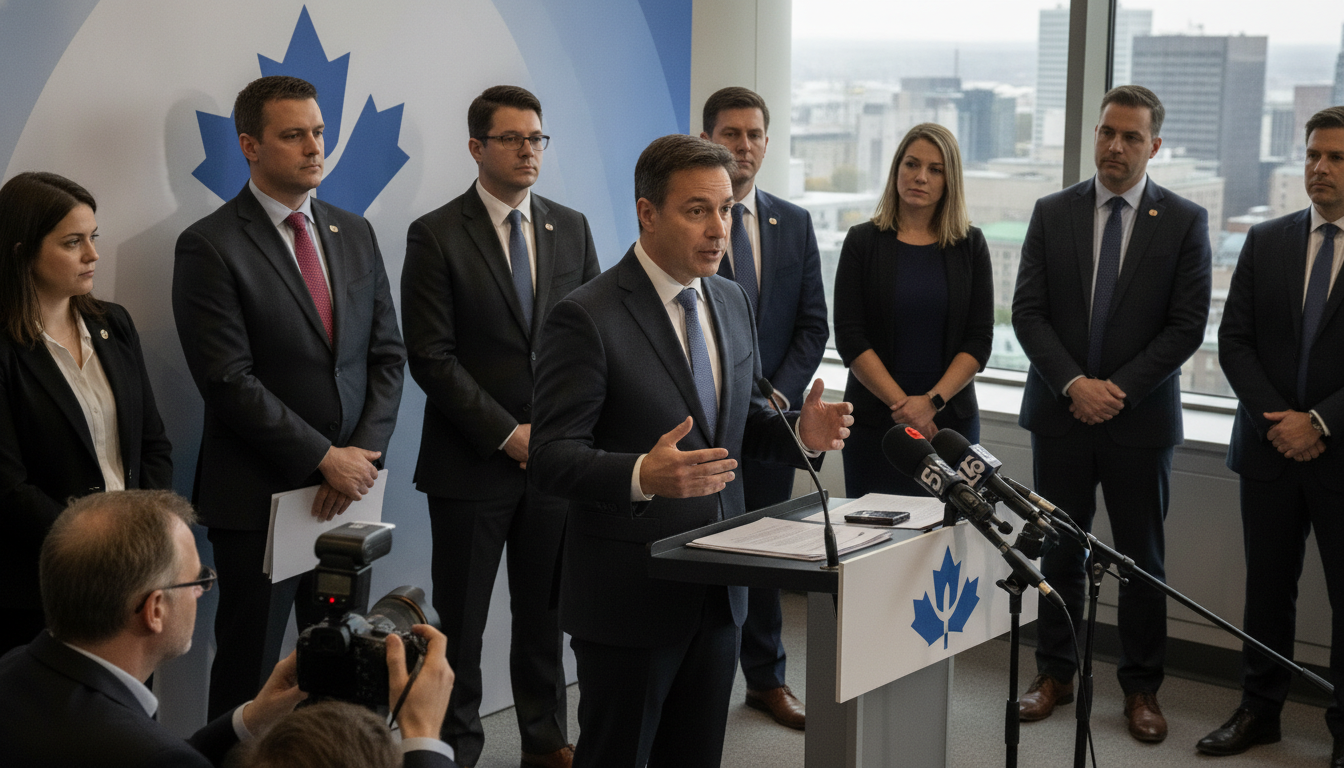
The Quebec Conservative Party unveiled a plan Thursday that promises $47 billion in state spending reductions over five years and large tax cuts if it wins government, casting the package as a response to what it calls widespread “waste” in public finances. The policy, presented by party leader Éric Duhaime and finance spokesman Adrien Pouliot, frames Quebec spending cuts as the central element of the PCQ’s fiscal strategy. The party says the measures would restore budget balance in a first mandate while protecting front-line services.
Scope and headline numbers
The PCQ says its $47-billion target represents roughly 5.6 percent of provincial expenditures and would be phased in across a five-year timeline. Party officials presented the total as achievable through three pillars: subsidy reductions, program pruning and an accelerated digital transition of government systems. Adrien Pouliot acknowledged the figure is large but argued the percentage share of total spending is modest compared with the scale of projected savings.
The plan pairs the spending reductions with promised income tax cuts, though the party has released only outline estimates so far. The PCQ’s calculations allocate major savings to cuts in subsidies and program consolidations, with a separate stream of savings tied to workforce reductions and technology-driven efficiency gains.
Public-sector workforce reductions and hiring freeze
A central element of the proposal is a reduction of nearly 20,000 full-time public-sector positions, primarily to be achieved through attrition and a proposed hiring freeze. The PCQ projects that limiting new hires and streamlining administrative roles would yield about $3.75 billion in savings over five years. Party spokespeople emphasized that the cuts would not target teachers, nurses or personal support workers, and they presented the move as eliminating bureaucracy while preserving front-line services.
Officials said the hiring freeze would be applied broadly across government departments and agencies, with exemptions for essential health and education positions. The party also promised further details on which classifications and programs would be prioritized for attrition in upcoming campaign releases.
Subsidies and program eliminations
Reducing corporate subsidies is another major plank, with the PCQ estimating $20 billion in potential savings by cutting or cancelling targeted business assistance. Adrien Pouliot cited past provincial investments in projects such as battery and electric-vehicle initiatives as examples of what the party considers excessive spending. The plan calls for a wholesale review of all government programs and the abolition of selected funds, including climate and electrification accounts deemed duplicative.
Under the proposal, the Treasury Board would be renamed the Treasury Board and Government Efficiency Office, and all programs would face a “one-for-one” rule: any new program approved by a minister would require cancellation of existing spending of equivalent value. The party intends to change mandates at agencies such as Investissement Québec and to eliminate entire lines of spending it considers low priority.
Digital modernization and AI-driven savings
The PCQ intends to accelerate the government’s digital transformation and to use artificial intelligence to modernize service delivery, reduce costs and limit failed IT projects. The party says it will draw on recommendations from the Gallant commission into the modernization of the Société de l’assurance automobile du Québec’s systems as a template for broader reform. Officials estimate digital reforms and improved project management would save roughly $3.75 billion over five years, by preventing costly rollouts and improving efficiency.
Pouliot said the party will publish more detailed proposals on the role of AI and specific digital investments during the campaign. He framed the digital agenda as both a cost-saving measure and a way to make government services more accessible and responsive to citizens.
Political context and campaign implications
The announcement was staged outside the Marie-Guyart building in Québec City, a symbolic site for thousands of provincial civil servants, and is timed to sharpen the PCQ’s contrast with the incumbent government. The party used the rollout to criticize recent administrations for subsidy programs and “hundreds of millions” allegedly lost to poorly managed IT projects. Éric Duhaime and Adrien Pouliot framed the plan as a platform for fiscal responsibility ahead of the upcoming provincial campaign.
Opposition and government officials will likely scrutinize the feasibility of the cuts, including the projected savings from workforce reductions, program eliminations and technological reforms. Analysts and union representatives are expected to press for details on the impacts to public services and employment, while the PCQ has pledged to shield key front-line positions.
The party’s strategy rests on persuading voters that the proposed Quebec spending cuts can be executed without undermining essential services and that tax relief would return savings to households and businesses. As the campaign progresses, the PCQ has promised to release more granular costings and implementation timelines to support its headline figures.
Public debate over the proposals is likely to focus on which programs would be eliminated, the mechanics of the one-for-one rule and the sequencing of job reductions. The coming weeks are expected to bring formal responses from the government and other parties, while the PCQ seeks to frame the cuts as a comprehensive plan to rebalance the province’s finances.
