
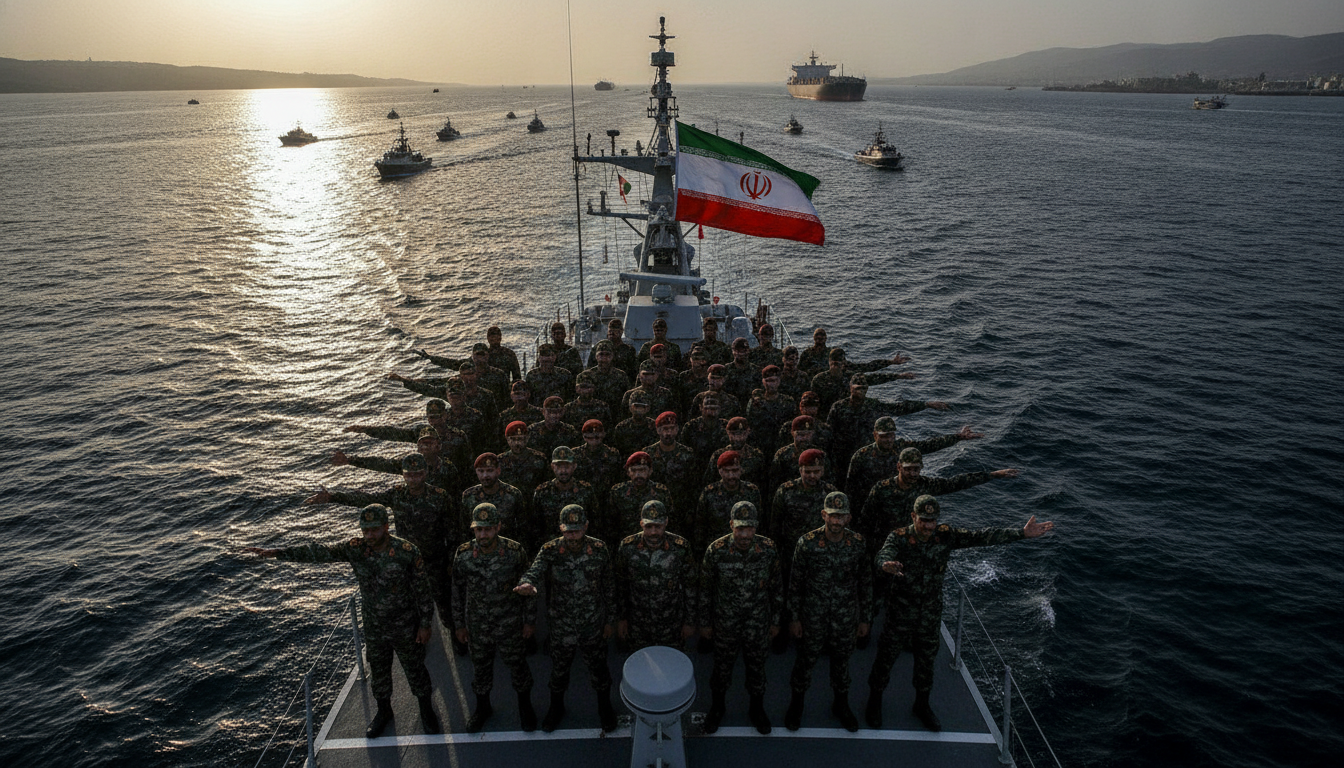
Iran Rejects Trump’s Claim of U.S. “Total” Control Over the Strait of Hormuz
Iranian military rejects U.S. claim of ‘total’ control over the Strait of Hormuz and warns commercial ships will face restrictions without Tehran’s consent.
The Iranian armed forces on Thursday publicly rejected U.S. President Donald Trump’s assertion that Washington holds “total” control of the Strait of Hormuz, saying Tehran retains authority over the strategic waterway. The dispute erupted after Mr. Trump reiterated on his social platform that the United States controls the strait and would “keep” that status, prompting a sharp response from Iran’s military and political officials.
Iranian military spokesman calls U.S. claims “lies”
Ebrahim Zolfaghari, a spokesman for the Khatam al-Anbiya central command, described U.S. statements about normal navigation through the Strait of Hormuz as fabrications. He said in a video broadcast on state television that claims of uninterrupted passage under U.S. control were false and undermined by Iran’s capacity and intent to manage the waterway.
Zolfaghari added that commercial and oil tankers would not be able to transit safely without the explicit authorization and supervision of Iran’s armed forces. His remarks reiterated a long-standing Tehran position that it retains both de facto and legal measures to regulate traffic in key maritime chokepoints adjacent to its coast.
Tehran asserts authority and proposes fees for transit
Senior Iranian figures have repeatedly stressed that Tehran intends to oversee shipping through the Strait of Hormuz and to impose service fees on vessels navigating the passage. Officials argue that any transit must be subject to prior authorization from Iran, a demand opposed by Washington which insists on freedom of navigation.
Hossein Taeb, head of the Basij paramilitary forces aligned with the Islamic Revolutionary Guard Corps, asserted that the strait remains “under the management and control of the Islamic Republic.” Iranian lawmakers on security committees have gone further, saying Israeli and U.S. military vessels would be barred from transit, signalling a policy that could sharply complicate naval operations in the Gulf.
Recent clashes and military footage cited by both sides
Hostilities between Tehran and Washington flared earlier in July after a June memorandum intended to end regional fighting unraveled, according to officials from both sides. The exchanges included targeted strikes, with U.S. military footage circulated showing equipment it said belonged to Iranian forces being targeted prior to strikes on July 23, 2026.
President Trump has since said strikes have paused and that negotiations were underway, a claim Tehran has disputed. Iranian authorities maintain they have only engaged with Oman on discussions related to possible transit routes through the Strait of Hormuz, underscoring the role of regional intermediaries in any de-escalation.
Diplomatic tit-for-tat and accusations of intelligence failure
Iranian foreign ministry officials and lawmakers publicly criticised U.S. policy, framing recent American assessments as strategic miscalculations. Foreign Minister Abbas Araghchi accused the United States of poor judgement linked to intelligence failures, posting on social media that Washington had repeatedly misread Tehran’s capabilities and intentions.
Those comments came amid broad rhetoric on both sides, with Iranian deputies asserting that ships linked to the “sionist regime” and U.S. warships would not be permitted to pass the strait “in war or peace.” Washington, for its part, rejects Tehran’s moves to restrict navigation and has pointed to international law and customary rights protecting passage through international straits.
Implications for global oil trade and regional security
The Strait of Hormuz is a vital artery for global energy markets, with a substantial share of the world’s seaborne oil transiting the narrow channel between the Persian Gulf and the Gulf of Oman. Any constraints, fee structures or enforcement actions by Iran could raise shipping costs, reroute tankers and increase insurance premiums for vessels operating in the region.
Analysts warn that reciprocal actions—U.S. naval patrols, sanctions and what Tehran describes as port blockades—could further escalate tensions and disrupt supply chains. Commercial operators have already debated alternative passages and contingency plans, but alternatives such as overland pipelines or longer sea routes remain costly and time-consuming.
Recent statements from both capitals suggest a fragile pause in kinetic operations, but the core disagreements about control of the Strait of Hormuz and the legal right to regulate passage remain unresolved. Regional intermediaries like Oman may play a mediating role, but for now the prospect of continued diplomatic friction and intermittent military posturing keeps uncertainty high for maritime traffic.
The coming days will be closely watched by shipping companies, energy traders and foreign ministries as they assess whether diplomatic channels can produce a durable understanding for safe passage through the Strait of Hormuz or whether unilateral measures by Tehran or Washington will further heighten the risk of confrontation.
