
Perseid meteor shower in Calgary likely muted by B.C. wildfire smoke and clouds
Perseid meteor shower set to peak over Calgary, but wildfire smoke from B.C. and cloud cover with storm risk threaten visibility across southern Alberta.
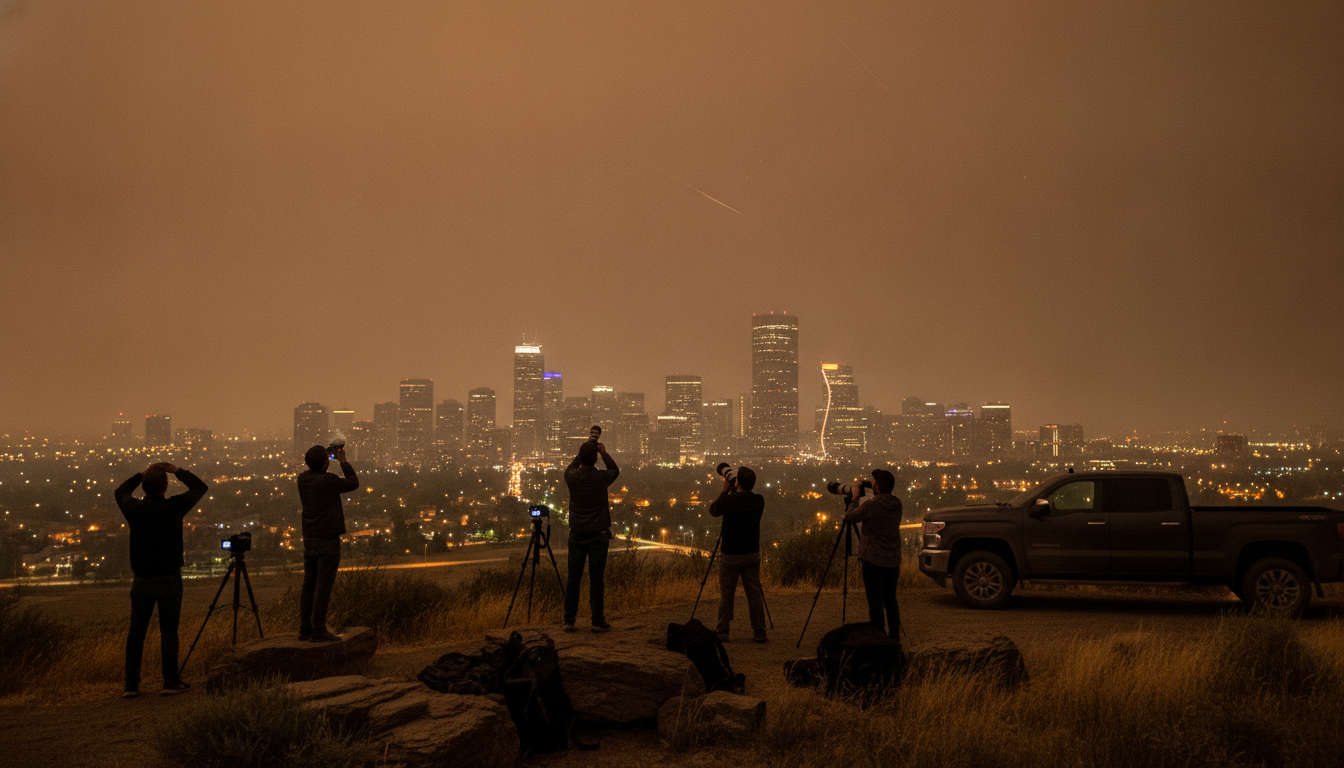
The Perseid meteor shower, which normally produces dozens of visible shooting stars per hour, arrived under compromised conditions for Calgarians this week. Wildfire smoke sweeping east from British Columbia and an unstable weather pattern producing cloud and thunderstorm potential combined to reduce the chance of a clear, dramatic display. Local astronomy volunteers and Environment Canada forecasters both warned that while a few bright meteors may still be seen, fainter streaks are likely to be obscured. Observers were urged to manage expectations and follow safety guidance if they travel outside the city to look skyward.
Perseid meteor shower faces wildfire smoke over Calgary
Wildfire smoke from major B.C. fires moved across the Rockies into southern Alberta on Tuesday evening, raising concerns about sky clarity in Calgary. Environment Canada meteorologists reported that the air quality index had begun to rise as plumes drifted eastward, creating a milky haze that can wash out faint astronomical phenomena. The smoke layer arrived at a particularly unfortunate moment for the Perseids, which coincided this year with a new moon that would otherwise have produced excellent darkness. Organizers and amateur astronomers said the combination greatly reduces the number of meteors most people will be able to see.
Environment Canada forecasts temporary clearing then clouds return
Forecasters said the densest smoke was expected to thin by Wednesday afternoon, but improvements would be offset by incoming moisture and unstable air over southern Alberta. Cold air surging southward into a feed of warmer, moist winds increased the likelihood of cloud formation and scattered thunderstorms, conditions that hamper overnight sky watching. Environment Canada emphasized the transient nature of the smoke — it may clear locally for short periods — but cautioned that cloud cover and storm potential would persist through the prime viewing window. Those planning to watch were advised to check updated forecasts and air-quality reports in real time.
Astronomers explain why faint meteors are most affected
Volunteer astronomers with the Royal Astronomical Society of Canada’s Calgary Centre said the Perseids produce many more faint meteors than bright fireballs, and those dim streaks are the first to disappear under haze or thin cloud. The meteors themselves are tiny — roughly the size of grains of sand — but they collide with Earth’s atmosphere at tens of kilometres per second, heating and flashing as they burn up. That high speed creates the classic shooting-star trails, yet most of these will be too faint to cut through smoke or light cloud. Experts said observers might still catch occasional bright meteors that penetrate the veil.
Where to look and when for the best chance
Observers seeking the best chance to spot Perseid meteors were advised to head away from Calgary’s light dome and aim northward or northeastward, where local haze sometimes thins. Volunteers suggested travelling to darker rural areas while respecting private property and road safety, and warned against stopping on narrow country roads or blocking traffic. The best viewing remains after local midnight until just before dawn, when the shower’s radiant in the constellation Perseus is higher in the sky. Those who can reach elevated or open sites with an unobstructed horizon will have the best odds for spotting brighter streaks.
Safety and air-quality precautions for viewers
Public-health officials urged people to monitor air-quality advisories before heading outdoors, as smoke can aggravate respiratory conditions. Individuals with breathing issues, heart conditions, or young children were told to limit outdoor exposure when particulate levels are elevated and to keep protective masks on hand if recommended. Emergency crews also reminded the public to avoid parking hazards if travelling to rural viewing spots and to bring warm clothing, water, and a flashlight with a red filter to preserve night vision. Event organizers cancelled or modified scheduled watch parties where conditions posed health or safety risks.
Local groups adapt plans amid dimmed expectations
Astronomy clubs in Calgary adjusted outreach plans as conditions shifted, moving some activities online or rescheduling community viewing events. Volunteers said they would still gather to monitor the shower and to educate the public about meteors and the scientific importance of the Perseids, even if the visual spectacle proved limited. Many groups planned to offer live-streamed feeds and commentary to provide context and extend access to those who must stay indoors. Organizers stressed that the Perseids remain a dependable annual event and encouraged the public to try again on clearer nights before the shower’s activity fades.
Wildfire smoke and a cloudy sky combined to temper what otherwise would have been an ideal Perseid meteor display for Calgary this year, but experts said intermittent viewing opportunities remained possible. Observers who choose to go out should check local air-quality and weather updates, seek darker locations away from city lights, and take basic safety precautions when travelling at night. Despite the setbacks, the Perseids continue to be one of the most reliable meteor showers each summer, offering chances to glimpse the debris of comets streaking through Earth’s atmosphere.
