
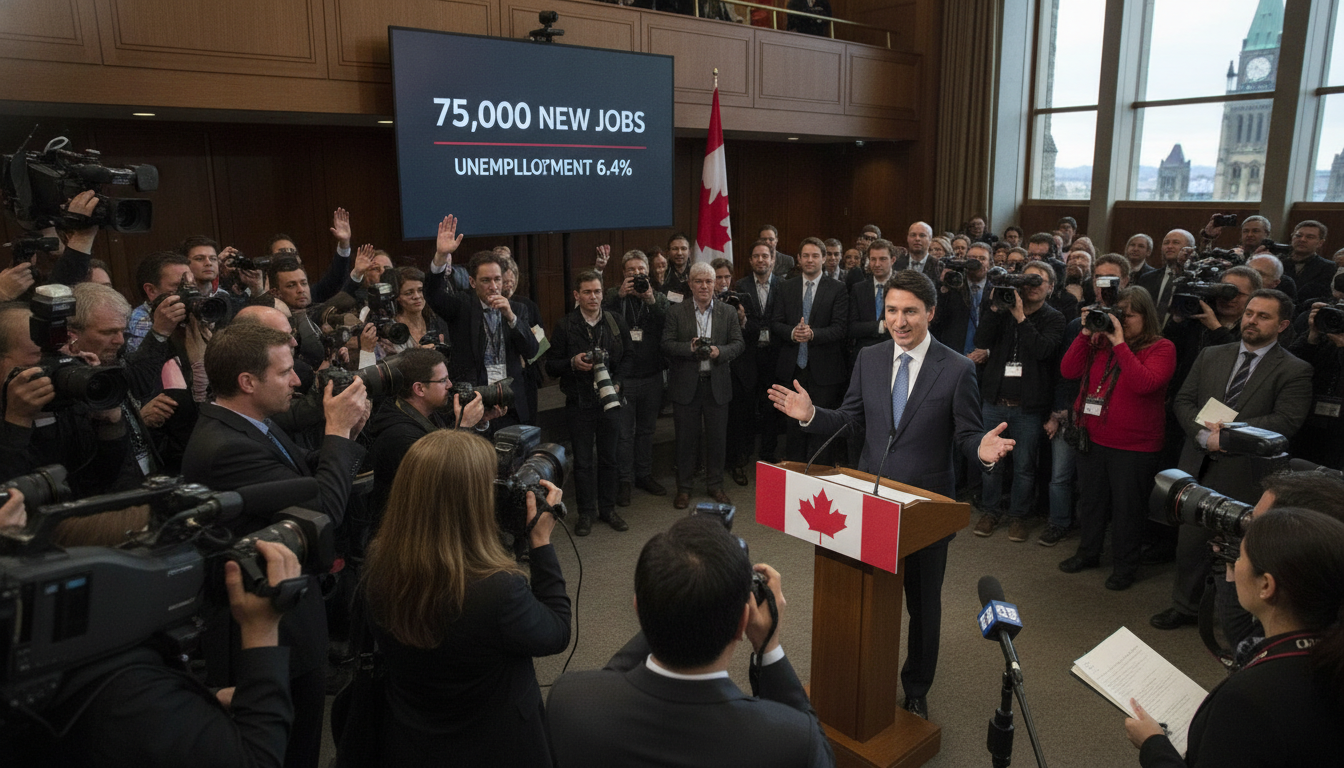
Canada unemployment rate falls to 6.4% as economy adds 75,000 jobs in July
Canada unemployment rate dropped to 6.4% in July as 75,000 jobs were added, marking a third consecutive monthly gain led by Alberta and health-care hiring.
Canada’s unemployment rate eased to 6.4 per cent in July as Statistics Canada reported the economy added 75,000 positions, extending a three-month streak of employment growth. The July Labour Force Survey outperformed expectations and pushed the Canada unemployment rate to its lowest level in roughly two years. Economists had forecast modest gains and a flat unemployment reading, making the stronger result a notable surprise for markets and policymakers.
July job gains exceeded consensus
The Labour Force Survey showed employment rose well above the roughly 20,000 positions analysts had anticipated, with full-time work accounting for the lion’s share of the increase. Full-time employment expanded by 58,500 jobs, while part-time work rose by about 20,100, underscoring the predominance of substantive hours over more precarious roles. Royal Bank of Canada senior economist Claire Fan described the report as “pretty solid all around,” highlighting the stronger summer labour-market momentum after earlier softness this year.
Unemployment level at a two-year low
The drop to 6.4 per cent represents the Canada unemployment rate at levels not seen in approximately two years, according to the Statistics Canada release. Three consecutive monthly gains reflect improving demand for labour even as inflation and interest-rate dynamics continue to shape hiring decisions. The tighter labour market could influence wage pressures and will be watched closely by both employers and the Bank of Canada as it assesses the broader economic picture.
Alberta emerges as a primary engine of growth
Provincial data and an RBC analysis point to Alberta as a major contributor to year-to-date job growth, with the province posting the largest annual increase. Yet the drivers of that expansion surprised some forecasters: employment gains in Alberta have been concentrated in health care, social assistance and public administration rather than a broad surge in oilpatch hiring. RBC economist Salim Zanzana noted that oil-sector employment has “remained largely unchanged” despite strong output and export demand.
Ontario posts notable additions while others lag
Ontario recorded substantial job gains in July, adding roughly 65,600 positions, a result singled out by analysts as the other clear provincial advance. Ontario’s year-over-year employment increase sits well below Alberta’s pace, however, and several provinces showed either stagnation or contraction. Labour markets in Quebec and British Columbia contracted in the latest data, underscoring a geographically uneven recovery across Canada.
Sectoral shifts favor public services and health care
The sectoral breakdown for July points to public services and health-care roles as the primary sources of new employment across the country. Health care and social assistance, along with public administration, accounted for a meaningful share of hires, reflecting both demographic demand and public-sector staffing needs. By contrast, employment in natural resources and oil-related activities did not expand appreciably despite higher production, suggesting different transmission mechanisms between commodity output and local hiring.
Risks to the outlook and policy implications
Economists cautioned that the positive July print comes amid persistent external and domestic risks, including an ongoing trade dispute with the United States that could weigh on exports and business investment. A tighter labour market may add complexity to monetary policy deliberations, particularly if wage gains accelerate and feed into inflation. Policymakers will be monitoring upcoming indicators to determine whether the summer’s hiring trend is durable or a temporary rebound.
Looking ahead, Statistics Canada’s follow-up releases and provincial employment surveys will be scrutinized for confirmation of the current trajectory in the Canada unemployment rate. Employers, workers and officials will likely pay close attention to wage growth and sectoral trends to judge whether hiring strength broadens beyond public services and selected provinces. The July results provide a firmer footing for the labour market, but the outlook remains contingent on trade developments, global demand and domestic inflation dynamics.
