
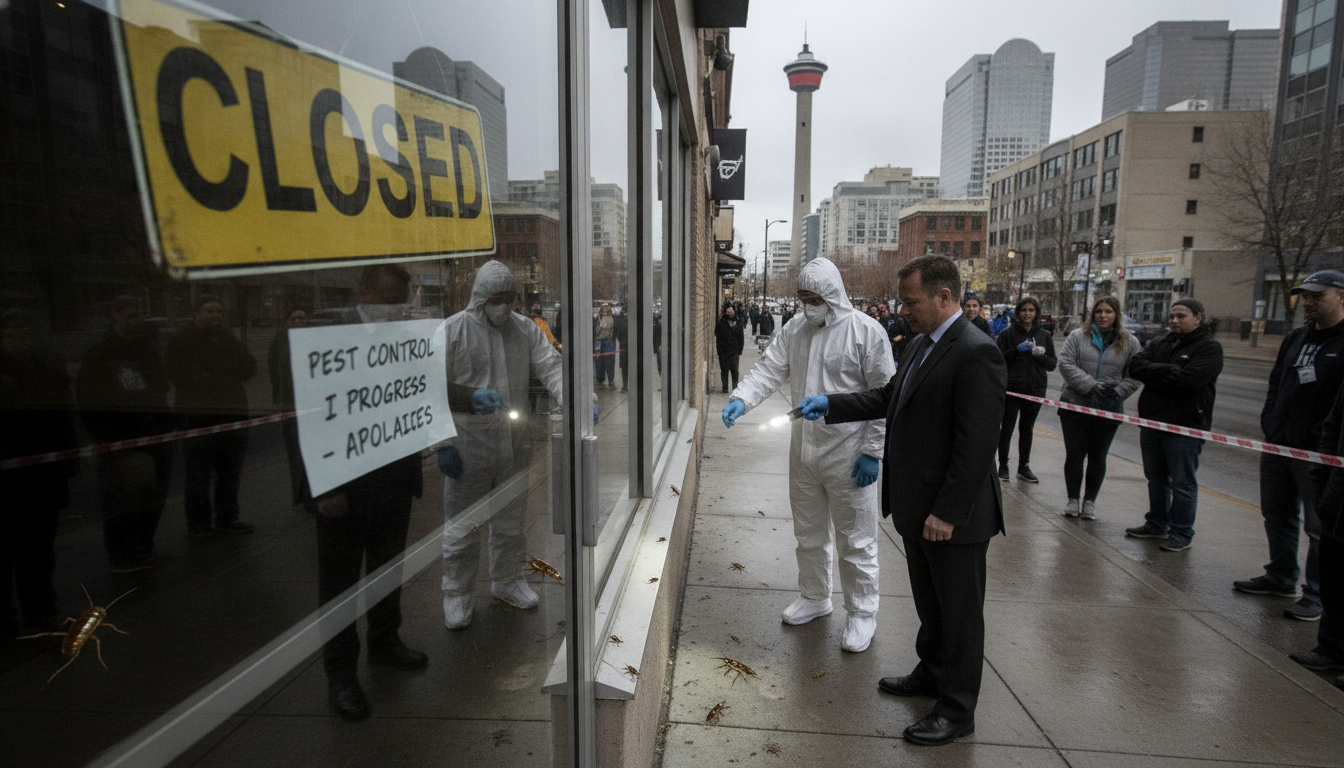
German cockroach infestation in Calgary prompts restaurant closure and renewed public concern
German cockroach infestation in Calgary prompts inspections and expert warnings as health data, pest-control firms and businesses weigh causes and containment.
Calgary’s recent temporary closure of a downtown restaurant after a German cockroach infestation has reopened debate about whether roach problems are rising across the city. The incident follows a string of reported infestations in recent years, including outbreaks at a daycare, multiple food-court stalls and several restaurants. Health officials and pest-control professionals offer differing views on whether the insect problem is growing or simply becoming more visible.
Restaurant closure puts pests back in the headlines
The closure of National on 17th after inspectors found evidence of German cockroaches brought the issue to public attention this week. The shutdown prompted renewed inspections and media coverage that highlighted prior incidents across Calgary dating back to 2024 and 2025.
Business owners and customers expressed concern about food safety and the economic impact of short-term closures. Public reaction has pressured health authorities and property managers to clarify inspection findings and remediation responsibilities.
Health authority reports no clear rise in inspections
Alberta Health Services said inspection data do not indicate a measurable increase in cockroach numbers provincewide, noting no significant uptick in complaints or service requests. Officials cautioned that counting cockroaches is difficult because the insects hide and disperse when exposed.
AHS reiterated standard inspection protocols while urging businesses to report and remediate infestations promptly. The agency’s statement emphasizes surveillance and compliance rather than declaring a new public-health crisis.
Pest-control firms cite more frequent calls and changing conditions
Local pest-control operators say they are seeing more infestations and more complex cases, estimating a noticeable rise in service calls over recent years. Companies point to factors such as increasing imports, shifting pest management practices, and the city’s rapid expansion with more multi-unit housing.
Veteran exterminators warn that while official inspection numbers may not show a spike, the combination of population growth and higher turnover in housing and furnishings creates more opportunities for German cockroaches to spread. They urge property owners to take early action when signs appear.
How German cockroaches travel and hide
Unlike outdoor-foraging insects, German cockroaches typically spread by hitchhiking on items people carry into buildings. Exterminators report common vectors include cardboard boxes, grocery bags, luggage, backpacks and secondhand appliances.
Once inside, the insects favor warm, dark spaces near food and moisture, such as behind refrigerators, under sinks and around dishwashers. In multi-unit buildings they can move between suites through plumbing chases, utility penetrations and other voids, which complicates containment.
Reproduction and speed of infestation
German cockroaches reproduce rapidly, making early detection critical. A single female can produce multiple egg capsules, each containing dozens of young, allowing populations to expand quickly under favorable conditions.
Technicians note that warmer indoor temperatures accelerate life cycles, so infestations can worsen in heated buildings. This biology explains why infestations often seem to appear suddenly and why standalone sanitation measures may not be sufficient once a population is established.
Steps residents and managers should take immediately
Pest-control experts stress that ignoring cockroaches worsens the problem and that timely intervention improves the chances of successful eradication. They recommend starting with a thorough inspection to identify hotspots and entry points before treatment begins.
Sanitation reduces food sources but rarely eliminates an established infestation on its own, so professionals advise combining cleaning with targeted treatments, monitoring traps and follow-up visits. For apartment buildings, coordinated, whole-structure treatment is often necessary because insects move between units.
Prevention strategies and monitoring
Simple prevention measures can reduce the risk of bringing cockroaches indoors: inspect used furniture and appliances, seal gaps around plumbing and electrical lines, and store food in sealed containers. Residents who travel or move items between homes should check boxes and luggage for stowaways.
For property managers, ongoing monitoring using glue traps in kitchens and utility spaces helps detect problems early. Educational outreach to tenants about hygiene and prompt reporting can make collective management more effective.
Calgary’s recent string of high-profile infestations has prompted debate but also practical action: inspectors are monitoring compliance, pest professionals are urging layered responses, and businesses are reviewing sanitation and maintenance practices. While official data do not yet confirm a citywide surge, experts agree that vigilance, early detection and coordinated treatment remain the most effective defenses against German cockroach infestation.
