
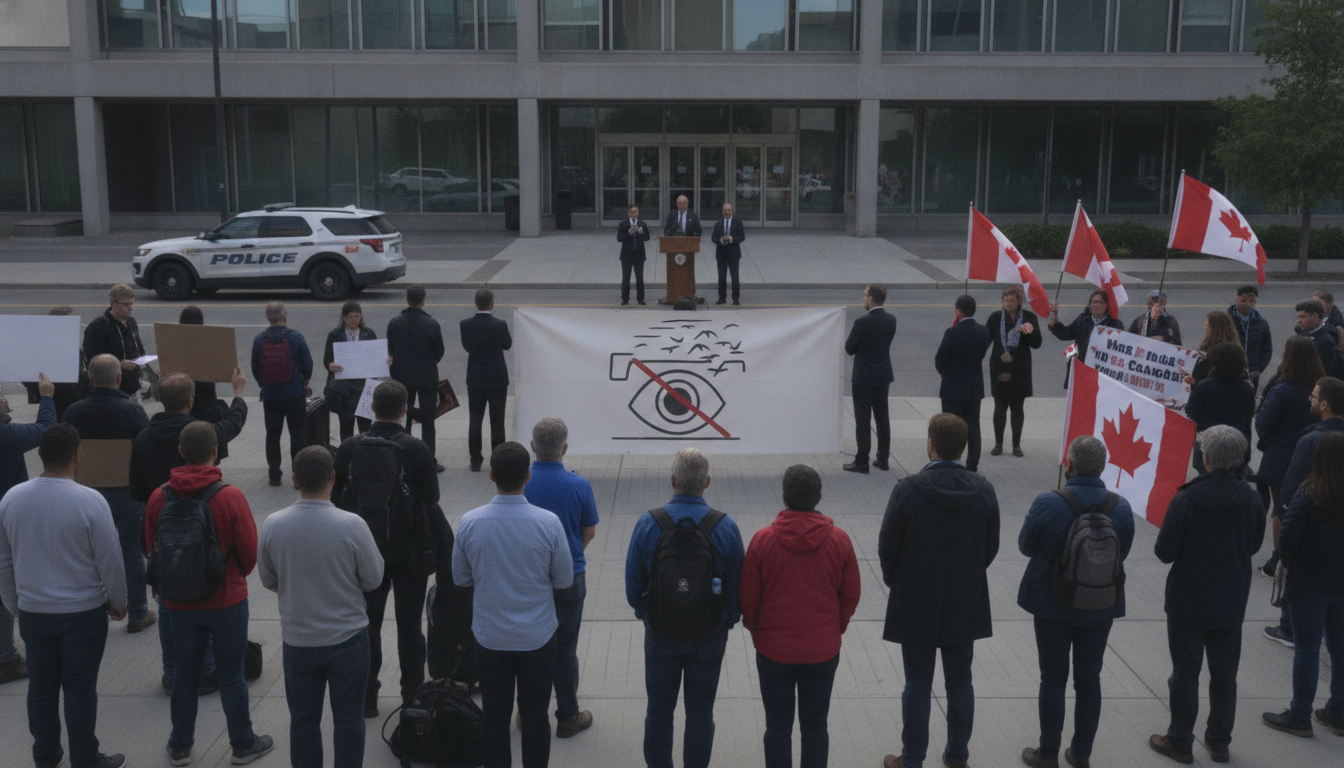
Flock cameras spark privacy fight as Ontario police expand licence-plate readers
Flock cameras and automated licence-plate readers are under fresh scrutiny after a U.S. lawsuit fundraiser and growing deployment by Ontario police raised concerns about data retention, access and cross-border use. The dispute, centred on continuous plate-reading technology, has prompted legal challenges in the United States and renewed calls for clearer rules in Canada. As municipalities scale up use of ALPR systems, privacy advocates and police offer sharply different views on benefits and risks.
U.S. legal challenge draws public attention
An American plaintiff has launched a legal campaign and public fundraiser to challenge Flock, the company behind widely deployed curb‑side cameras that read licence plates. The GoFundMe effort exceeded its goal, signaling public interest in limiting what supporters call intrusive surveillance. The case has helped focus attention on how plate‑reading data are collected, stored and shared.
Flock’s cameras operate in thousands of U.S. communities and critics say the company’s rapid expansion has outpaced oversight. Supporters of the technology argue it aids police work; opponents say it enables mass location tracking of ordinary people without sufficient safeguards.
Flock’s presence in Canada remains unclear
Flock has told inquiries that it has no formal partnerships with Canadian police, but it has not provided detailed public disclosure about installations north of the border. That opacity has left municipal officials and privacy advocates uncertain about whether the company’s street‑mounted systems are in operation here. Meanwhile, companies and police forces use a range of automated licence‑plate recognition (ALPR) suppliers in Canada, complicating transparency.
Local deployments of ALPR technology are well documented in Ontario, from private operators along Highway 407 to commercial sites such as Yorkdale Shopping Centre. Different vendors supply cameras and software to municipal and provincial police services, creating a patchwork of systems and policies.
How automated licence‑plate readers work
ALPR systems capture plate images from vehicles passing fixed cameras or patrol cars and convert them into searchable data, often recording time, location and vehicle colour. The technology matches captured plates against watchlists such as stolen vehicle registries or plates linked to outstanding investigations. When a match occurs, operators receive an alert to prompt immediate action.
Beyond hits, these systems also generate large volumes of “non‑match” data — records of plates that do not trigger alerts. How long those routine scans are stored varies by agency and can determine whether the system functions as a targeted investigative tool or a broad surveillance registry.
Ontario police have rapidly increased ALPR use
Several Ontario police services — including Hamilton, Peel, York, Waterloo, Sudbury and the provincial force — now operate ALPR gear in vehicles or on roadways. The Toronto Police Service began rolling out Axon‑supplied plate‑reading cameras in 2023 and now equips hundreds of patrol cars with front‑facing units. Officials report the equipment can process large daily volumes of plates, enhancing routine checks during patrols.
Police proponents point to concrete casework gains, including locating stolen vehicles and helping in missing‑person searches. They say centralized alerts and audited access controls limit misuse and improve operational efficiency compared with manual plate checks of the past.
Privacy experts warn about retention, access and mission creep
Former Ontario privacy officials and civil liberties groups caution that retention of non‑match data and the potential for interagency sharing can erode privacy protections. They argue that keeping routine scans for hours or days creates location histories that could be repurposed beyond the original investigative intent. Provincial guidance recommends deletion “as soon as technically feasible,” but practices differ between services.
Civil liberties advocates also point to troubling precedents, including U.S. reporting that federal immigration agents obtained location data linked to commercial plate‑reading databases through local police. That example underscores the risk that data collected for policing could be accessed by other agencies or third parties, particularly when providers or partners operate across borders.
Calls grow for independent oversight and clearer rules
Privacy advocates and legal experts urge provinces and municipalities to tighten rules governing ALPR use, including strict retention limits, robust auditing and independent approvals for program changes. Some recommend that any expansion of plate‑reading capabilities receive oversight by a regulator or judicial authority rather than internal police approvals alone. Transparency about vendors, data flows and contractual clauses is another frequent demand.
Police officials counter that ALPR is a powerful investigative tool that must adapt to evolving criminal tactics, including cloned or fabricated plates and the use of unplated vehicles. They say operational safeguards — role‑based access, logging and internal audits — mitigate the primary risks while allowing officers to respond to urgent public‑safety needs.
The debate over Flock cameras and ALPR systems in Canada highlights a wider tension between public‑safety gains and privacy protections as jurisdictions adopt new surveillance technologies. Policymakers now face pressure to reconcile those aims with clear legislation, independent oversight and transparent deployment practices to ensure that automated plate‑reading serves legitimate law‑enforcement purposes without becoming a tool for pervasive tracking.
