
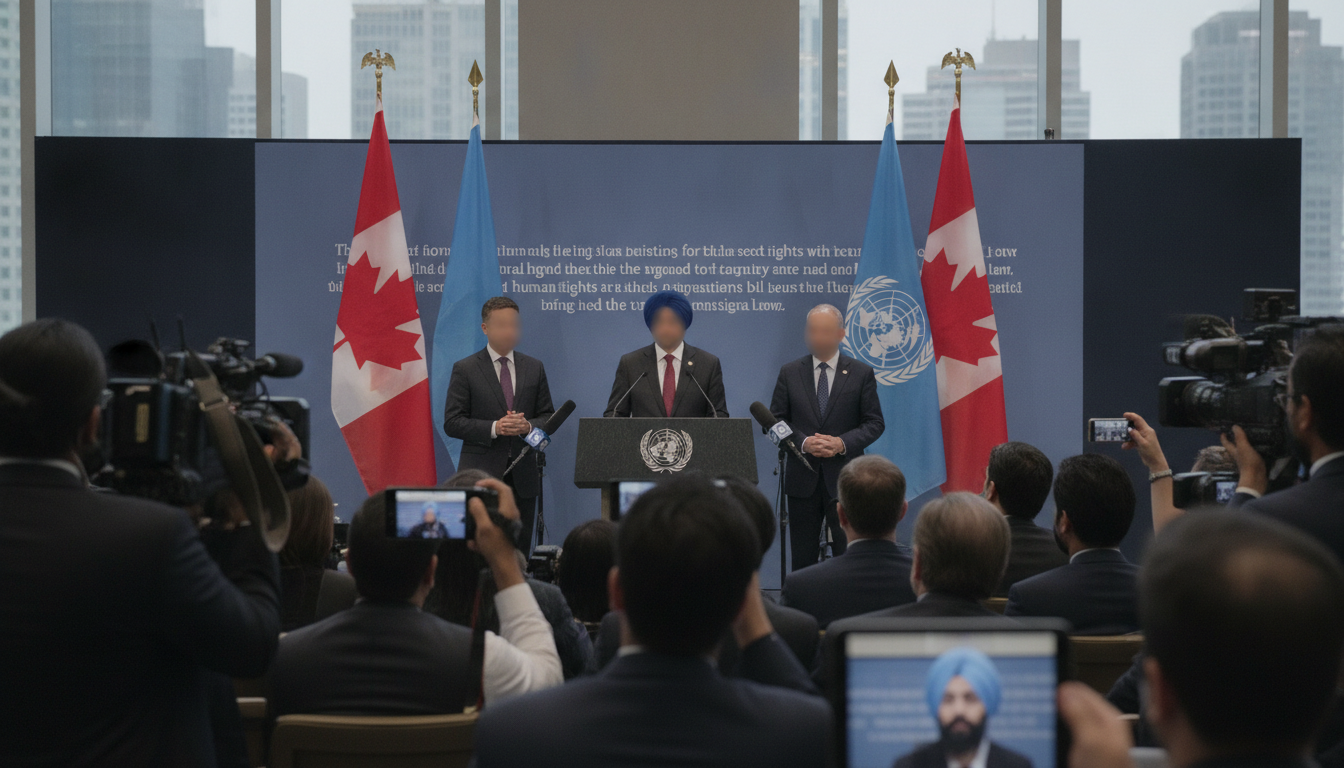
UN experts urge Canada to strengthen protection for Moninder Singh amid credible threats
Five UN human rights experts have called on Canada to urgently bolster protection for Moninder Singh after authorities warned of credible threats to his life and family.
UN experts raise alarm over safety of Moninder Singh
Five independent United Nations human rights experts wrote to Ottawa on June 3 asking the Canadian government to step up measures to protect Moninder Singh, a Canadian Sikh activist who has received repeated security warnings.
The letter, published online two months after it was sent, says authorities alerted Mr. Singh and his family to credible threats but that the experts remain concerned about the adequacy of follow-up protection.
The experts, who speak in their personal capacities under mandates from the UN Human Rights Council, highlighted a pattern of warnings to Mr. Singh dating back to 2022 and urged transparent, effective safeguards.
Details of the UN letter and the experts’ concerns
The specialists commended Canadian authorities for issuing alerts to Mr. Singh and his family but said public information indicates few additional protective actions since the most recent warning in February.
They noted that investigations and security operations may require confidentiality, but warned that lack of visible protective measures can leave those at risk vulnerable, particularly when prior similar alerts preceded a fatal attack.
The letter referenced the death of a Sikh community member after a comparable warning in June 2023 as a reason to maintain heightened vigilance.
Timeline of warnings received by Moninder Singh
Canadian officials have issued multiple advisories to Mr. Singh since 2022, with the latest known notice delivered in February before his trip to Geneva to address the UN Human Rights Council.
Those notices reportedly informed Mr. Singh of credible threats to his safety and that of his family, though public details about the nature of the threats and subsequent security steps have been limited.
The UN experts asked the government to clarify what protective measures are in place and to ensure continuity of protection until the threat has been effectively neutralized.
Connection to the 2023 killing of Hardeep Singh Nijjar
The experts’ intervention comes against the backdrop of the 2023 killing of Hardeep Singh Nijjar, a Sikh activist and associate of Mr. Singh, who was shot dead in the parking lot of the temple he led in Surrey, British Columbia.
That killing triggered accusations by then-prime minister Justin Trudeau that elements of the Indian government were linked to the murder, allegations which New Delhi has strongly denied and which led to a severe diplomatic rift.
The memory of Nijjar’s death has heightened concern within the Sikh community and among human rights monitors about the safety of activists living in Canada.
Diplomatic context and Canadian government posture
Relations between Ottawa and New Delhi cooled sharply after the 2023 allegations, although officials indicated a shift in tone after a change in Canadian leadership last year under Prime Minister Mark Carney.
Canadian authorities have publicly signaled both the need to investigate threats and the importance of managing sensitive diplomatic channels, a balance the UN experts say must not come at the expense of individual safety.
The experts urged the Canadian government to report on concrete protective steps and on any progress in investigations that could reduce risk for targeted activists.
Community reaction and calls for transparency
Members of the Sikh diaspora and advocacy groups have repeatedly expressed unease about transnational threats against activists and pressed for clearer, more frequent communication from security agencies.
Community leaders say timely, verifiable information about protective measures can reassure those at risk and enable families to take informed precautions, while also preserving necessary operational confidentiality.
The UN experts recommended that Canada provide regular updates to affected individuals and relevant civil society groups, consistent with security needs, to build trust and accountability.
Canada now faces a choice about how to respond publicly to the UN experts’ letter while balancing investigative secrecy and the imperative to protect a citizen who has received multiple warnings.
Officials will be watched closely by community members, rights monitors and foreign governments for steps that demonstrably reduce the risk to Moninder Singh and his family and that advance the broader inquiries into threats against activists.
