
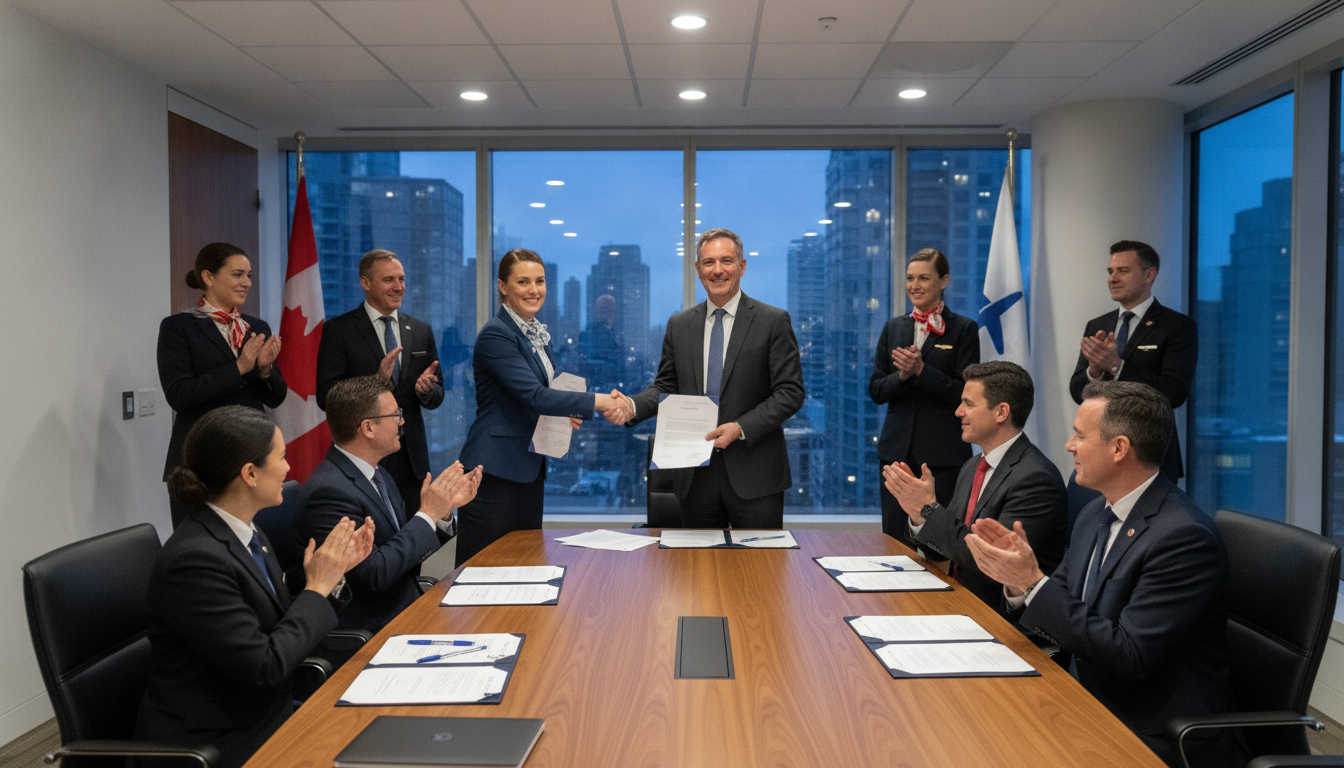
CUPE Local 8125 tentative agreement advances flight credit system and pay for cabin crew
Meta description: CUPE Local 8125 tentative agreement updates the flight credit system and raises compensation for cabin crew; members will review and vote on ratification.
A tentative agreement announced by CUPE Local 8125 lays out changes to the flight credit system and general compensation increases for cabin crew, the union said. The CUPE Local 8125 tentative agreement, described by the union as a step forward in recognizing the scope of cabin crew duties, will be presented to members for review and a ratification vote. Union leadership stressed the deal was reached at the negotiating table through collective bargaining and framed it as meaningful progress for front-line staff.
Planned changes to the flight credit system
The negotiated package modifies how flight credits are awarded to cabin crew, according to the union’s release. The changes are designed to account for a broader set of tasks that crew members perform beyond time in the air, moving toward compensation that more closely reflects actual work. Leaders say the revised crediting approach will alter calculations used to determine pay and entitlements tied to flight credits.
The union framed the revision as an evolution of the system rather than a simple tweak, signaling a structural adjustment that could affect scheduling, overtime thresholds and seniority-related calculations. While details on exact formulas or credit values were not released, the union said increased recognition of work performed was central to the bargaining goals.
Compensation increases described by the union
CUPE Local 8125 said the agreement includes general increases to compensation for cabin crew across classifications. The union presented the pay improvements as part of a broader effort to make compensation more commensurate with the demands placed on crew members. No specific wage figures were disclosed in the release, but the union emphasized that the overall package boosts financial recognition for the work.
Union officials indicated the pay increases were negotiated alongside the flight credit revisions to ensure the two elements work together. The combination of credit changes and higher rates is intended to raise take-home pay and address long-standing concerns about comparability and fairness in remuneration.
Collective bargaining process and union statement
CUPE Local 8125 reported that the agreement was achieved at the negotiating table following collective bargaining sessions. Union president Alia Hussain characterized the outcome as meaningful progress and highlighted that the terms were the result of direct negotiations rather than imposed measures. The union’s statement emphasized member-centred bargaining and the role of representatives in securing changes.
The union plans to distribute the full tentative agreement to its membership for examination before a ratification vote, allowing members to evaluate the specific provisions. The ratification process gives members the final say on whether to approve the negotiated package, a standard step in union contracts.
Potential effects on crew scheduling and work conditions
Changes to flight credit policies often ripple through staffing, rostering and eligibility for premium pay, and the union indicated those dynamics were considered in talks. If credits will now reflect a broader range of duties, crew members could see differences in calculated hours, eligibility for certain pay categories and how trip sequences are valued. That, in turn, may affect scheduling practices and the way seniority is applied in bid systems.
Operational implications will depend on the exact mechanics of the revised credit system, which the union has yet to publish for members. Airline management and crew planners will need to adapt rostering processes if credit accounting changes how work is quantified for pay and benefits.
Next steps: member review, vote and possible outcomes
The tentative agreement will next go to CUPE Local 8125 members for review and a ratification vote, the union confirmed. During the review period members will receive documentation outlining the specific changes and the union will typically hold information sessions or Q&A opportunities to explain the terms. If members vote to ratify, the agreement would move into implementation according to negotiated timelines.
If the membership rejects the agreement, the union and employer would likely return to bargaining or consider mediation to resolve outstanding issues. The ratification decision is a critical step that determines whether the proposed changes become binding.
Wider labour context and industry implications
The deal comes amid ongoing labour negotiations across the airline sector where pay, rostering and recognition of expanded workloads remain central themes. A tentative agreement that ties pay increases to a revamped credit system could serve as a reference point in other bargaining contexts, particularly where unions seek to modernize how non-flying duties are compensated. Employers may view the package as a compromise that balances operational needs with crew demands for fairer compensation.
Observers say how members respond in the ratification vote will influence the tone of future talks between the carrier and its workforce. Ratification would signal member endorsement of the negotiated trade-offs, while rejection could reset bargaining dynamics.
The union’s next communications will provide the full text of the tentative agreement and details about voting procedures and timelines for CUPE Local 8125 members to consider before casting their ballots.
