
Dutch elm disease in Edmonton: four new cases raise total to 14
Edmonton confirms four new cases of Dutch elm disease, bringing the citywide total to 14; officials expand monitoring zones and advise against moving firewood.
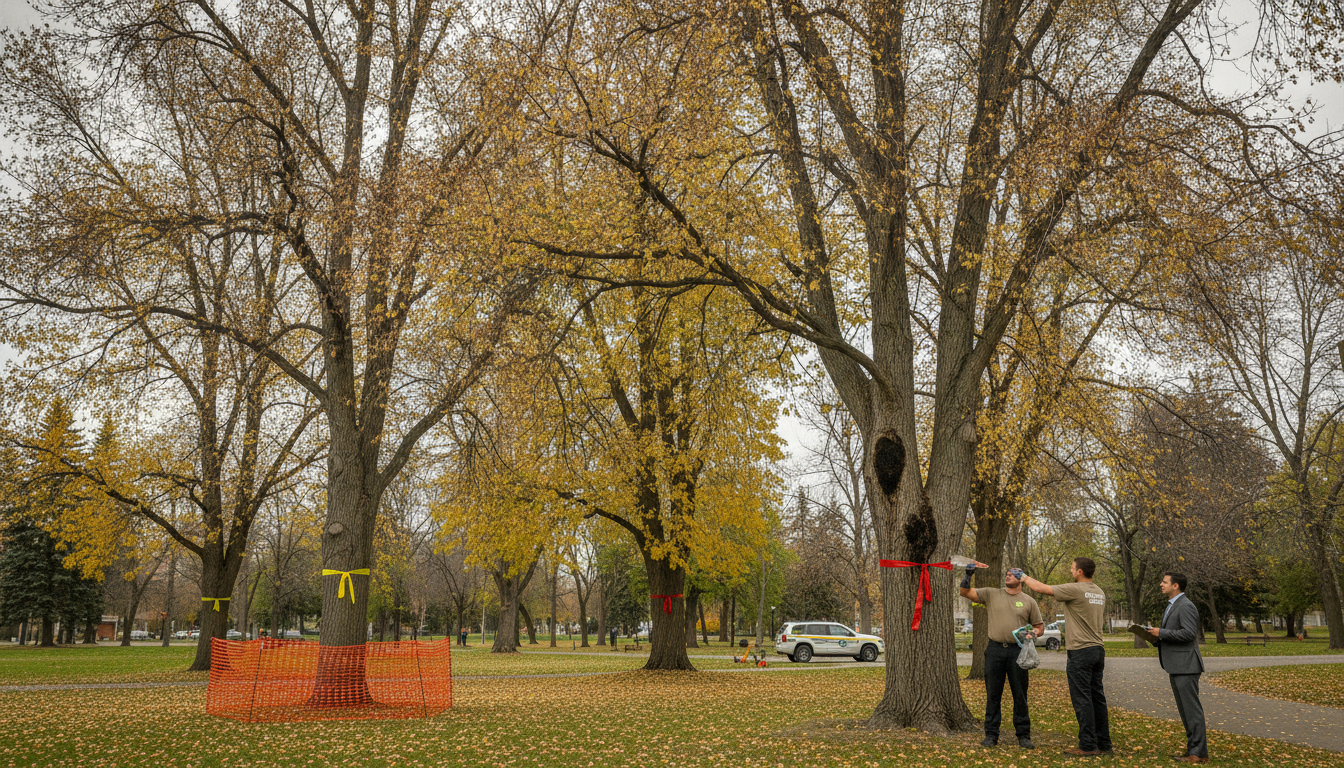
Edmonton city officials confirmed four new cases of Dutch elm disease in a news release on Aug. 1, 2026, increasing the city’s total to 14 infections since the first detections in August 2024. The new confirmations, identified through visual inspection and laboratory testing, include two trees in Glengarry and two in Rossdale. City crews will remove the infected trees as part of a broader containment effort to protect the urban canopy.
Four new infections confirmed in early August
The city said the latest positives were confirmed after crews visually identified suspect trees and laboratory analyses returned positive results. Those removals will occur promptly, following the city’s established protocol for confirmed Dutch elm disease cases. Officials said half of the total 14 infections were detected in the two weeks leading up to the Aug. 1, 2026 announcement, signaling renewed spread.
City staff emphasized that rapid removal of infected trees is a key tool in limiting further transmission by bark beetles. The confirmed cases will trigger expanded monitoring and care within the newly adjusted protocol areas around each site. Residents in affected neighbourhoods will see increased assessment activity over the coming weeks.
Infections found beyond the original north-side area
The first cluster of cases was reported in August 2024 in the Killarney neighbourhood and the adjacent Yellowhead corridor. Since then, detections have gradually extended beyond that original north-side zone. The latest confirmations include Rossdale, a river valley community well south of the initial cluster, demonstrating the disease’s capacity to appear across a broader geographic range.
City maps of protocol areas have been updated to reflect the new detections, with one-kilometre monitoring buffers placed around each confirmed site. Edmonton officials said the moving pattern underscores the importance of citywide vigilance and targeted inspections by tree crews and arborists.
Removal and containment procedures applied citywide
When a confirmation occurs, the city establishes a one-kilometre monitoring radius and removes the infected tree plus any elms within a 20-metre buffer of the confirmed specimen. Crews perform follow-up inspections and, where necessary, remove additional high-risk trees to reduce beetle movement and fungal spread. The city’s response aims to protect public safety and the overall health of the urban forest.
Testing is performed after visual identification to ensure removals are based on laboratory confirmation. Officials reiterated that timely removals both limit disease transmission and prevent hazards from weakened or decaying trees near streets and properties.
Public guidance on firewood, pruning and storm debris
Edmonton is urging residents to help halt transmission by not transporting firewood into the city from other regions, since infested wood can carry bark beetles and fungal material. The city also enforces a seasonal ban on pruning elm trees from April 1 to Sept. 30 to avoid attracting beetles to fresh cuts when beetles are active.
Storm-damaged elm debris should be removed promptly and disposed of safely by burning (where permitted) or by taking the wood to the Edmonton Waste Management Centre. Residents were explicitly advised not to place elm branches or infected wood in residential green bins or with regular organic waste to prevent accidental spread.
Scope of Edmonton’s elm population and urban risk
Edmonton has roughly 90,000 publicly owned elms, which make up about 22 per cent of its open space and boulevard tree inventory. That large proportion means Dutch elm disease poses a significant risk to the city’s urban canopy and the ecological services those trees provide, including shade, air quality improvement and stormwater moderation.
Given the density of elms in some neighbourhoods, the city’s management strategy balances targeted removals with proactive monitoring and community education. Officials note that early detection and coordinated action are essential to preserving mature trees while minimizing the need for large-scale removals.
Chronology of detections since August 2024
The city’s first four confirmed cases were reported in August 2024 in the Killarney and Yellowhead areas, followed by a fifth positive in October 2024 in the same vicinity. Two additional cases were documented in 2025 — one in July 2025 in the Alberta Avenue community and another in November 2025 in Glengarry. No new cases were reported for more than seven months after those detections.
On July 14, 2026, Edmonton announced two further cases, one in Northmount and one in Rossdale, and a 10th infection was confirmed on July 22, 2026, in Calder. The Aug. 1, 2026 update added four more confirmed trees, bringing the total to 14 and prompting the most recent expansion of monitoring zones.
Residents are asked to report suspected symptomatic elms — including yellowing foliage, wilting leaves and D-shaped exit holes left by bark beetles — to the city’s tree services. Continued public cooperation, combined with the city’s removal and monitoring program, will determine how successfully Edmonton can limit further outbreaks and protect its elm population.
