
Ceuta migrants: nearly 60,000 cross from Morocco in mass influx that killed at least 67
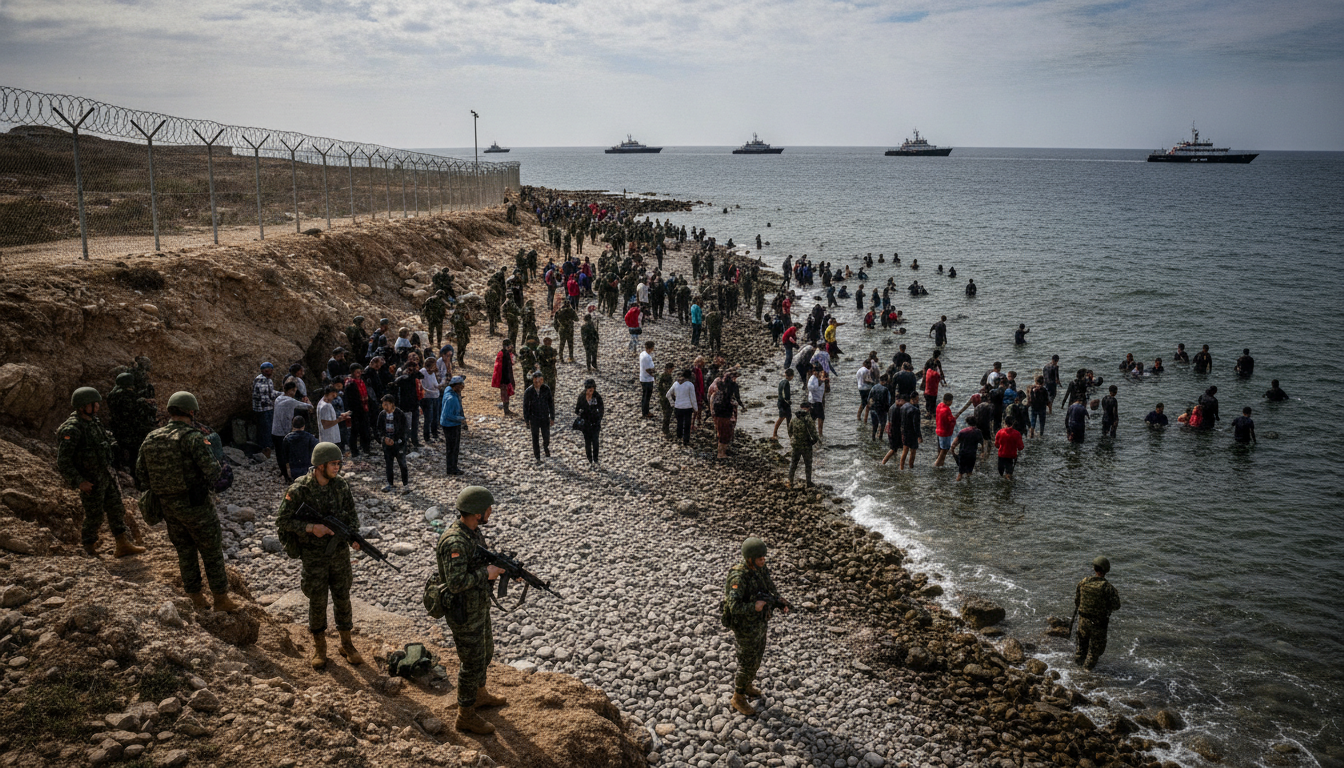
Nearly 60,000 Ceuta migrants entered the Spanish enclave from Morocco in a single surge, overwhelming local authorities and leaving at least 67 people dead in the crossings.
Mass arrival and immediate toll
Nearly 60,000 migrants arrived in Ceuta over the course of hours on Friday, temporarily swelling the enclave’s population that usually numbers about 80,000 residents. Spanish and Moroccan authorities reported at least 67 deaths linked to the crossings, many of them people who attempted to reach Ceuta by swimming to bypass land controls.
The influx followed reports and social-media rumors that the Ceuta border was open, prompting thousands to gather in the Moroccan border town of Fnideq. By Saturday most of the newly arrived migrants had been returned to Morocco, Spanish officials said, but the human cost and the shock to the local community remain significant.
Local response and security measures
Local authorities in Ceuta called for a state of emergency to manage the unprecedented movement, but Madrid declined to declare one, instead dispatching the prime minister to the enclave and sending the military to assist. Shops closed and many residents remained barricaded in their homes as security forces coordinated the response.
Officials have also begun installing a 500-metre inflatable barrier in the Mediterranean to deter future sea crossings, and police and coastguard units increased patrols along the coastline. The barrier and deployments reflect an immediate priority to prevent more deaths and limit further uncontrolled entries.
Return operations and bilateral cooperation
Spanish officials said cooperation with Moroccan authorities intensified after the surge, enabling the rapid return of most migrants to Moroccan territory. Madrid described the returns as evidence that existing migration cooperation mechanisms between Spain and Morocco can still function under pressure.
Morocco denied deliberate orchestration of the crossings, but many analysts and witnesses on the ground said large-scale movements of people of this size would be difficult to stage without at least some level of tolerance by local authorities. Authorities on both sides say they are working together to process cases and reduce tensions along the border.
Legal ruling and the role of misinformation
Observers and officials pointed to a Spanish Supreme Court decision on July 8 that limited the immediate readmission of migrants who arrive by sea without prior administrative procedures. Spanish ministers accused people-smuggling networks of misreading the ruling and circulating false claims that maritime arrivals would be treated differently.
Journalists who spoke to migrants in Fnideq said social-media rumors that the border was open played a central role in mobilizing large crowds. The combination of legal uncertainty and viral misinformation appears to have helped drive the sudden movement of people toward Ceuta’s shores.
Historical precedents and geopolitical context
The 2026 surge has revived memories of a 2021 episode when Morocco allowed around 10,000 migrants into Ceuta amid diplomatic tensions with Spain, a move then seen as political pressure. Analysts note similarities between that episode and the current events, especially given Spain’s recent diplomatic engagement with Algeria, including a July 2026 state visit, which may have strained relations with Rabat.
Experts such as Henry de Laguérie and Sarah Wolff say the pattern of migrants being used as leverage — or at least tolerated during diplomatic disputes — cannot be dismissed. They also caution against reducing the story to geopolitics alone, noting that complex motives and local decisions contributed to the situation.
Economic drivers and migrant perspectives
Journalists and researchers who spoke with Moroccan commentators emphasized deep socio-economic drivers behind migration, particularly high youth unemployment that many estimate at over 30 percent for those aged 15 to 24. Morocco posted GDP growth in early 2026, but this has not translated into job opportunities for many young people, fueling a “desire for elsewhere,” according to local media figures.
Some migrants said they were encouraged by social-media posts and by public statements from Spanish political leaders who have signaled more open migration policies, including a pledge by Spain’s government to regularize the status of up to 500,000 undocumented people. Those messages, combined with economic frustration, appear to have contributed to individuals’ decisions to attempt the crossing.
European reactions and diplomatic fallout
The mass movement prompted sharp reactions across Europe, with several leaders calling for swift repatriation and tighter controls. Italy’s prime minister suggested Spain could face consequences within the Schengen area, while Germany’s chancellor urged immediate repatriation by Morocco and France offered logistical support to Spain.
Spanish Prime Minister Pedro Sánchez criticized what he described as self-interested responses from some EU partners and defended Madrid’s handling of the crisis. EU interior ministers planned to discuss the events in a videoconference under Ireland’s rotating presidency to coordinate responses and border measures.
This sudden surge in Ceuta has exposed weaknesses in messaging, cross-border coordination and migration policy across the region, and it has reignited debates over how democratic governments should respond to rapid population movements without sacrificing human rights protections.
The short-term focus in Ceuta is stabilizing the enclave, processing returns and identifying deceased migrants, while longer-term questions now center on preventing recurrent surges and addressing the underlying economic and political pressures that drive people toward perilous sea and land routes.
