
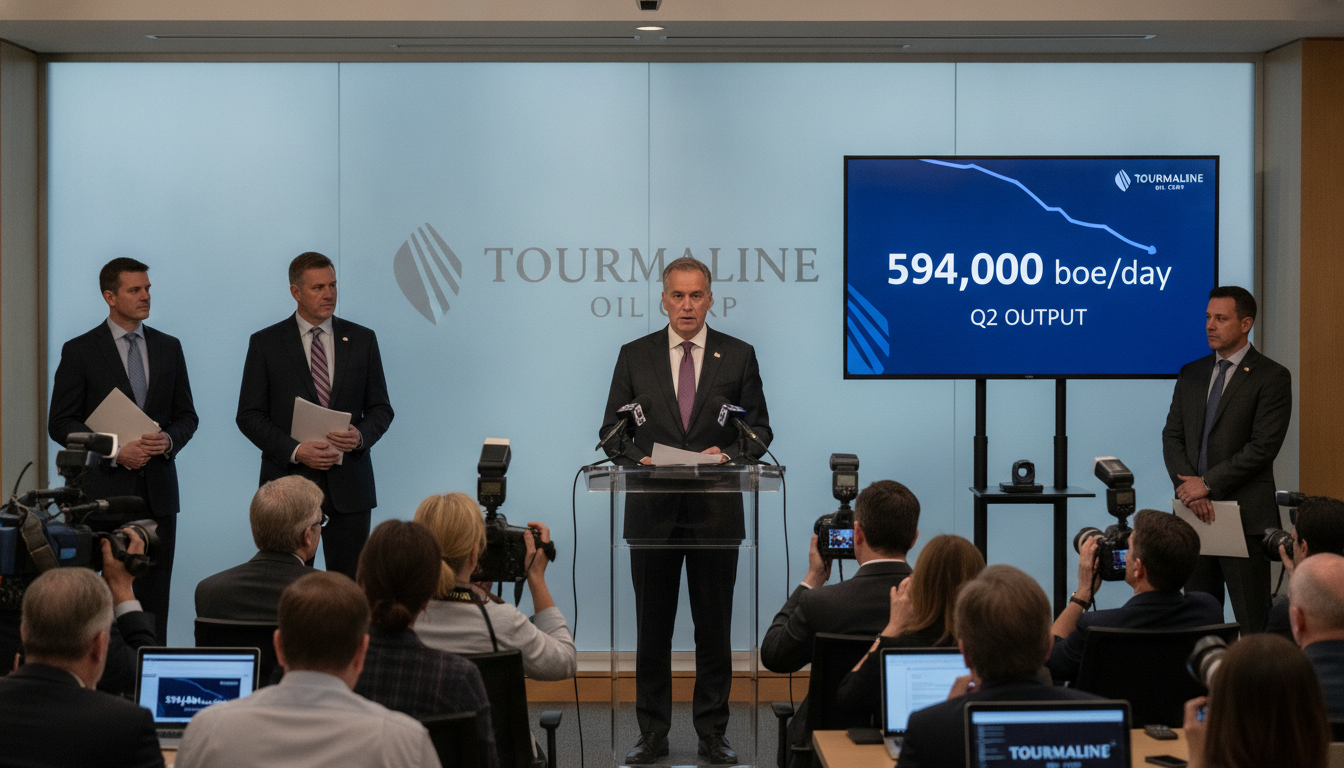
Tourmaline Oil Q2 output dips to 594,000 boe/d as company injects more gas into storage
Tourmaline Oil reported a slight decline in output to 594,000 barrels of oil equivalent per day in the April–June quarter as the company increased gas injections and paused activity amid weak prices.
Tourmaline Oil, Canada’s largest natural gas producer, recorded production of 594,000 barrels of oil equivalent per day for the April-to-June quarter, a modest decline from previous levels. The company said the drop was driven in part by higher volumes being injected into storage and by temporary price-related shut-ins. Management also deferred some planned activity until later in the year in response to persistently low natural gas prices. The shift in operations reflects a deliberate choice to preserve value while awaiting stronger market conditions.
Q2 production and operational drivers
Tourmaline Oil’s reported output figure combines oil, natural gas and natural gas liquids into barrels of oil equivalent, a standard industry measure used to compare energy volumes. The company described the quarter’s drop as slight, underscoring that core production remained broadly stable despite the operational changes. Key drivers cited were increased storage injections, targeted shut-ins when prices dipped below economic thresholds, and the postponement of some capital activity. These moves suggest the company prioritized inventory management and capital discipline over maximizing short-term volumes.
Increased gas injections into storage
Higher injections into storage during the quarter were a central factor behind the lower reported production rate. By choosing to inject additional gas, Tourmaline is building inventory that can be marketed when prices improve or when seasonal demand increases. Storing gas can also reduce exposure to short-term price volatility and provide flexibility for meeting winter demand. This strategy is commonly used by producers to smooth revenue over time and to preserve resources until market conditions are more favorable.
Price-related shut-ins and activity deferrals
Tourmaline attributed part of the production decline to price-related shut-ins, a practice where wells are temporarily taken offline when commodity prices make production uneconomic. The company also deferred some drilling and completion activity until later in the year, a move intended to optimize capital spending. These decisions reflect a judgment that the cost of producing and selling certain volumes at low prices would be less attractive than waiting for improved pricing. Such tactics are consistent with a broader industry approach to managing output during periods of weak gas prices.
Implications for revenue and capital planning
Lower reported volumes can directly affect near-term sales and cash flow, but the financial impact depends on the blend of stored volume, hedging arrangements and the timing of resumed activity. By deferring work and injecting gas into storage, Tourmaline is signaling a focus on protecting margins rather than maximizing throughput. That conservatism can support longer-term returns if prices recover and the company can sell stored volumes at higher rates. At the same time, the approach may temper growth in production metrics until the deferred activity is restarted.
Market context and price environment
Low natural gas prices during the period prompted many producers to reassess immediate production plans and capital allocations. Oversupply, softer demand in certain markets and storage dynamics have combined to keep pricing under pressure at times, particularly outside peak seasonal demand windows. For a large producer like Tourmaline Oil, managing how much gas is brought to market versus placed into storage is a core operational decision tied closely to price signals. The company’s actions in this quarter reflect an adaptive response to those market conditions.
Outlook and timing for resumed activity
Tourmaline indicated some activity would be deferred until later in the year, implying the company is prepared to accelerate operations if and when market conditions improve. Resumption of deferred drilling, completions and production would likely depend on a combination of higher gas prices, improved demand and clear seasonal signals. The stored volumes created during the spring and early summer can be tapped later when selling conditions are stronger, providing optionality for the company. Investors and market observers will watch price trends and company updates for signals about the pace of any restart.
Tourmaline Oil’s modest production dip to 594,000 boe/d for April through June reflects a tactical choice to prioritize value preservation and flexibility amid a weak natural gas price environment. The company’s increased injections into storage, selective shut-ins and postponed activity underline a conservative operating stance designed to manage risk while keeping the option to scale up later in the year.
