
Raccoon rabies confirmed in Quebec stray cat; three people treated after exposures
Three people received post‑exposure treatment after contact with a stray cat later confirmed to carry raccoon rabies, officials say.
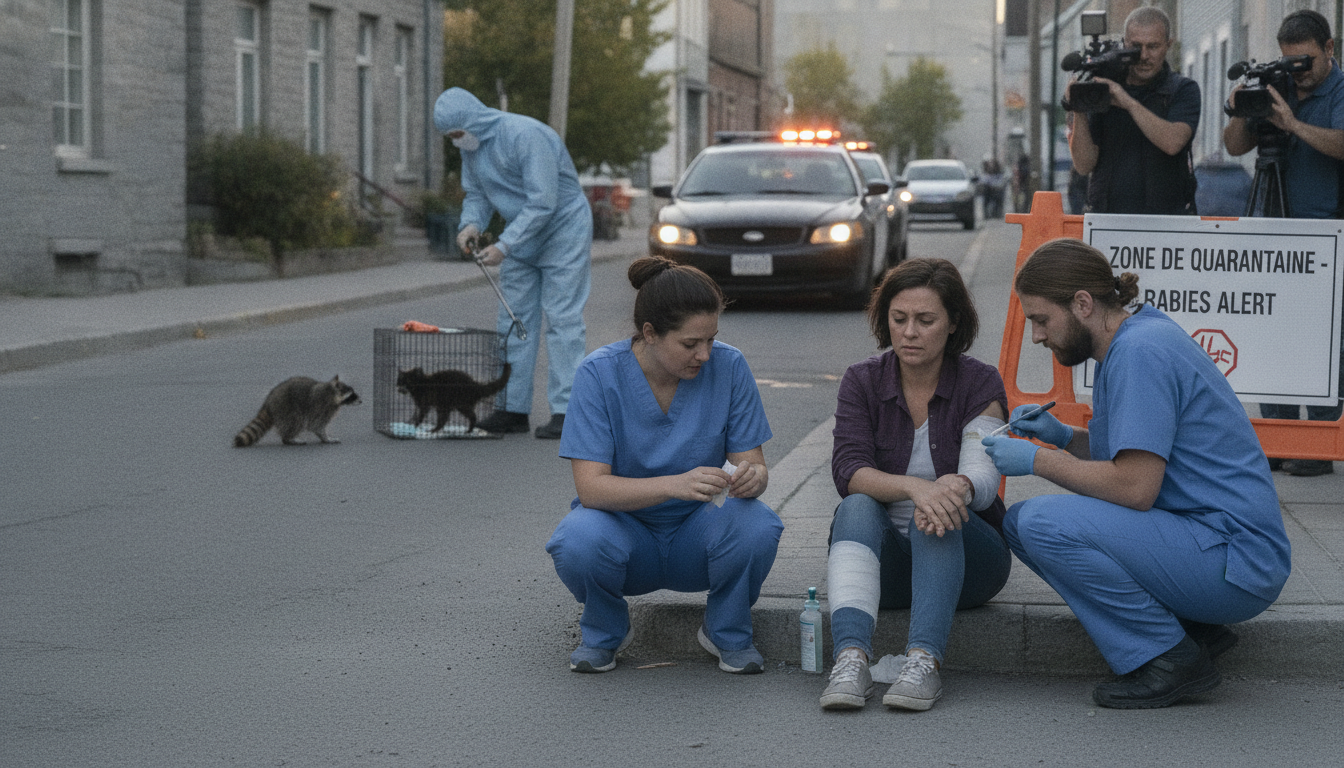
A stray cat with atypical behaviour attacked a resident in Godmanchester, southwest of Montreal, on July 16 and was later captured, examined and euthanized at a veterinary clinic. Public health authorities confirmed on July 23 that laboratory testing detected the raccoon rabies virus in the animal, and three people who were exposed to the cat — through a bite, scratch or contact with saliva — received post‑exposure prophylaxis.
Attack on resident and ambulance crew
Mary Elizabeth Doyle told local reporters she was returning from church on the morning of July 16 when the cat suddenly leapt at her, biting and scratching her leg and causing significant bleeding. She was treated at the scene by paramedics and transported to hospital; an ambulance attendant was also bitten while trying to restrain the animal.
The animal was contained by emergency personnel, examined by a veterinarian and subsequently euthanized for testing. Ms. Doyle later had sutures removed and completed the prescribed vaccine series after public health officials confirmed the rabies diagnosis.
Three people underwent preventative treatment
Health officials in Montérégie‑Centre confirmed that three individuals received prophylactic treatment following their exposures to the infected cat. The region’s communications director said the treatments were administered because the contacts included a bite, a scratch or potential contact with the animal’s saliva.
Post‑exposure prophylaxis is advised whenever clinicians judge a wound or contact presents a rabies risk, because once clinical symptoms of rabies appear in humans the disease is almost always fatal.
First confirmed raccoon rabies case in a stray cat in Quebec
Provincial authorities described the finding as the first confirmed case of raccoon rabies in a stray cat in Quebec. The Ministère de l’Agriculture, des Pêcheries et de l’Alimentation du Québec (MAPAQ) said the detection underscores how wildlife reservoirs of the virus can spill over to domestic animals.
Officials noted the province has previously documented other rabies variants in domestic animals, including the arctic fox variant in northern regions, demonstrating that different wildlife cycles can affect pets in different areas.
Public health advice and immediate steps after exposure
Public health officials reiterated standard guidance for anyone bitten or scratched by a wild or unfamiliar animal: wash the wound thoroughly with soap and water for at least 15 minutes and contact health services for assessment. In Quebec, callers are urged to reach Info‑Santé at 811 to determine whether post‑exposure prophylaxis is warranted.
Authorities also stressed avoiding contact with any animal that behaves abnormally, appears disoriented, aggressive or unusually tame, and to report such animals to local public health or animal control services promptly.
Veterinarians urge vaccination and outdoor safeguards
Veterinarian Claudia Gilbert emphasized that vaccination of household pets remains the primary defence against rabies transmission to people. She recommended pet owners keep vaccinations up to date, supervise animals outdoors and consider keeping cats indoors to reduce contact with wildlife.
Gilbert also advised practical measures to deter wildlife around homes, such as securing compost and pet food, and arranging professional relocation when animals become established near residential structures.
Provincial surveillance figures and local impact
MAPAQ reported that, since the start of 2026, 118 cases of raccoon rabies have been confirmed in animals across Quebec. In the Montérégie region, nine people have received post‑exposure treatment this year after confirmed exposures to rabid animals, according to Santé Québec Montérégie‑Centre.
A recent survey from a provincial association of small‑animal veterinarians indicates there are about 2.18 million domestic cats in Quebec and that a portion of those animals go outdoors, leaving several hundred thousand cats potentially at risk of encountering rabid wildlife.
Public health authorities continue surveillance and targeted communications in affected areas to reduce the risk of further human exposures.
The incident in Godmanchester is a reminder to residents and pet owners to remain vigilant around wildlife, ensure companion animals are vaccinated, and seek medical advice promptly after any bite, scratch or possible saliva exposure.
