
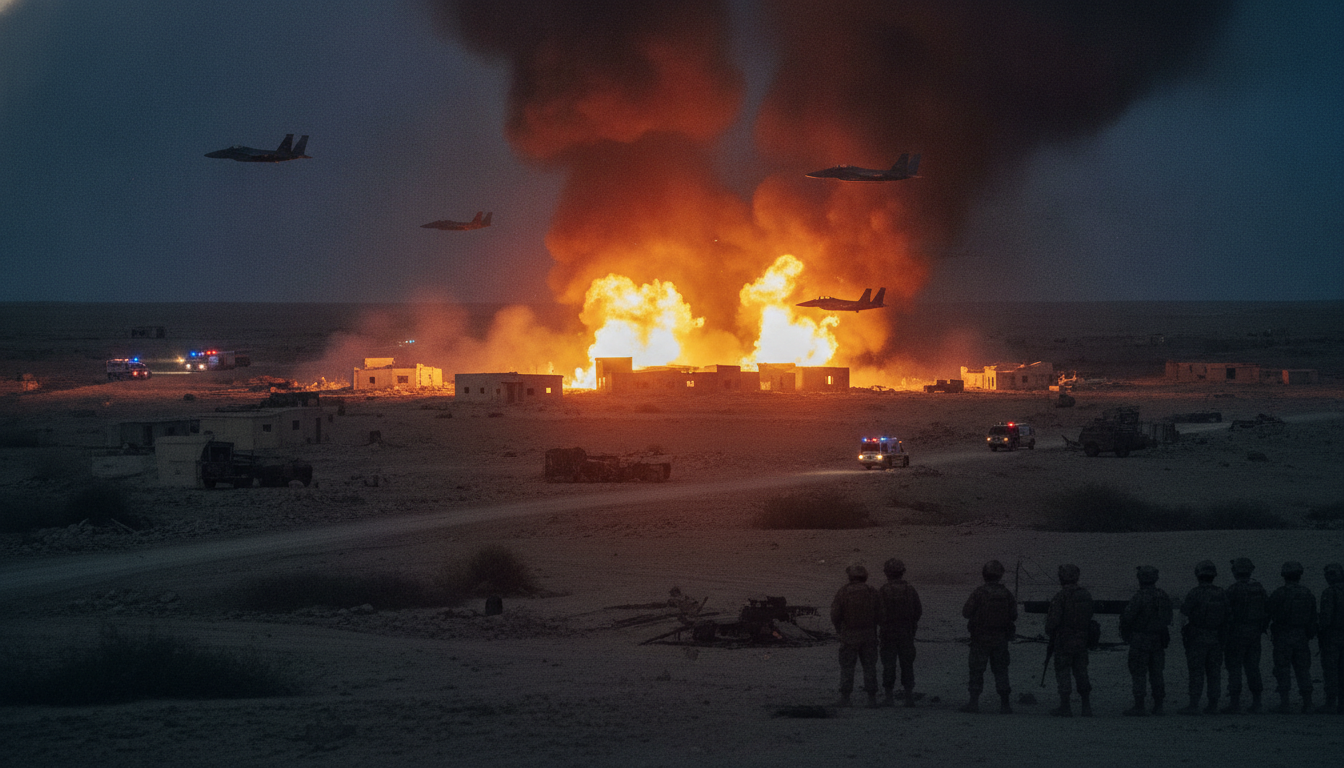
US and Saudi airstrikes in Iraq hit Iran-backed PMF bases; reports say 20 fighters killed
US and Saudi airstrikes in Iraq targeted Iran-backed Popular Mobilisation Forces bases on July 29, 2026, after alleged drone attacks on Saudi oil infrastructure, with initial reports saying 20 fighters were killed.
The strikes, carried out in coordination by United States and Saudi military forces, struck multiple positions across Iraq that are associated with Iran-backed Popular Mobilisation Forces units. Videos circulating on social media showed the immediate aftermath at several sites, and regional officials linked the operation to recent drone attacks on Saudi oil facilities that Riyadh blamed on groups backed by Iran.
Strike Details and Targets
U.S. and Saudi aircraft carried out coordinated strikes across several locations in Iraq that sources identify as bases and command positions used by elements of the Popular Mobilisation Forces. Military officials in Washington and Riyadh described the operation as targeted, aimed at degrading the operational capacity of units alleged to have launched cross-border drone attacks on Saudi critical energy infrastructure.
The strikes reportedly used precision munitions to limit collateral damage, according to military statements released by the forces involved, while video footage shared online showed damaged buildings, wreckage and fires at multiple compound sites. At this stage there has been no independent, on-the-ground verification of all claimed impacts or a complete accounting of munition types and strike times.
Casualties and Local Aftermath
Early tallies released by local media and militant-affiliated outlets put the death toll at about 20 fighters, though those figures remain unconfirmed by independent monitors and Iraqi authorities. Several videos shared online purport to show casualties and destroyed vehicles, but verification of the identity and affiliation of those killed is pending.
Iraqi emergency services were reported to be active at some of the strike sites, and residents in affected areas described blasts and subsequent security sweeps, though independent reporting teams have had limited access to some locations. Authorities in Baghdad had not issued a comprehensive public casualty or damage assessment at the time of initial reports.
Claims of Retaliation and Triggering Events
Riyadh and Washington framed the operation as a response to recent drone attacks on Saudi oil facilities that Saudi officials have attributed to groups allied with Iran, a claim that has driven a sharper security partnership between the two countries. The strikes come amid an intensifying series of cross-border incidents that both countries say threaten critical infrastructure and regional stability.
Iraqi-based Iran-backed militias, many organized under the Popular Mobilisation Forces banner, have long been accused by Gulf states and Western officials of conducting or enabling such indirect attacks, a dynamic that has repeatedly drawn Iraq into a broader contest between Tehran and its rivals. The coordinated nature of the operation underscores the increasing willingness of Saudi forces to act beyond their borders in concert with U.S. partners.
Iraq’s Sovereignty and Political Response
Iraqi leaders and parliament have historically reacted strongly to foreign military actions on Iraqi soil, citing violations of sovereignty, but official responses to these latest strikes were still emerging. Government spokespeople and senior officials had not issued full statements in the immediate aftermath, and diplomatic channels were reported to be engaged to seek further clarification from both the U.S. and Saudi sides.
Iraq’s complex political landscape and the presence of pro-Iran armed groups create pressure on Baghdad to balance calls for national sovereignty with security cooperation and the need to stabilize areas affected by militia activity. Any formal Iraqi response is likely to influence next steps and could shape parliamentary or legal actions in the days ahead.
Regional Implications and U.S.–Saudi Coordination
The operation highlights an intensified security alignment between Washington and Riyadh as both states face a rising tempo of asymmetric attacks in the Gulf and surrounding regions. Coordinated strikes of this type send a tactical message to Iran-backed militias and to Tehran itself, while also raising the risk of a broader cycle of reprisals that could draw neighboring states further into confrontation.
Analysts warn that such military actions, even when narrowly targeted, can exacerbate tensions between regional actors and complicate diplomatic efforts to reduce hostilities. The visible cooperation between U.S. and Saudi forces, however, underscores a shared determination to protect critical infrastructure and deter future attacks.
Security and Humanitarian Concerns
Humanitarian and civilian protection concerns were central to international reaction, with groups monitoring the conflict warning about the dangers posed to nearby communities and essential services. Damage to infrastructure and the displacement of civilians from areas near strike locations were flagged as immediate risks requiring humanitarian assessment and potential aid.
Humanitarian agencies and rights monitors typically call for transparent investigations into civilian harm and for all parties to uphold international humanitarian law; whether such inquiries will be launched in this instance will depend on access and the willingness of Iraqi and coalition authorities to cooperate with independent monitors.
The situation remains fluid as officials from the United States, Saudi Arabia and Iraq continue to issue statements and assess the damage, while independent verification of casualties and site impacts is ongoing. Further reporting is expected to clarify the scale of the strikes, any civilian harm, and the diplomatic responses that follow, as regional actors weigh the risks of escalation.
