
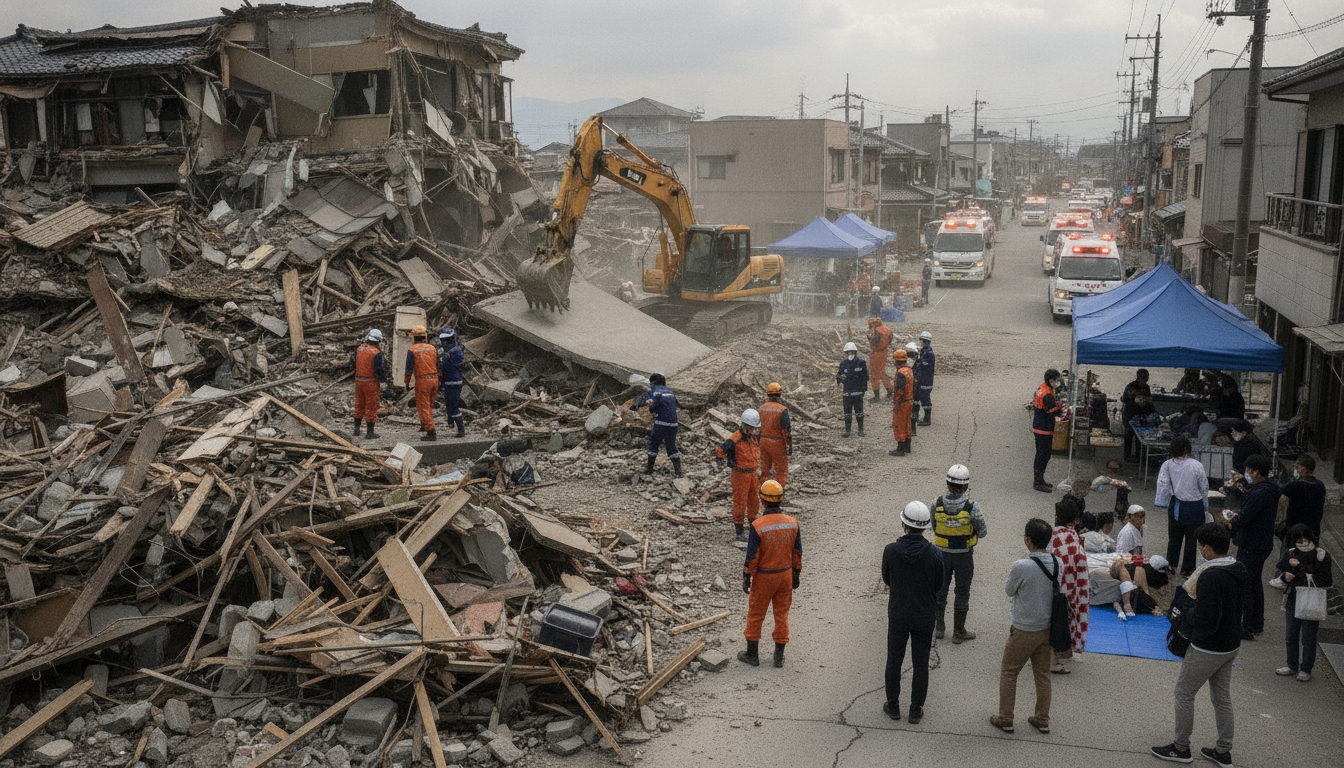
Kumamoto earthquake: at least 13 dead and rescue teams search collapsed shopping centre in Kyushu
Kumamoto earthquake kills at least 13 and injures over 100 after a magnitude 7.1 quake struck Kyushu on July 28, 2026. Rescue teams continued searches of rubble on July 29.
The Kumamoto earthquake that struck Japan’s southern island of Kyushu on July 28, 2026, has left at least 13 people dead and more than 100 injured, authorities said. The quake, measured at magnitude 7.1 by the Japan Meteorological Agency and 6.8 by the U.S. Geological Survey, hit at 16:27 local time and caused widespread structural damage across Kumamoto prefecture. Rescue crews fanned out on the morning of July 29 to search for survivors under collapsed buildings and to assess fires and infrastructure disruption.
Rescue operations at collapsed Kashima shopping centre
Rescuers focused on a large shopping complex in the Kashima district where one floor collapsed and an explosion occurred after occupants had been evacuated. Local officials reported two confirmed deaths at the mall and said crews had pulled eight people from the rubble, five of whom were injured. Police warned that access to parts of the structure remained unsafe, complicating efforts to reach people who might still be trapped.
Factory damage and missing workers in Yatsushiro
In Yatsushiro, a chimney at a Nippon Paper plant toppled and caused heavy damage to nearby structures, officials said. Two people were reported in cardiopulmonary arrest at the factory site and nine others were initially listed as missing, prompting concentrated search-and-rescue activity around the industrial complex. Local responders noted hazards from unstable debris and interrupted access routes that slowed operations.
Evacuations and sheltering for thousands
The national government reported that more than 9,000 people spent the night in evacuation centres as aftershocks and damaged housing left families displaced. Officials tallied at least seven people seriously injured and dozens more with minor wounds across the affected area. Emergency services coordinated food, water and temporary shelter while monitoring for further seismic activity.
Infrastructure, transport and utilities hit
Road closures, derailed freight trains and partial suspension of Shinkansen services compounded the emergency response, with crews inspecting lines and bridges for damage. Utilities were widely affected: roughly 36,900 homes and facilities reported power outages and about 84,000 households experienced water supply disruptions. Television footage broadcast by NHK showed damaged bridges, fires and buildings at risk of collapse in several municipalities.
Cultural and historical sites sustain damage
Historic structures also suffered, with reports of partial collapse to a wall at Kumamoto Castle and damage to a shrine in Yatsushiro, where the main torii was reported knocked down. Local hot spring operators described significant harm to traditional ryokan facilities and concerns about lost tourism revenue as clients were evacuated and water supplies cut. Preservation experts warned that repair of centuries-old stonework and wooden gates could be lengthy and delicate.
Government response and seismic context
Prime Minister Sanae Takaichi told reporters on July 29 that considerable damage had been confirmed, including building collapses and road and fire damage, and pledged central government support for relief efforts. The Japan Meteorological Agency recorded the quake as intensity level 7 on the country’s scale, reflecting severe shaking in places, and officials urged residents to remain cautious of aftershocks. Japan’s long experience with earthquakes — including devastating events in 2011 and the major Kumamoto sequence in 2016 — has left emergency systems in place, but authorities emphasised the scale of cleanup and reconstruction ahead.
Rescue teams continued methodical searches of collapsed structures on Wednesday morning, facing unstable debris and limited safe entry points. Local police said earlier reports that 20 to 30 people might be trapped in the shopping complex appeared to overstate the number, but they remained certain some employees could still be inside. Emergency medical units established triage points near damaged sites while coordinated efforts by municipal, prefectural and national teams prioritized life-saving work.
Communications and transport challenges added urgency to relief planning as officials worked to restore essential services and open routes for supplies and heavy equipment. Hospitals managed incoming patients while arranging transfers for those needing specialist care, and municipalities set up call lines for relatives seeking information. Authorities requested residents adhere to safety directives and avoid nonessential travel into hard-hit zones to allow responders room to operate.
The coming days will focus on stabilizing damaged structures, accounting for missing people and beginning debris removal and utility repairs. With aftershocks likely, officials advised vigilance and the use of emergency kits, and said recovery would require sustained coordination between national agencies, local governments and private operators. The full human and material toll of the Kumamoto earthquake will only become clear as teams complete their searches and assessments.
