
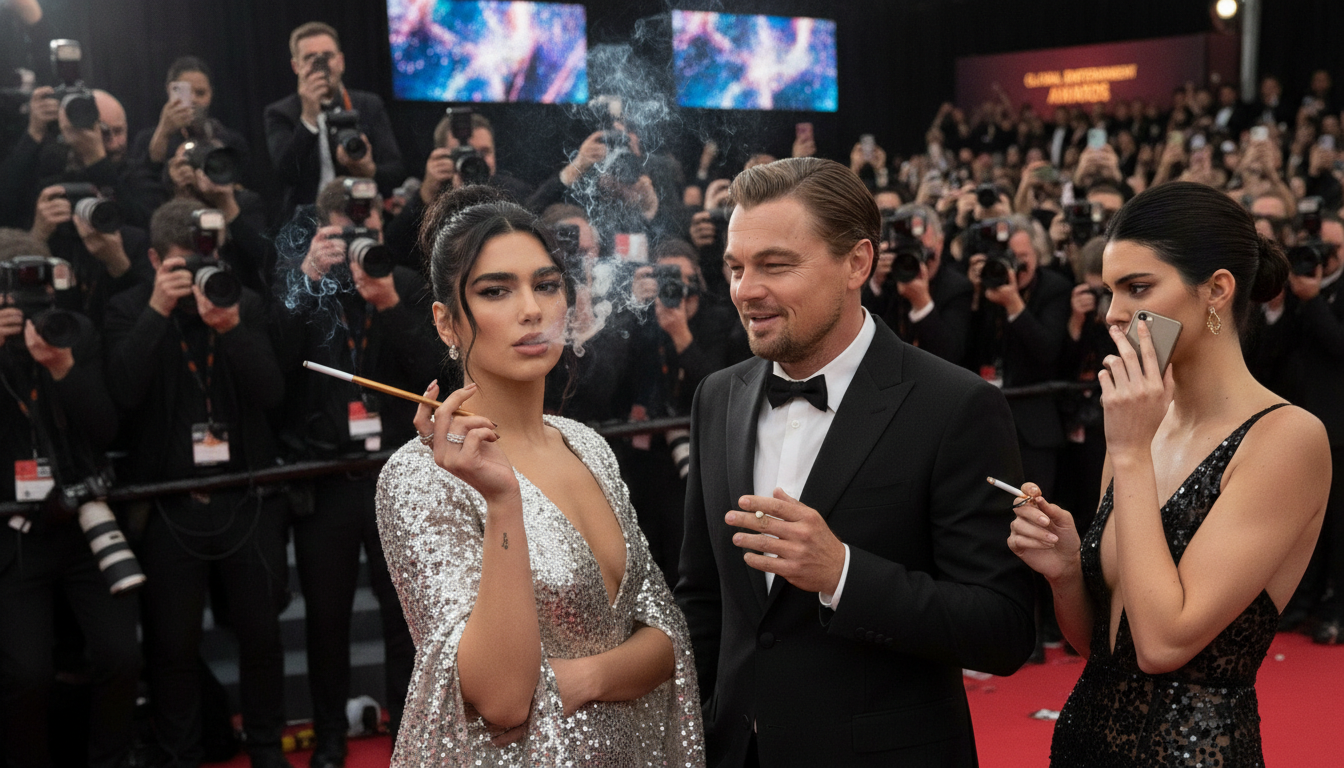
Smoking glamorization returns as celebrities and ‘cigfluencers’ make cigarettes fashionable again
Celebrity smoking and ‘cigfluencers’ are reviving cigarette glamour online and at red carpets, raising alarms from public-health groups in the US and beyond.
The recent resurgence of smoking glamorization in fashion, film and social media has public-health advocates worried that images of cigarettes are normalizing nicotine use for young people. High-profile moments—from magazine covers to red-carpet events and curated Instagram feeds—have coincided with a spike in online interest among younger adults, according to industry observers. Health groups say the trend threatens to undermine decades of progress in reducing tobacco use.
Celebrities and the ‘cigfluencer’ trend
Celebrities and high-profile guests are again appearing with cigarettes in photos that circulate widely on social platforms and in lifestyle publications. Accounts that aggregate celebrity smoking imagery—sometimes called "cigfluencers"—have multiplied, presenting cigarettes as a style accessory or an emblem of rebellion.
Public attention to such images intensified after a series of widely shared red-carpet and party photos, where cigarettes were displayed casually alongside haute couture and staged portraiture. Advocates note that even if most celebrity images are unpaid, their visual reach can eclipse formal advertising efforts.
Online searches and youth interest
Data from fashion-sector analysts reported in November 2025 showed a sharp rise in image searches for poses with cigarettes among 18- to 24-year-olds. Pinterest searches for “smoking pose” increased substantially in that cohort over a year, a sign that the imagery is being actively sought and emulated.
Experts caution that search and social activity do not immediately equate to higher smoking rates, but they serve as indicators of shifting cultural norms. Given the long lag between exposure and sustained behaviour change, officials say rising interest among young adults merits close monitoring.
Film, television and on-screen exposure
Mainstream film and television have also played a role in the renewed visibility of smoking. Recent award-season contenders and popular series have included characters who smoke, returning a once-common visual trope to screens and streaming platforms. Critics and health advocates argue that frequent on-screen tobacco use can make smoking seem normal, even glamorous.
Research cited by prevention groups links exposure in entertainment to a higher likelihood that young viewers will try cigarettes, and several advocates are urging producers and platforms to consider context and counter-messaging. Some creators have begun to embed realistic quitting storylines in scripts, a practice health groups say could reduce glamorization without erasing historical or narrative authenticity.
Public-health concerns and evidence
Anti-tobacco organizations warn that the cultural revival of smoking runs counter to decades of declining prevalence in the United States, where overall adult smoking is said to be at its lowest level in decades. Health officials emphasize that smoking remains the leading cause of preventable illness and death, and that any increase in social acceptability could reverse hard-won gains.
Leaders at organizations such as Truth Initiative and The Campaign for Tobacco-Free Kids have highlighted research showing that youth exposed to tobacco imagery are more likely to experiment with cigarettes. They also point to broader mental-health pressures and misinformation about nicotine alternatives as compounding factors that make young people more vulnerable to initiation.
Policy shifts and industry advertising
Advocates say public-policy decisions and industry marketing are part of the backdrop for the trend. Cuts to prevention and cessation funding, along with shifts in regulatory priorities, have reduced some outreach efforts that historically counterbalanced tobacco imagery. Meanwhile, tobacco industry advertising expenditures remain substantial, particularly in markets with fewer restrictions.
Non-governmental groups say they lack full visibility into whether tobacco companies are directly seeding celebrity content, but they suspect a mix of organic influencer behavior and strategic marketing contributes to the visibility of smoking. Calls for stricter platform controls and clearer advertising rules have multiplied as regulators and health officials weigh responses.
Prevention efforts and media partnerships
Public-health groups are advocating a multipronged response that pairs traditional tobacco-control measures—price increases, media campaigns and cessation supports—with collaboration across entertainment and social platforms. Suggestions include on-screen prompts directing viewers to quit-lines or support services when tobacco use appears in programming, mirroring practices used for other health and safety topics.
Some producers have demonstrated how characters’ struggles with quitting can be woven into dramatic arcs, offering realistic portrayals of dependence and recovery. Health advocates argue that partnering with studios, agencies and influential creators could blunt the glamour effect while preserving creative freedom.
The cultural return of smoking imagery presents a nuanced challenge for policymakers and media makers who must balance artistic expression with public-health responsibility. As social feeds and screens continue to amplify celebrity images, officials say the priority should be keeping cigarettes out of the realm of fashion and aspiration, especially for younger audiences.
