
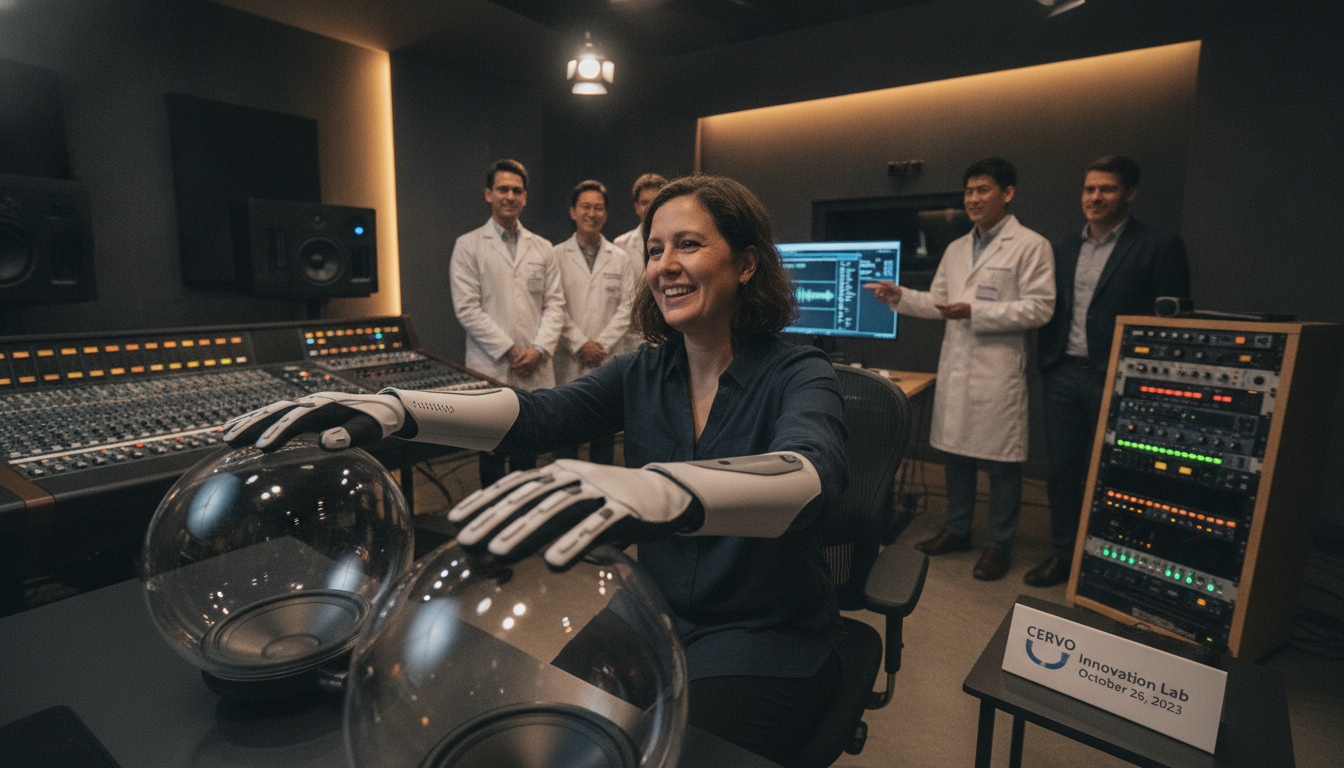
Vibrotactile gloves let people feel music: Quebec researchers build wearable that turns sound into touch
Researchers at CERVO develop vibrotactile gloves that translate music into fingertip vibrations, aiming to help people with hearing loss enjoy and interpret music.
The research team at the CERVO Research Centre in Quebec has developed vibrotactile gloves that convert musical signals into patterned vibrations on the hands, offering a new way for people with hearing loss to perceive music. The prototype uses small speakers embedded at each fingertip and a computer interface to map instruments and tones to distinct tactile channels. Early trials report that people with severe or profound hearing loss can identify emotions and musical elements through the gloves, suggesting potential to complement hearing aids in daily life.
Prototype converts music into touch
The current gloves are a wired prototype that routes audio through a computer to individual speakers on each finger, producing time‑synchronized vibrations that track the music’s rhythm and timbre. Researchers can assign different instruments or frequency bands to specific fingers, so a piano line might be felt on the little finger while a flute is mapped to the thumb. By separating musical components across channels, the device creates a multi‑layered tactile representation rather than a single undifferentiated buzz.
The design aims to preserve expressive musical features such as dynamics, tempo and instrument separation so users can sense shifts in mood and structure. The team emphasizes that tactile coding of music is not meant to replace hearing, but to offer an alternative sensory pathway that can enhance musical access for people with reduced auditory perception.
Design collaboration and team roles
The project is led by Dr. Andréanne Sharp, an audiologist and neuroscientist who drew on her clinical work and personal experience as a musician to pursue tactile solutions for music perception. Graduate student Loonan Chauvette has been the primary developer of the glove system, overseeing engineering and software mapping. The group partnered with Professor Jérémie Voix at the École de technologie supérieure to translate acoustic signals into tactile output and refine the hardware.
The development has been iterative and interdisciplinary, with about a decade of antecedent work informing the current prototype. A small engineering team is now working on a portable version with an integrated battery, aiming to shrink the system from lab rig to everyday wearable.
Clinical testing and emotion recognition
Pilot tests with people who are deaf or have profound hearing loss indicate that tactile information alone can convey emotional content in music. In controlled sessions, participants were asked to identify emotional cues conveyed by musical excerpts delivered through the gloves, and many could reliably distinguish feelings such as joy and sadness. Researchers describe these results as evidence that the tactile sense can carry meaningful affective and structural information from music.
These findings do not imply universal performance—individual responses vary with factors such as prior musical experience, tactile sensitivity and training. The team is continuing systematic evaluations to quantify accuracy and to develop training protocols that could enhance users’ ability to interpret complex musical patterns.
Creating a multisensory, concert‑like experience
Researchers say the gloves create an immersive sensation that some users liken to the physical feel of live music, where low frequencies produce palpable vibrations through the body. The project builds on existing community practices in which people with hearing loss attend concerts and feel bass vibrations through the floor or from tactile transducers. By delivering targeted vibrations to the hands, the gloves aim to provide finer spatial and temporal resolution than whole‑body methods.
The team stresses the multisensory nature of music and argues that tapping the underused sense of touch could broaden participation in musical activities. In lab demonstrations, participants reported that the gloves enhanced their sense of presence and engagement with musical material.
Toward portability and clinical integration
Although the current system remains a prototype, the researchers are actively developing a battery‑powered, portable version intended for everyday use. The goal is a lightweight, wearable device that could be worn at concerts, social gatherings or during meals to augment ambient auditory cues. Dr. Sharp has expressed the ambition that clinicians might one day recommend the gloves alongside hearing aids, providing a complementary sensory modality.
Scaling from prototype to consumer product will require further engineering to reduce wiring and improve robustness, as well as clinical trials to establish efficacy, safety and usability across diverse user groups. The team recognizes regulatory, manufacturing and training hurdles but says progress toward a practical device is ongoing.
Public health context and potential impact in Quebec
Hearing‑loss prevalence underscores the potential reach of tactile assistive technologies; local figures indicate about one in ten people in the province live with auditory difficulties. Advocacy groups such as Audition Québec have called the CERVO project “innovative and highly relevant,” highlighting its potential to improve access to cultural and social activities for people with hearing loss. A wearable tactile music interface could also support social inclusion by enabling shared musical experiences that do not rely solely on hearing.
Beyond musical enjoyment, the researchers argue the gloves could have broader rehabilitative uses, such as augmenting speech cues in noisy environments or serving as a training tool in audiological rehabilitation programs. Further research will determine which applications deliver the most benefit.
The CERVO team plans expanded trials and iterative refinements over the coming years as they pursue a version of the vibrotactile gloves that is portable, affordable and clinically validated for use alongside standard hearing technologies.
