
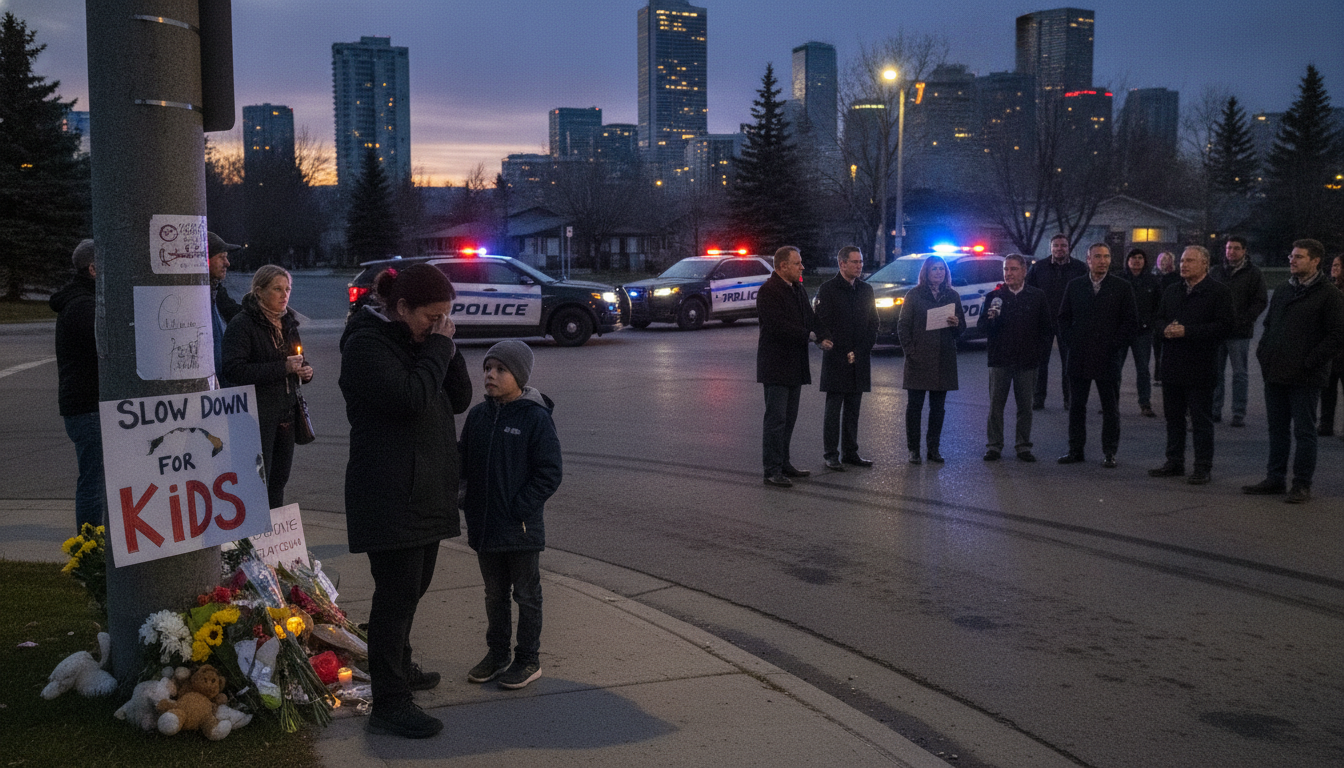
Calgary pedestrian safety spotlighted after 12-year-old survives hit-and-run
After a hit-and-run leaves a 12-year-old with a shattered leg, questions rise about Calgary pedestrian safety, enforcement limits and gaps in collision data.
A neighbourhood in northeast Calgary is grappling with trauma and unanswered questions after a 12-year-old boy was struck by a fleeing vehicle while walking to the bus stop on March 10. The child survived but suffered a leg broken in three places, and the driver remains at large, a case that has intensified debate about Calgary pedestrian safety. City officials, traffic experts and affected families say the crash is part of a broader pattern of rising pedestrian harm across Calgary streets.
Child hit in Taradale; driver fled scene
The boy, identified as Bentley St. John, was halfway through a crosswalk when a white four-door sedan hit him and continued on, according to family accounts. Witnesses say Bentley crawled to the curb while several vehicles passed, until a passerby finally stopped to help and emergency services arrived. His mother, Jennifer, described rushing outside in her pajamas after receiving a call and finding her son injured on the sidewalk as sirens approached.
Increasing pedestrian fatalities and injury trends
Calgary police told reporters in May that the city was on course for a record number of pedestrian deaths this year, with officials citing a rising tally of fatal and serious collisions. Last year’s figures already showed the highest number of pedestrian-vehicle collisions in more than a decade, including 15 fatalities and a sharp rise in major-injury crashes. Municipal staff and councillors warn that those numbers understate the frequency of dangerous encounters because some incidents and near-misses go unreported.
Family facing long recovery and financial strain
Bentley’s recovery has involved extensive medical care, physical rehabilitation and family counselling, highlighting the long aftermath of such crashes. For the St. John family, which relies on a single income, the logistical demands of appointments and the loss of routine added financial and emotional pressure. School, sleep and household routines were disrupted, and Bentley’s sister Kenzie, who was present the morning of the crash, has reported ongoing anxiety when crossing streets.
Experts point to street design and distraction as causes
Francisco Alaniz Uribe, an associate professor in the University of Calgary’s School of Architecture, Planning and Landscape, said street design that prioritizes vehicle throughput contributes to risk for pedestrians. He cited a culture of designing for speed and capacity rather than protecting people on foot, and he added that cellphone distraction compounds the danger for both drivers and pedestrians. Uribe argued that properly engineered intersections and immediate fixes at trouble spots would reduce predictable collisions.
Councillors raise concerns over reduced enforcement and data gaps
Local councillors and staff say provincial changes to automated enforcement have limited tools available to deter speeding and risky driving outside narrow zones. In December 2024, provincial rules curtailed the use of photo radar on many highways and restricted intersection cameras to red-light violations only, curbing speed enforcement, council members say. City offices also reported discrepancies between provincial and municipal collision reporting, with some data sets capturing only incidents that interrupted traffic and required a police response, leaving near-misses and unreported hit-and-runs absent from safety databases.
Calls for targeted intersection upgrades and renewed measures
Residents and officials are urging targeted changes at the Taradale crossing where Bentley was struck, including a four-way light at the intersection and other calming measures to protect children on their way to school. The city has introduced initiatives such as a traffic safety team, temporary lane reductions, leading pedestrian intervals and an AI platform for risk evaluation, but critics say implementation is uneven and some high-risk locations remain unaddressed. Councillors and safety advocates are pressing for restored enforcement options and more comprehensive data collection so that interventions can be prioritized where collisions repeat.
Recovery for victims extends well beyond physical healing, psychologists warn, with many families facing chronic anxiety, pain and reduced independence in the months or years after a collision. Joyce Achtnig, a registered psychologist, noted that survivors and family members often need long-term support for post-traumatic stress and changes to daily functioning. For the St. Johns, practical changes and therapeutic care have been essential as they try to regain a sense of safety and normalcy.
Bentley’s family has proposed naming the revised intersection “Bentley Cares” and is calling for concrete, expedited action to protect other children and pedestrians. As Calgary debates enforcement, engineering and data priorities, the case underscores how a single hit-and-run can reveal broader weaknesses in urban design and public safety systems. The family and local officials say the combination of upgraded crossings, better data and targeted enforcement are needed to prevent another child from being hurt on a walk to school.
