
Gordie Howe International Bridge inaugurated in Windsor as U.S. officials stay away after tariff threats
Canada opens Gordie Howe International Bridge in Windsor as U.S. officials skip the ceremony after tariff threats; leaders tout jobs, trade and regional growth.
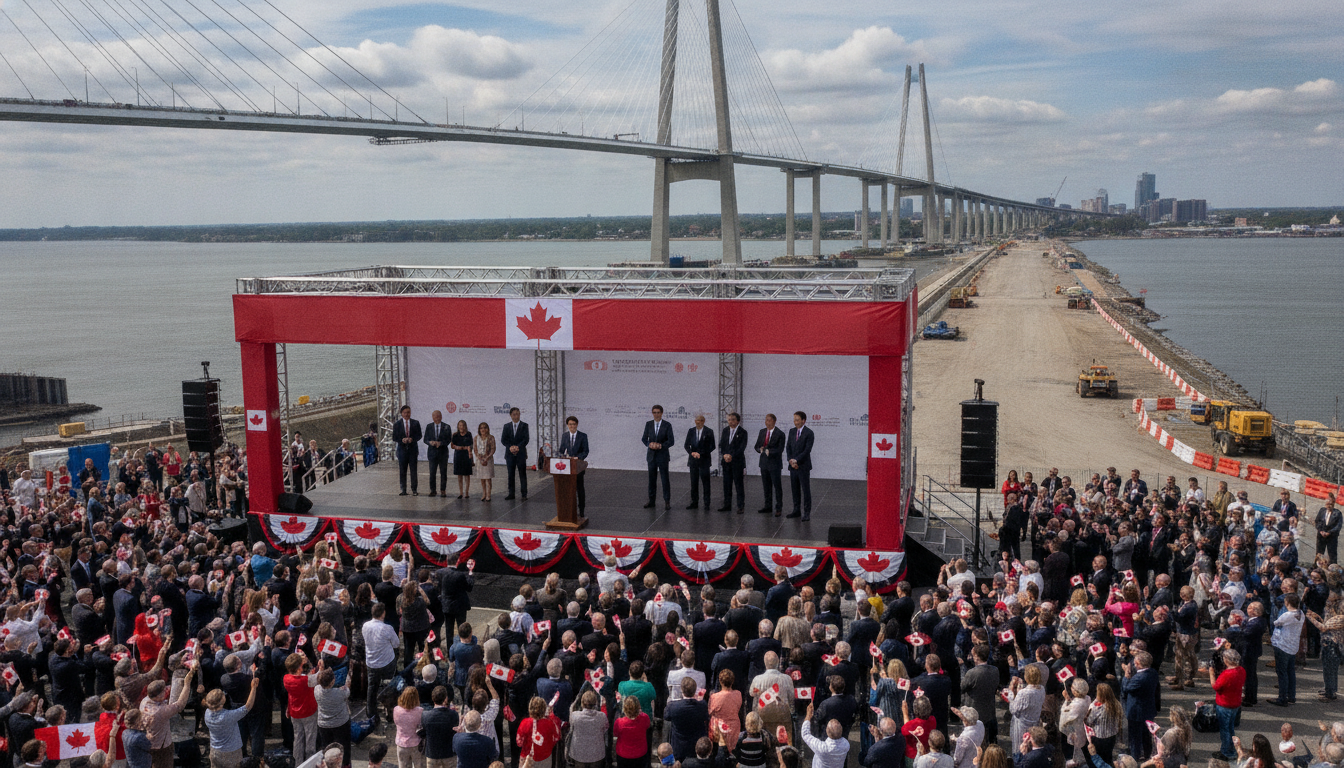
The Gordie Howe International Bridge was officially opened in Windsor on July 24, 2026, in a ceremony attended by Canadian officials but marked by the absence of any U.S. dignitaries. The $6.4-billion structure, funded by Canada, was unveiled amid heightened tensions after U.S. tariff threats, and Canadian leaders used the event to stress the bridge’s importance for trade and jobs. Local and provincial figures celebrated a decades-long effort to deliver new border capacity while framing the inauguration as a statement of Canadian resolve.
Canadian-only inauguration in Windsor
Ottawa chose to proceed with a Canadian-only ceremony after what officials described as recent threats of new U.S. tariffs. Organizers rescinded invitations to American representatives and asked guests to wear red and white to emphasize the national character of the event. Federal, provincial and municipal figures — including Infrastructure Minister Gregor Robertson, Ontario Premier Doug Ford and Windsor Mayor Drew Dilkens — attended the proceedings on the Windsor side.
Speakers framed the decision as a defensive response to changing diplomatic circumstances rather than a break in day-to-day cooperation. The absence of U.S. officials underscored diplomatic friction but did not prevent ceremonial recognitions of the cross-border partnership that produced the bridge. Attendees hailed the project as an achievement for workers, suppliers and regional economies.
U.S. absence tied to tariff dispute
The decision followed public comments from U.S. President Donald Trump, who warned of tariff measures and posted about the inauguration on his social platform. Trump said the original deal “no longer holds” and claimed his administration had altered terms to give the United States a larger share of financial benefits. Those remarks came as Canadian authorities signaled they would not host a joint ceremony under the new public circumstances.
Organizers and local onlookers in Detroit responded with mixed messages: some Americans expressed support for their Canadian neighbours while federal-level participation was absent. The diplomatic rift played out publicly during an event intended to spotlight cross-border commerce, highlighting how trade disputes can shape even symbolic moments of cooperation.
Financial terms and toll revenue arrangement
Under the financial agreement announced for the bridge, Canada will receive half of net toll revenues from the crossing during the first 15 years of operation. The remainder of the net revenues is earmarked for a U.S.-controlled economic development fund, part of the arrangement that governs long-term fiscal flows tied to the new crossing. Canadian officials emphasized that the funding and ownership structure still represent a major national investment in critical infrastructure.
Windsor-Detroit bridge authorities stressed the complexity of the international deal and pointed to years of negotiation and legal work that preceded construction. Chuck Andary, interim CEO and chief legal officer of the Windsor-Detroit Bridge Authority, highlighted the cooperative effort behind the project and described the inauguration as a historic milestone for the region and for North American infrastructure.
Economic case for the Windsor–Detroit corridor
Federal ministers and local leaders presented the Gordie Howe International Bridge as a strategic economic engine for the Windsor–Detroit corridor, which already handles a large share of bilateral trade. Ottawa noted that Canada and the United States exchange roughly $1.3 trillion in goods and services annually, and that more than $300 billion of that trade moves through the Windsor-Detroit corridor. The new crossing is billed as a way to speed inspections and reduce congestion.
Infrastructure officials said the Canadian inspection complex includes 24 inspection lanes and 16 toll lanes, enhancements intended to cut delays for freight and passenger vehicles. Planners estimate the design improvements could save carriers roughly 850,000 hours per year and yield multibillion-dollar savings for the economy, figures officials used to justify the investment and long-term operating plan.
Local leaders stress long campaign and regional benefit
Windsor officials framed the opening as the culmination of roughly 25 years of work, from early proposals through construction amid global supply-chain disruptions and political headwinds. Mayor Drew Dilkens called the bridge a transformative project that will help solidify the region’s role as a manufacturing and automotive hub and open space for future investment. He said the bridge will spur jobs, tourism and renewed economic activity on both sides of the river.
Doug Ford described the structure as a tribute to Gordie Howe’s cross-border legacy and said it symbolized the long-standing ties between Canadians and Americans in the region. Provincial leaders emphasized the expected local economic boost — officials cited about 2,500 jobs created during construction and projected hundreds of millions of dollars in long-term regional economic activity.
The inauguration also featured public displays of sympathy from some Detroit residents, who turned out with signs to express support for Canadian neighbours amid the diplomatic dispute. Those gestures underscored the everyday interdependence of border communities even as national governments sparred over trade policy.
The Gordie Howe International Bridge now joins the Ambassador Bridge as a major international crossing between Windsor and Detroit and will serve as a critical artery for North American commerce. Officials said operational testing and phased openings will follow, with tolling and customs operations ramping up in the coming months to integrate the new crossing into existing logistics networks.
