
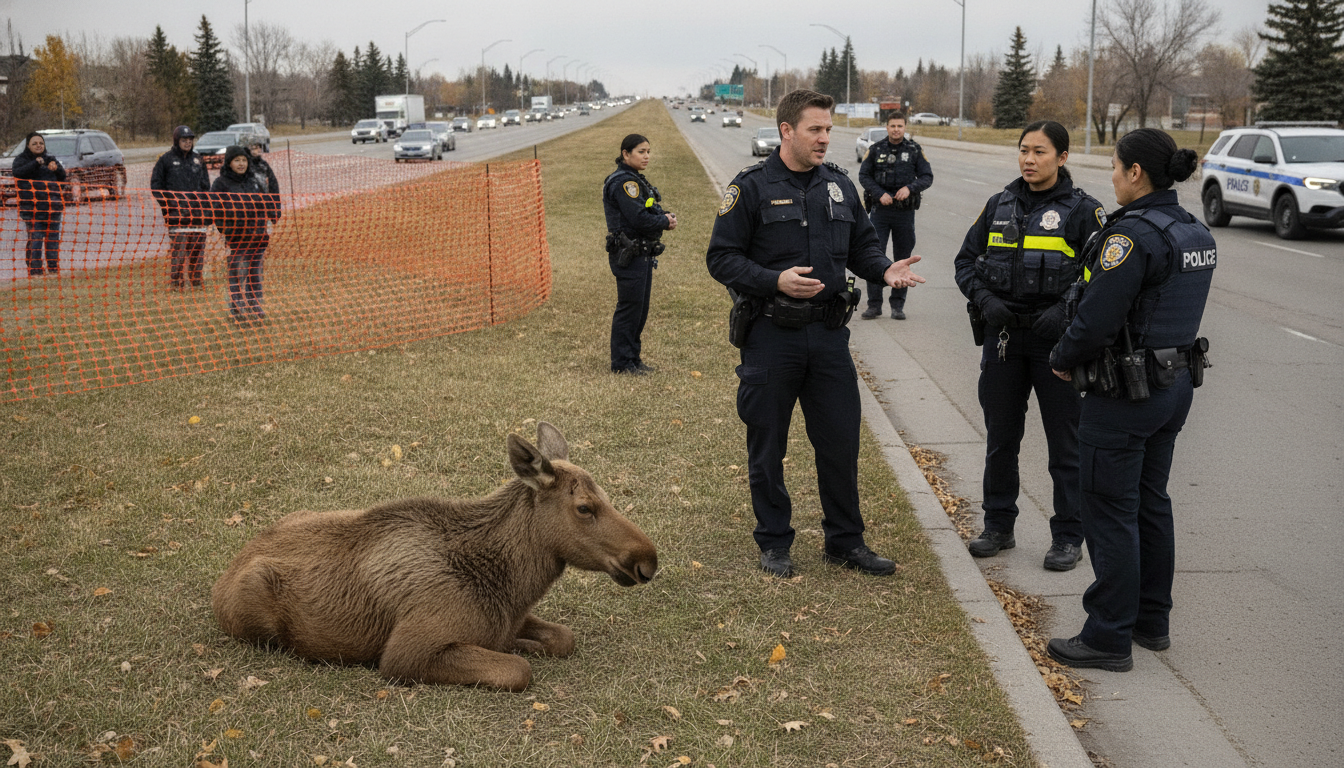
Bowness orphaned moose calf left near busy 16th Avenue after mother struck, officials to monitor
Bowness orphaned moose calf remains near 16th Avenue after the mother was killed July 6; Fish and Wildlife is monitoring amid resident concerns about traffic.
A young moose calf believed to have been orphaned after its mother was struck and killed by a vehicle on July 6 is still inhabiting green space near 16th Avenue in the Bowness area, provincial officers and residents say. The Bowness orphaned moose calf has been observed close to roadways, prompting local worry about its safety and the potential hazard to drivers. Fish and Wildlife Enforcement Services (FWES) officials say they are monitoring the animal and will intervene only if its condition or behaviour warrants action. Neighbours who knew the moose family have been watching the calf and urging caution as traffic on nearby thoroughfares continues.
Mother moose struck on 16th Avenue July 6
A collision on 16th Avenue near Bowfort Road N.W. resulted in the death of an adult moose on July 6, residents reported, leaving at least one very young calf behind. Witnesses in the Bowness community said the adult animal had been part of a small group that regularly moved through the area, and neighbours believe two calves may have been present around the time of the crash. The incident has reawakened conversations about wildlife movement through urban corridors and the recurring danger posed by vehicles. Police and FWES attended the scene at the time and recovered the adult moose; officers later received reports of a surviving calf in nearby green space.
Calf located near Greenwood and WinSport green space
The orphaned calf has been sighted across 16th Avenue from WinSport, in a stretch of green space adjacent to the Greenwood neighbourhood and Paskapoo Slopes. Photographs taken by residents earlier in July show a small moose walking toward the roadway, reinforcing fears that the animal does not yet recognize traffic as a threat. Neighbours have described the calf as very young — likely only weeks to a few months old — and said earlier sightings suggested the family had been familiar with the local area. Residents have been alerting FWES when the calf is seen close to busy roads to ensure officers can track its movements.
FWES to monitor behaviour, intervention only if necessary
A ministry spokesman confirmed FWES officers are aware of a lone calf in the Bowness area and are conducting regular monitoring rather than immediate capture or relocation. Officials told residents the animal’s behaviour has not yet met the threshold for physically intervening, and that officers will reassess should its condition deteriorate or it repeatedly approach traffic. FWES noted that moving wild ungulates can carry risks and is not undertaken lightly, particularly when young animals may still be paired with a surviving adult or able to forage. The ministry reiterated it remains prepared to step in if monitoring indicates the calf’s welfare or public safety is at risk.
Former wildlife officer warns of traffic danger and capture options
John Clarke, a former provincial fish and wildlife officer who has experience handling moose calves, questioned the decision to allow the calf to remain near heavy traffic. Clarke argued the immediate hazard to motorists and the likelihood of another collision warrant more proactive measures, including capture and transport to a rehabilitation facility when feasible. He cautioned, however, that tranquilizing and transporting very young moose is complex and carries medical risks, so any capture must be executed by trained crews with appropriate equipment. Clarke said officers in the field have a clearer picture of the situation and must balance public safety, animal welfare, and the risks of intervention.
Rehabilitation experts outline survival and stress risks
Wildlife rehabilitators say capturing an infant moose carries significant stress and mortality risks, and that not all calves survive transport or rehabilitation. Carol Kelly, director of the Medicine River Wildlife Centre near Red Deer, said young moose are prone to severe stress during handling, and some animals die from shock or injury despite expert care. She also noted that a calf at this stage may be transitioning from milk to browsing on shrubs, which improves its chances of surviving without its mother if it avoids roadways. Kelly added that the centre recently cared for multiple moose but lost some to stress-related complications, underscoring the difficult judgement calls officials face.
Residents mobilize to watch and report sightings
Neighbourhood volunteers and residents have organized informal watches, calling in sightings to FWES and sharing photos to help officers keep tabs on the calf’s location. Steph Bee, a Bowness resident, said neighbours are especially concerned because the animal appears young and inexperienced at avoiding vehicles. Some locals pointed to a previous collision in the area, saying they fear a pattern of wildlife-vehicle incidents along stretches of 16th Avenue. Residents are urging drivers to slow down, remain vigilant for wildlife signs, and report any calf sightings to authorities so professional responders can maintain situational awareness.
Officials emphasise that interacting with or attempting to move wild moose can be dangerous for people and animals alike, and they ask the public to maintain distance and report concerns through official channels. FWES has advised motorists to exercise caution in neighbourhoods and green corridors where moose are present, particularly during dawn and dusk when animals are most active. The ministry continues to monitor the Bowness orphaned moose calf and will assess intervention if necessary to protect public safety and animal welfare.
Local groups and officials say they will continue to track the situation in the coming days, balancing the risks of capture against the calf’s ability to survive on natural forage away from roads. Residents have pledged to keep reporting sightings and to work with wildlife officers to reduce collision risk as summer vehicle volumes and animal movement patterns converge.
