
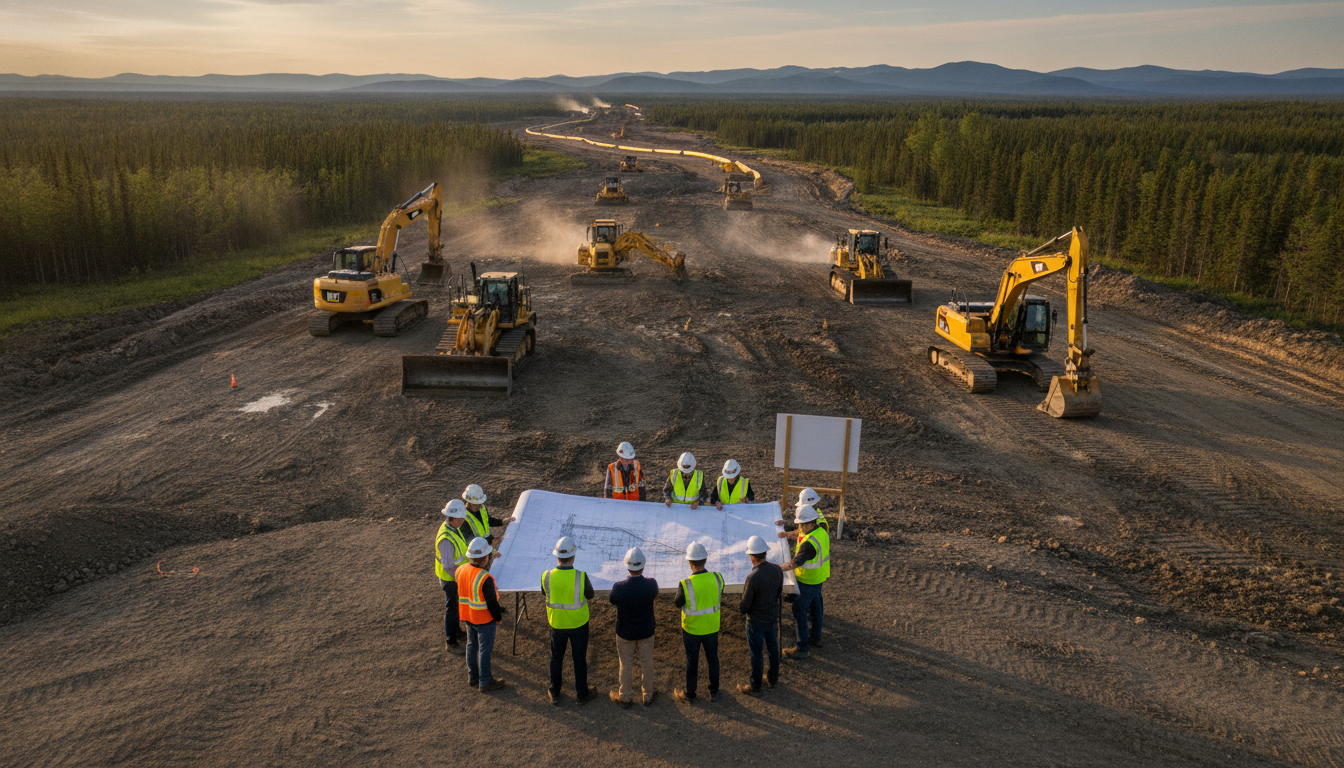
Atco’s Yellowhead pipeline gets AUC approval; $2.9B project to run Peers–Fort Saskatchewan
Alberta’s new Yellowhead pipeline received regulatory approval on July 20, 2026, and Atco says construction will begin immediately to meet a November 2027 in‑service target.
Project approved and construction timeline
Atco Energy Systems won approval from the Alberta Utilities Commission on July 20, 2026, clearing the way for what the company calls its largest utility project to date.
Company officials said crews would break ground immediately, ramping workforce numbers to about 2,000 by October as site mobilization and right‑of‑way works accelerate.
The $2.9‑billion project carries a firm target to enter service in November 2027, according to Atco, which has framed the timeline as key to meeting near‑term provincial energy needs.
Atco’s chief operating officer described the Yellowhead pipeline as both the largest financial undertaking and the broadest infrastructure scope in the utility group’s history.
Route and technical specifications
The Yellowhead pipeline will span approximately 235 kilometres between the Peers area northeast of Edson and the Fort Saskatchewan area northeast of Edmonton.
Atco plans one compressor station along the route and says the alignment will follow existing infrastructure corridors where possible to limit new land disturbance.
Company documents indicate the line will integrate with Alberta’s existing gas transmission and distribution network, creating a backbone intended to increase system efficiency and capacity across the province.
Officials said the design choices are driven by operational reliability and by efforts to reduce incremental environmental and community impacts.
Capacity and provincial energy impact
Once complete, the pipeline is expected to deliver more than 1.1 billion cubic feet of natural gas per day into Alberta’s system.
Atco has noted that volume is roughly equivalent to the energy delivered by the province’s electricity system on a peak day, positioning the Yellowhead pipeline as a significant addition to Alberta’s supply architecture.
Company modeling cited by Atco indicates the new capacity will improve flow paths and increase energy availability within Alberta by more than 10 per cent.
That enhanced throughput is being promoted as a means to bolster grid reliability and to provide downstream industrial users with steadier access to supply.
Economic effects and consumer implications
Atco has projected broader economic benefits from the pipeline, estimating roughly a $3.9‑billion uplift to provincial GDP tied to the construction and to follow‑on industrial activity that access to additional gas would enable.
The company also emphasized short‑term employment gains, with the planned workforce expansion during construction and associated service, manufacturing and logistics jobs in supply chains.
When asked about consumer bills, Atco argued the Yellowhead pipeline is underpinned by industrial demand and therefore is likely to stabilize or improve overall energy flow without increasing residential rates.
Company leaders said a higher industrial load can produce system efficiencies that ultimately benefit household customers, though independent analyses and regulator reviews will be key to verifying those claims.
Indigenous engagement and environmental mitigation measures
Atco said route selection prioritizes existing corridors — paralleling roads, transmission lines and other pipelines — and that the company intends to work with First Nations and other landowners to mitigate impacts.
The utility described ongoing consultations and commitments to reduce the project’s footprint, although details on specific mitigation plans and Indigenous agreements were not released in full at the time of approval.
The project has prompted public debate amid calls from some groups for reduced reliance on fossil fuels and increased investment in renewables.
Atco’s leadership framed natural gas as a component of a broader energy strategy, arguing that it plays a role in reliability and affordability even as the province considers long‑term decarbonization pathways.
Regulatory oversight and next steps
With AUC approval secured, Atco must still finalize detailed engineering, procure major equipment and obtain additional municipal and environmental permits where required.
Regulators will continue to monitor construction activities, compliance with environmental conditions and the company’s consultation processes as the project progresses.
Atco’s timeline calls for major construction through late 2026 and 2027 to meet the November 2027 in‑service date, with commissioning activities to follow once the pipeline is mechanically complete.
Observers say the schedule is ambitious but feasible if supply chains, permitting and community agreements remain on track.
The Yellowhead pipeline will be a major new artery in Alberta’s gas network, delivering more than 1.1 billion cubic feet per day and promising significant construction employment and long‑term industrial capacity gains.
As work begins, regulators, Indigenous partners and stakeholders will be watching how Atco balances rapid build‑out with environmental safeguards and community commitments over the next 16 months.
