
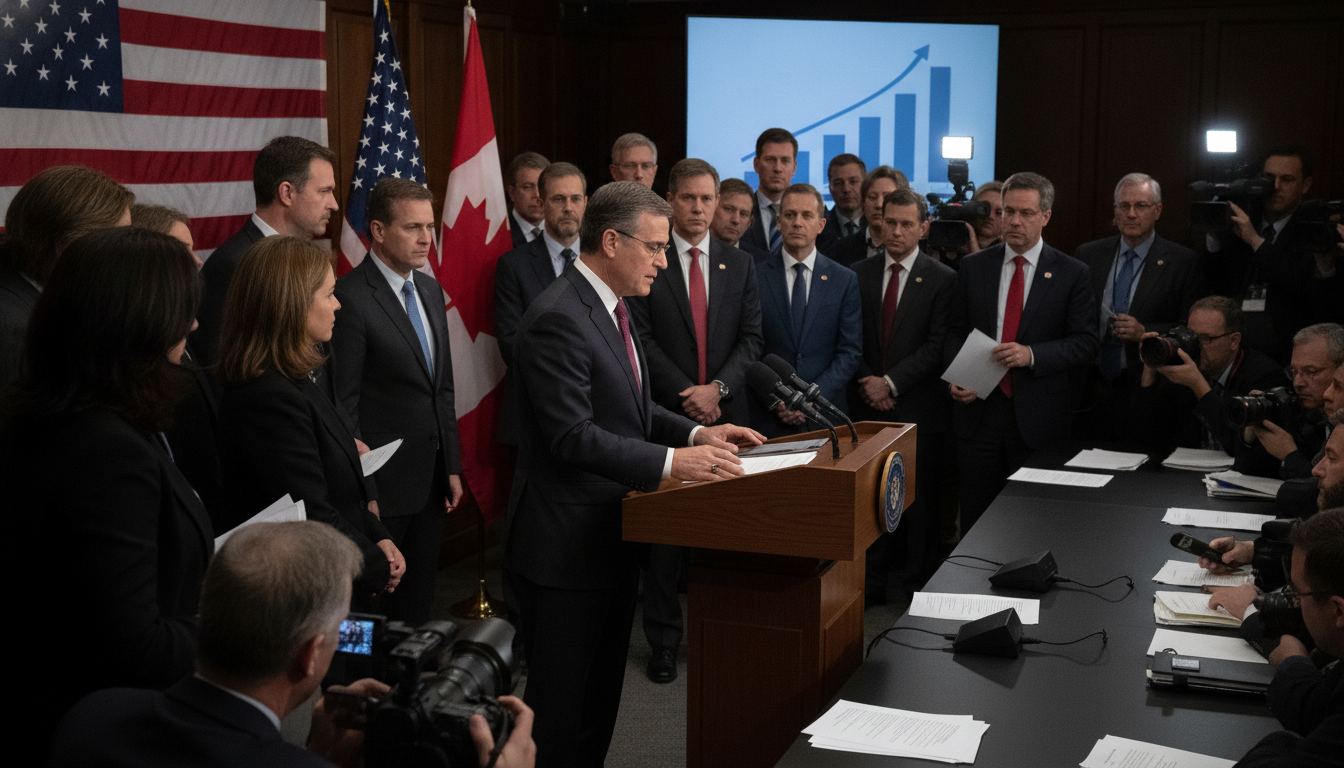
U.S. Imposes 50% Tariffs on Canadian Exports in Major Trade Escalation
Washington announces 50% tariffs on a broad range of Canadian exports, escalating tensions and threatening key industries as Ottawa weighs responses.
The Trump administration on Monday unveiled proclamations imposing additional 50% duties on a wide range of Canadian exports, a move the White House framed as retaliation for measures Ottawa has taken against U.S. goods. The new U.S. tariffs on Canadian exports are set to take effect in 30 days and target items that had previously benefited from exemptions under the Canada–United States–Mexico Agreement (ACEUM). Washington said the measures respond to what it described as discriminatory restrictions by Canada, singling out actions in alcohol sales, automotive policy and dairy protections.
White House cites Tariff Act authority
The proclamations issued by the White House invoke Section 338 of the Tariff Act of 1930, giving the president authority to impose duties on imports from countries that place unjustified restrictions on U.S. products. Officials described three separate proclamations that add levies on specified product categories, each tied to one of the U.S. grievances. The administration said the action is a targeted response rather than a blanket ban, while framing Canada alongside only one other nation that it says has taken retaliatory steps against U.S. measures.
Products targeted, timing and exclusions
The tariff list ranges across consumer and industrial goods and is reported to include wine, hockey sticks, and cement, among others. The duties are scheduled to be implemented 30 days after the announcement, creating an immediate planning horizon for exporters and supply chains. Officials said the measures explicitly exclude energy, potash, critical minerals and fish, leaving major resource sectors outside this round of levies.
U.S. complaints focus on alcohol, autos and dairy
During a technical briefing, U.S. officials listed three principal complaints: the removal of American alcohol from some Canadian retail shelves, Canadian tariffs and quotas on U.S. vehicles, and protective measures for the Canadian dairy sector. Washington argued those policies impose burdens on U.S. producers that Canadian trade partners do not face, and characterized the measures as discriminatory treatment of U.S. commerce. The administration framed the tariffs as corrective action to hold Canada accountable for those practices.
Provincial leaders vow retaliation and defence
Political leaders in Ontario and Quebec reacted swiftly and critically to the announcement, warning of countermeasures. Ontario’s premier pledged to fight to protect the province’s industries and suggested Canada should respond with equivalent measures if the duties are applied. Quebec’s premier defended the province’s supply management system for dairy and called the U.S. move unjustified and troubling, promising to defend the sector vigorously. The federal government has not issued a public response at the time of the announcement.
Tensions amid stalled trade talks and ACEUM friction
The tariffs come as commercial negotiations between Ottawa and Washington have been stalled for months and as the administration has signalled concerns about perceived gaps in the ACEUM. U.S. officials recently declined to renew certain aspects of the agreement, citing issues they want addressed. The White House has also deployed other tariff tools in recent months, including a temporary 10% surcharge on a range of imports and sector-specific duties applied in the name of national security, raising worries among trade officials about a pattern of escalating measures.
Economic exposure and industry implications
Analysts and industry groups warn the measures could escalate costs for Canadian exporters and disrupt deeply integrated supply chains that link Canadian and U.S. manufacturers. Targeted sectors such as beverage producers, building materials suppliers and sporting goods manufacturers may face immediate price and demand shocks if duties are applied. The automotive sector remains particularly sensitive given cross-border manufacturing links and the long lead times for reconfiguring supply arrangements. Provincial economies that rely on exports to the United States could see sharper effects if Ottawa opts for reciprocal tariffs.
The coming weeks will test whether diplomatic channels can defuse the dispute or whether both governments will move toward tit-for-tat escalation that spreads beyond the products named in the proclamations. Markets, industry groups and provincial governments are watching closely as stakeholders weigh retaliation options and prepare contingency plans ahead of the tariffs’ scheduled start date.
