
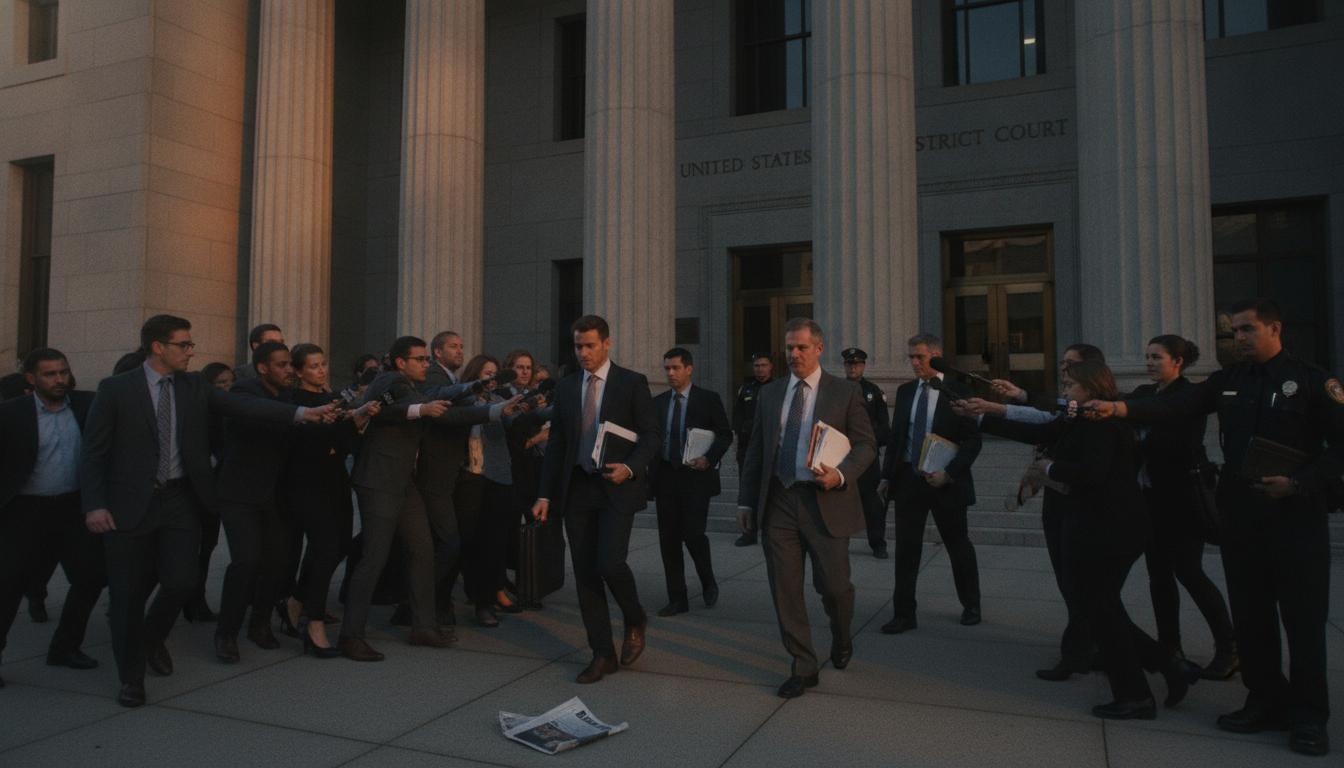
Paramount-Warner merger paused as federal judge grants temporary suspension
Federal judge orders a 14-day pause on Paramount-Warner merger, giving states more time to press antitrust claims in court.
A federal judge on Monday ordered Paramount and Warner Bros. Discovery to suspend their proposed $81 billion merger, temporarily halting the Paramount-Warner merger and giving 12 states additional time to pursue antitrust claims. The injunction, granted by U.S. District Judge Araceli Martínez-Olguín, pauses the transaction for at least 14 days and can be extended to 28 days as the states seek a preliminary injunction. The move intensifies scrutiny of consolidation in Hollywood and raises fresh questions about how the deal would reshape the U.S. media landscape.
Federal judge orders temporary suspension
The court’s order prevents the two companies from closing the deal while the states’ case advances, effectively freezing any final transfer of assets for the next two to four weeks. Judge Martínez-Olguín said the temporary pause was necessary to allow time for the parties and the states to present arguments on whether the merger would substantially lessen competition. The pause follows a temporary restraining request filed after the companies signaled they intended to proceed despite the lawsuit.
States argue merger would hurt competition
Twelve states, led by California’s attorney general, brought the lawsuit last week arguing the Paramount-Warner merger would “annihilate competition” in key entertainment markets. The states contend the combination of two of Hollywood’s remaining legacy studios would concentrate production, distribution and news operations under a single corporate umbrella, reducing choices for viewers and raising risks for prices and quality. California Attorney General Rob Bonta characterized the ruling as a crucial early victory for consumers and local governments seeking to block the transaction.
Scope of assets at stake in the merger
The proposed deal would bring together a broad portfolio of content and distribution channels, including HBO Max, major film franchises such as Harry Potter, and national news outlets now affiliated with both companies. Combining these assets would fold a large catalog of streaming content, cable channels and local stations under a single corporate owner, the states argue, amplifying the potential for vertical and horizontal market power. Industry analysts have warned that the aggregation of premium content and network reach could shift bargaining leverage with distributors and streaming rivals.
Companies respond and frame legal strategy
Paramount, which was acquired by Skydance last year, has said it will “vigorously” defend the acquisition and maintains that the merger would enhance competition against other large entertainment conglomerates. Warner Bros. Discovery has similarly argued the combination would produce efficiencies and strengthen its ability to compete in a streaming-dominated market. Both companies have pointed to regulatory clearances they previously obtained as evidence the deal has passed scrutiny, while also signaling readiness to litigate the states’ challenge.
Regulatory backdrop and prior approvals
The firms have already secured certain regulatory approvals, including a sign-off from a federal review conducted under the prior administration, which the companies cite in defending the transaction. But the states’ lawsuit focuses on antitrust law and the courts’ ability to evaluate competitive effects beyond administrative sign-offs. Legal experts note that judicial review can proceed independently of regulatory approvals, and that consumer and state interests may weigh differently than federal agencies’ assessments.
Court timetable and potential outcomes
The court set an initial hearing on the states’ request for a preliminary injunction for Aug. 3, although that date could be postponed depending on scheduling and filings by the parties. If the court ultimately grants a preliminary injunction, the companies would face a significant legal barrier to closing the merger and might be compelled to alter terms or abandon the deal. Alternatively, if the injunction is denied, the companies could proceed, potentially subject to later remedies or divestitures ordered after a full trial.
The pause in the Paramount-Warner merger now turns attention to a broader debate over consolidation in media and the power of state attorneys general to challenge major transactions. Consumers, competitors and policymakers will be watching the legal process closely as the case moves toward the August hearing and possible extended litigation.
