
Regional MOU Aims to Boost Aviation, Aerospace and Defence Investment in Alberta
Leduc County, Sturgeon County, Cold Lake and Edmonton Airports sign MOU to boost aviation, aerospace and defence investment, training and jobs in Alberta.
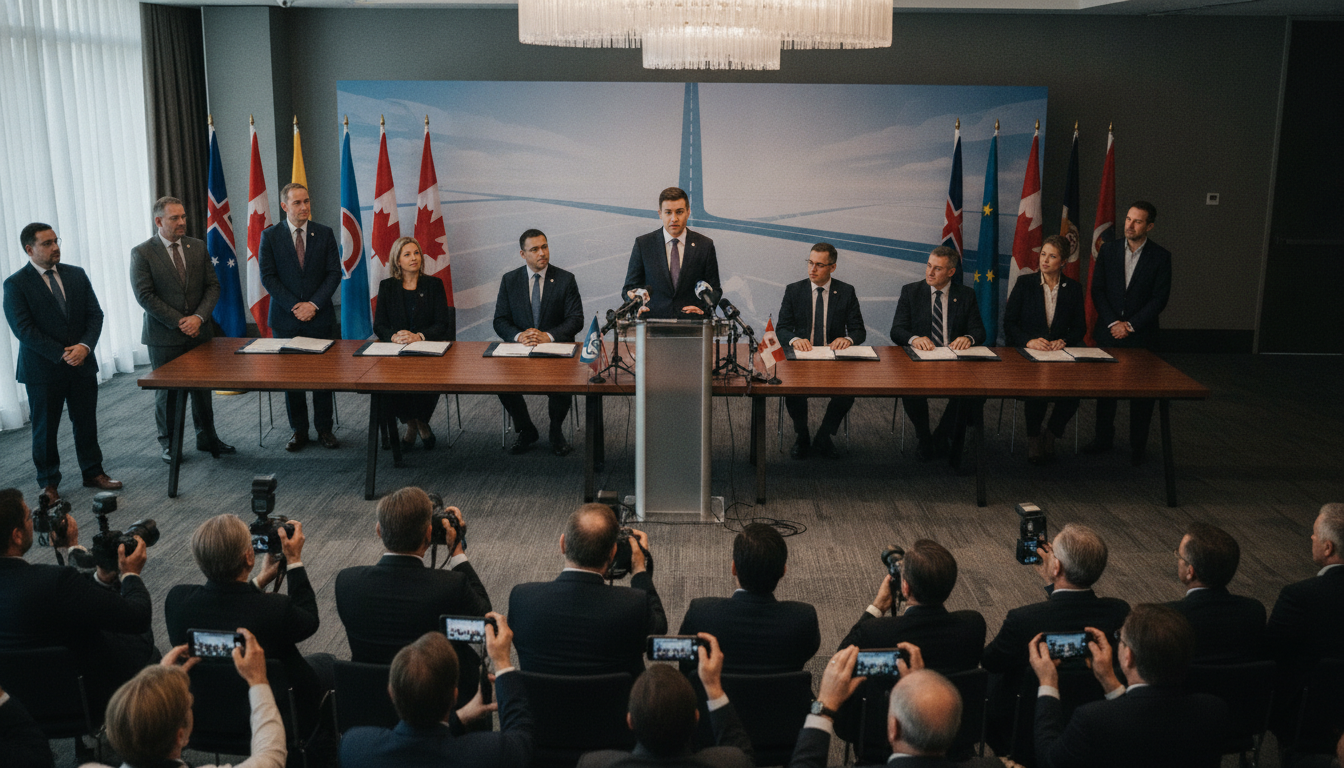
Leduc County, Sturgeon County, the City of Cold Lake and Edmonton Airports announced a memorandum of understanding this week designed to spur economic diversification focused on aviation, aerospace and defence. The agreement outlines coordinated efforts on training, investment attraction and business development intended to strengthen regional capacity and create employment opportunities. Officials described the MOU as a strategic step to align municipal and airport assets with industry needs across Alberta.
Partnership Scope and Signatories
The MOU brings together two counties, a city and a major airport authority to coordinate regional economic planning. Each signatory commits to share information, resources and lead collaborative initiatives to make the region more competitive for aviation and related industries.
The memorandum frames a shared intent rather than legally binding obligations and sets priorities around workforce development and investment promotion. Local governments and Edmonton Airports will use the agreement to coordinate outreach to investors and educational partners.
Economic Diversification Objectives
The partners say the MOU aims to reduce reliance on any single sector by attracting new aviation and aerospace activities. Investment in these sectors is expected to broaden the local tax base and support suppliers, contractors and service providers across multiple communities.
Planners emphasized the potential for cluster development where airports, maintenance facilities and training centres can generate spillover benefits. The agreement signals a regional approach to leverage existing infrastructure and geographic advantages for long-term growth.
Focus on Skills and Training
A central element of the MOU is workforce development tailored to aviation, aerospace and defence employers. The partners intend to work with post-secondary institutions, training organizations and industry to design programs that meet employer needs.
Officials noted that coordinated training initiatives can shorten hiring timelines and improve retention by aligning curriculum with practical, industry-specific skills. The agreement also contemplates apprenticeship support and upskilling pathways for workers transitioning from other sectors.
Role of Edmonton Airports in the Plan
Edmonton Airports is positioned as a key facilitator for site readiness, logistics and investor engagement under the MOU. Airports can influence where maintenance, cargo, and manufacturing operations locate and can support infrastructure upgrades that make properties more marketable.
Airport leadership will collaborate with municipal planners on zoning, capacity and transportation links to ensure potential projects are logistically feasible. By integrating airport strategies with regional economic planning, partners aim to present a cohesive value proposition to prospective tenants and investors.
Investment and Business Development Strategy
The memorandum prioritizes active investment attraction campaigns that showcase regional assets to aerospace manufacturers, defence contractors and aviation service firms. Partners will pool marketing and business development resources to target domestic and international opportunities.
The strategy includes identifying ready-to-develop land, improving permitting processes and creating incentives where feasible. Public-sector partners stressed that a coordinated approach reduces duplication and strengthens the region’s ability to win competitive bids.
Regional Coordination and Governance
To operationalize the MOU, signatories expect to form working groups that meet regularly to track initiatives and measure outcomes. These groups will likely include economic development staff, airport representatives and training institution liaisons.
Regular reporting and shared performance indicators are intended to keep partners aligned and accountable. The governance approach aims for pragmatic collaboration that can scale projects as private-sector interest emerges.
This MOU creates a framework to attract companies that provide maintenance, repair and overhaul, component manufacturing, avionics services and defence-related suppliers. By combining municipal planning, airport capacity and targeted training, the partners hope to convert regional potential into concrete projects and jobs.
The agreement stops short of committing specific funding lines, but it signals where future public and private investments may be directed. Moving forward, the partners will work to identify priority projects, potential funding sources and timelines for implementation.
