
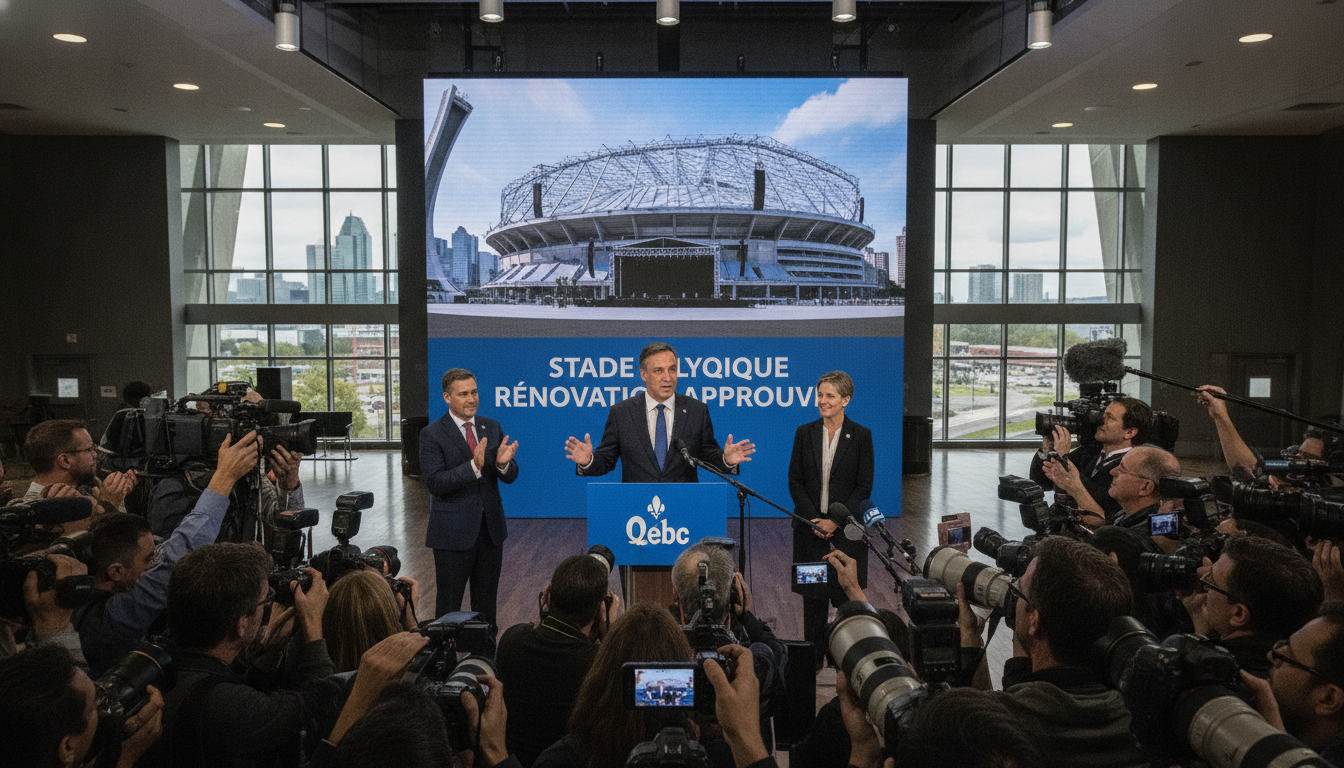
Montreal Olympic Stadium renovation approved as Quebec bets on big-name music tours
Quebec approves Montreal Olympic Stadium renovation to attract global music tours, but concerns persist about promoters, Quebec artists and public benefit.
The Quebec government has formally approved an interior renovation of the Montreal Olympic Stadium aimed at restoring the city’s ability to host major international music tours. The Montreal Olympic Stadium renovation, announced Friday, is pitched as a way to bring large-scale concerts and other marquee events back to the city while boosting tourism and local spending. Officials and industry groups say the project could reopen the venue to headline acts that currently bypass Montreal, though questions remain about who will capture the economic returns.
Government authorization and project timeline
The province’s tourism minister signalled the approval with a statement noting the lack of any local venue able to hold more than 20,000 spectators for large international tours. The project, managed by the Parc olympique, is scheduled to reopen the venue in 2028 after a series of interior upgrades meant to modernize staging, sightlines and amenities.
Officials have not released a final cost estimate for the interior work, and details on the construction schedule remain limited. The government frames the investment as both a cultural and economic priority intended to complement existing arenas and outdoor sites in the region.
Economic stakes tied to music tourism
Montreal’s pitch rests in part on the rising economic value of large tours, which can generate tens or hundreds of millions in local spending. Recent high-profile tours in other Canadian cities have produced sizable hotel, restaurant and retail revenue, and the province hopes the renovated stadium will capture a share of that market. Industry executives say the city could host four to six stadium-scale events annually if the venue meets technical and operational expectations.
Tourism officials point to an expanding market of fans who travel for live shows, increasing the potential returns from a modernized stadium. The renovation is being promoted as a tool to attract multi-night residencies and international tours that currently favour other North American stops.
Acoustics and technical improvements under scrutiny
A central complaint about the stadium has been its sound quality and suitability for complex concert productions, and those issues are a focal point of the renovation. Parc olympique leadership has signalled confidence that planned interventions will address acoustic shortcomings and make the bowl more compatible with modern stage designs.
Beyond acoustics, large tours often demand substantial backstage space, rigging capacity and logistical support for elaborate sets. Planners say the renovation will prioritize those technical capacities to meet the requirements of top-tier productions and reduce the need for permanent outdoor staging.
Demand questions for stadium-sized audiences
Analysts warn that venue readiness alone will not guarantee a steady calendar of sold-out stadium shows. The pool of artists able to fill 50,000-seat arenas is limited, and some major acts deliberately restrict the number of tour stops to concentrate demand. Recent cancellations and slower sales for some North American dates have also raised caution among promoters and venue operators.
Despite those uncertainties, some marketing academics and festival organizers believe four to six major events per year at a reopened Olympic Stadium is achievable. They caution, however, that attracting those acts will require competitive booking, marketing and ticketing strategies that align with broader tour routing.
Local artists and cultural return on investment
The renovation has prompted debate about how many Quebec artists will realistically benefit from a larger stadium. While historical shows at the facility drew crowds in the tens of thousands, contemporary ticket pricing and market fragmentation make repeat local sellouts less likely. Cultural organizations, including the province’s music industry groups, have urged assurances that the venue will allocate meaningful dates and programming to homegrown artists and productions.
Advocates also propose mechanisms to recycle revenue into the local ecosystem, such as ticket levies or regranting programs that support small venues and independent artists. Those proposals aim to ensure public investment produces wider cultural benefits rather than primarily enriching large external promoters.
Promoter concentration and calls for fair contracts
A recurrent concern is the dominance of a small number of major promoters in Canada’s live-music market and how that might shape bookings at the renovated stadium. Independent promoters and festival networks have urged the Parc olympique to seek multiple partners and avoid exclusive arrangements that would limit competition. Critics warn that public funds should not translate into exclusive commercial advantages for any single firm.
Advocacy groups point to international models where small levies on ticket sales support grassroots venues and local talent, arguing similar measures could be attached to stadium contracts. Parc olympique officials say they are in discussions with a range of potential partners and that the venue’s doors will be open to both large and smaller-scale event organizers.
The Montreal Olympic Stadium renovation presents a clear opportunity to reposition the city on North American tour maps, but its success will hinge on technical outcomes, booking strategies and the contractual arrangements that follow. As the work moves from planning into execution, the coming months will determine whether the public investment yields broad cultural and economic returns or primarily benefits a narrow set of commercial players.
