
Almería wildfire stabilizes after three-day blaze that killed 12; evacuees begin returning
Almería wildfire stabilizes July 12, 2026 after three-day blaze that killed 12; hundreds return as authorities begin victim identification and safety checks.
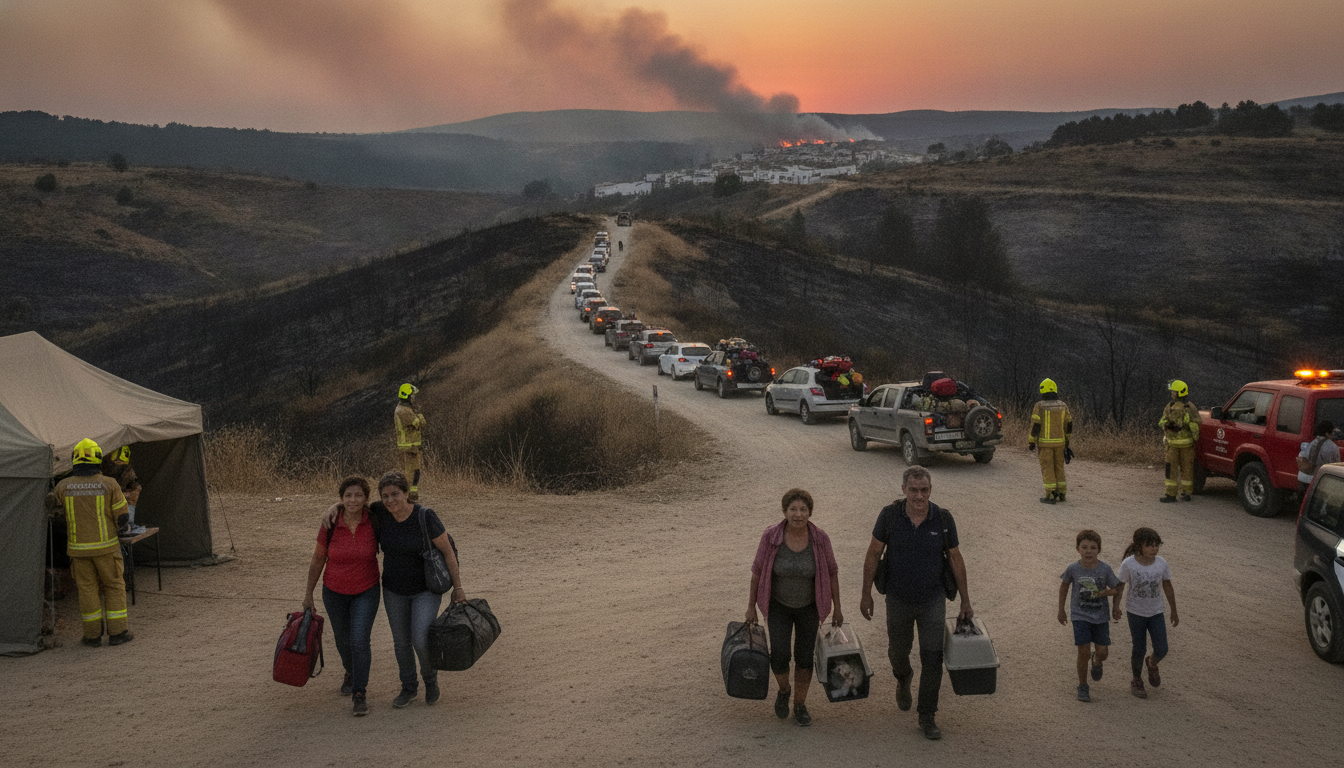
The Almería wildfire that tore through wooded hills near the Mediterranean was declared stabilised on Sunday, July 12, 2026, allowing hundreds of evacuated residents to begin returning to their homes. Authorities said the three-day inferno left at least 12 people dead and burned roughly 7,000 hectares, and officials warned that search and identification work will continue in the coming days. Local and national teams remained on the ground to monitor hotspots, secure affected roads and support families as they assess damage.
Evacuees return to charred neighbourhoods
Residents who had been ordered from their homes over the past 72 hours were permitted to re-enter parts of the affected area after regional leaders characterised the fire as stabilised. Many returned to find scorched vehicles, damaged houses and landscapes blackened by flame, and described shock at the suddenness of the blaze.
Officials reported that around 600 evacuees of an estimated 1,500 were able to return overnight as the perimeter held, with additional controlled re-entries planned once crews complete safety checks. Emergency teams emphasised that while the main front is contained, local conditions remain hazardous and access to some roads will stay restricted.
Scale and spread of the blaze
Regional authorities said the fire scorched an area of about 7,000 hectares and at times expanded along a perimeter of roughly 40 kilometres. Fire behaviour was extreme at the height of the incident, with frontline rates of spread estimated at about 100 metres per minute, according to officials briefed on containment efforts.
The blaze was first reported on Thursday, July 9, 2026, and investigators have said a fallen power cable along a road appears to be the likely ignition point. Aerial firefighting aircraft and ground crews were deployed in large numbers over the three days to slow the advance and protect population centres.
Dead and missing: identification challenges
Authorities have held the confirmed death toll at 12 while cautioning that the number of missing could change as forensic work continues. Many of the confirmed victims were foreign nationals who had been living in or visiting the area, which has complicated post-mortem identification and next-of-kin notifications.
Officials from the Spanish data integration centre said the collection of family reference samples is especially difficult because relatives are scattered across other countries. Autopsies and DNA comparisons were under way on July 12, 2026, and investigators said they would not finalise the list of victims until forensic results are complete.
Eyewitness accounts from affected communities
Residents described panicked escapes and a landscape transformed by rapid flames and choking smoke. Lore Van Moll, a 33-year-old Belgian who returned home on Sunday, said she had watched “a permanent orange light” on a nearby hill as the fire approached and expressed relief that she and her family survived.
Long-time local inhabitants also voiced sorrow and disbelief at the scale of destruction. James Shellingford, a 60-year-old British resident of the hamlet of Bédar where some victims were found, said his community was “totally devastated” and noted that while fire risk has long been understood in rural areas, recent events have been unprecedented in severity.
Official response and investigations
Andalusia’s regional president, Juan Manuel Moreno, announced the stabilisation of the fire on the morning of July 12, 2026 and urged residents to remain vigilant as teams clear hotspots. He warned that the coming weeks would be difficult for the region and asked for national support in victim identification and recovery operations.
Prime Minister Pedro Sánchez was scheduled to visit the area on Monday, July 13, 2026 to review response efforts and meet affected families, government sources said. The Guardia Civil and other agencies continued to conduct door-to-door checks to ensure no potential victims remained unaccounted for and to gather evidence about the blaze’s origin.
Climate context and wildfire history
Spain has faced an increasing frequency and intensity of wildfires in recent years, linked by officials and scientists to longer heat waves and drier spring and summer seasons. Data cited by authorities noted that more than 393,000 hectares burned in 2025, the highest recent national total, underscoring the growing fire risk across the country.
Regional leaders said the Almería event fits a pattern of earlier and more severe fire seasons, and they urged residents and visitors to adopt stricter precautions during high-risk periods. Emergency services are conducting reviews of prevention measures and infrastructure, including power-line safety, amid calls for strengthened forest management.
The immediate priorities in the coming days are completing thorough searches, supporting families of the deceased and displaced, and stabilising infrastructure to allow wider access for recovery teams. Authorities stressed that while the main fire front is under control, rebuilding and forensic work will extend well beyond the period of active firefighting.
