
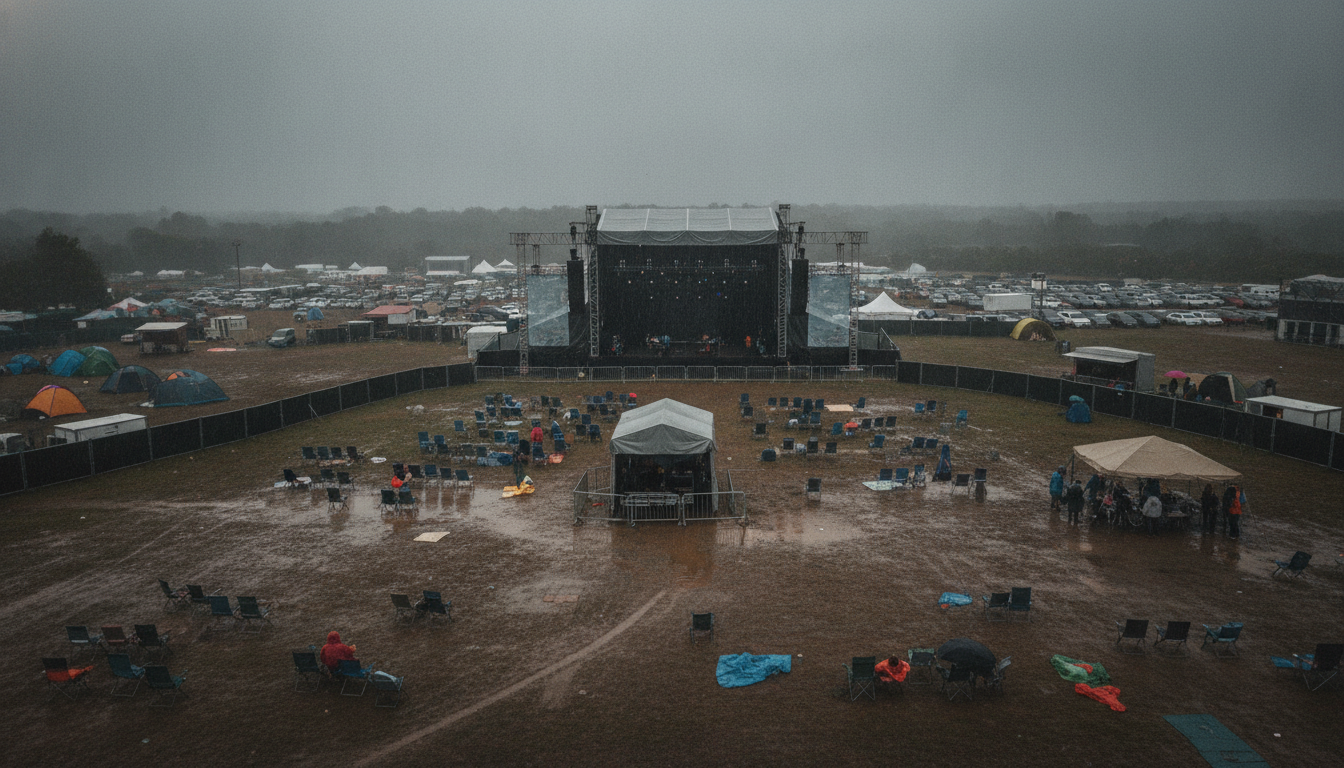
Art and performance festival moved indoors after storm as organizers warn of climate-driven losses
Art and performance festival moved indoors after storm; organizers warn climate-driven summer weather is eroding outdoor event reliability and revenue.
The city’s art and performance festival was forced indoors on Saturday evening after a sudden storm disrupted outdoor programming, organizers said, altering the experience for both performers and audiences. The art and performance festival, which was scheduled to run through Sunday, continued with many events relocated to upper-floor venues as crews worked to keep the schedule intact. Organizers warned the storm — and the pattern of increasingly erratic summer weather — is creating mounting financial and logistical pressures for cultural events that rely on short outdoor seasons.
Storm redirects outdoor shows to indoor spaces
Organizers described a rapid shift in plans when a severe storm swept through the area, making outdoor venues unsafe and prompting emergency moves. Performers and a large portion of the audience were moved upstairs into covered spaces where several acts gave alternate-format readings and condensed presentations. Festival managers said the impromptu indoor staging produced a different, more intimate audience experience, but one that was not what had been advertised or ticketed for open-air settings.
Volunteers and venue staff prioritized safety and swift communication with ticket-holders, coordinating transfers and announcing schedule changes through on-site updates. While many attendees adjusted to the new arrangements, some outdoor activations were canceled outright because of the weather and the inability to retrofit them for indoor presentation. The disruption highlighted the limits of quickly converting outdoor programming to an indoor model without major loss to the artistic vision.
Organizers outline the financial hit from lost attendance
Festival leaders warned the biggest consequence of the storm was the drop in attendance and the resulting revenue shortfall over a concentrated weekend. They noted that when bad weather keeps people home, the immediate economic impact is substantial — not only for the festival itself but for surrounding restaurants, hotels and small businesses that depend on increased foot traffic. Organizers estimated that if the public stays away for a full weekend, the cumulative financial loss can be severe for an event that depends on a limited run of dates.
Ticket refunds, venue rearrangements and the cost of last-minute logistics — including extra staffing and technical adjustments — added to the strain on resources. Some smaller vendors and independent artists, who rely on single-weekend exposure, were singled out as particularly vulnerable to income losses tied to a single weather event. Organizers urged funders and local partners to consider contingency support for cultural events facing climate-driven interruptions.
Climate trends are shrinking reliable outdoor seasons
Festival staff and arts administrators cited a pattern that has made outdoor gatherings less dependable: summers increasingly alternating between intense storms and prolonged smoke events. They said the last several seasons have seen either heavy rainstorms that force cancellations or atmospheric smoke from wildfires that poses health risks and reduces attendance. That volatility shortens the usable season for open-air activities, complicating planning and putting pressure on already tight production schedules.
The unpredictability of weather is forcing organizers to weigh the cost of securing additional indoor venues, expanding insurance coverage, or compressing schedules into fewer days. For many midsize festivals, those choices mean higher budgets and a rethinking of how to present outdoor work safely and sustainably. Organizers stressed that without adaptation measures, the long-term viability of some outdoor cultural events could be at risk.
Audience experience changed; artists adapted programming
Attendees reported a noticeably different tone for performances that were reconfigured for indoor spaces, with some artists turning staged pieces into readings and interactive workshops into smaller demonstrations. While some audience members appreciated the closeness and immediacy of the adapted format, others said the loss of the outdoor setting diminished the intended atmosphere for certain works. Performers also described the strain of modifying technically complex pieces on short notice, often without access to ideal lighting, sound or spatial arrangements.
Several artists used the change as an opportunity for experimental presentation, reimagining collaborations and improvising with reduced technical support. The spontaneous nature of these adjustments drew both praise and critique, underscoring a tension between the resilience of creative communities and the professional demands of scheduled festivals. For some companies, the night’s experience will inform how they design future touring shows to be more modular and weather-resilient.
Planning, insurance and infrastructure as prevention strategies
In response to mounting weather-related disruptions, festival organizers and municipal officials are increasingly focused on contingency planning, insurance options and hardening infrastructure. Measures under consideration include pre-booked indoor backup sites, clearer refund and rescheduling policies, and investment in all-weather stages or covered walkways. Event insurance can cover some costs, but premiums rise with perceived risk and may be unaffordable for smaller organizations.
City representatives and cultural funders are being asked to work with festivals to develop rapid-response protocols and to invest in shared emergency resources. Organizers also urged clearer public communication channels so attendees receive timely updates and can adjust plans without confusion. Long-term solutions will likely combine practical infrastructure investments with adaptive programming strategies that reduce the financial exposure of weekend-focused events.
As the festival completed its final programmed days, stakeholders said the weekend will serve as a case study in how cultural events must evolve amid a changing climate. Organizers and artists expressed resolve to continue staging public programming, but they also called for a broader conversation about resilience funding and municipal support. The urgency of adapting to more volatile summer weather — whether storms or smoke — was a recurring theme, with many saying that preserving a vibrant outdoor festival scene will require new levels of planning, partnership and investment.
