
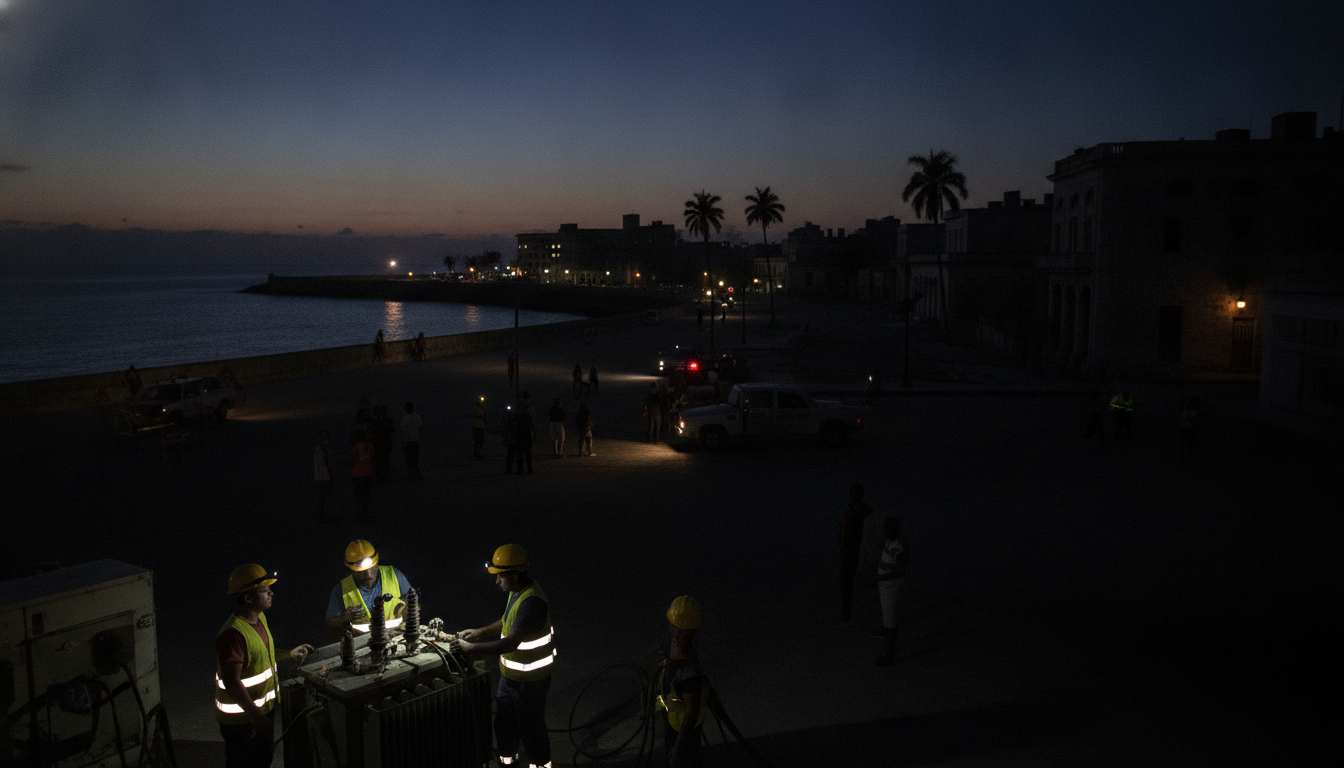
Cuba power outage leaves Havana largely dark as fuel shortages slow restoration
Cuba power outage: slow recovery after a second nationwide blackout this week leaves most of Havana without electricity as fuel shortages and sanctions hinder repairs.
The national power network in Cuba remained largely offline after a second nationwide blackout within days, officials said, with only a small fraction of Havana homes reconnected more than 24 hours after the grid went down. The outages, described by state utility UNE as the fourth island-wide cut this year and the ninth since late 2024, have compounded public frustration amid summer heat and persistent fuel shortages. UNE and government spokespeople blamed limited diesel supplies for slowing restoration work and preventing wider use of backup generators.
Partial reconnection reported in Havana
The national power company reported that by early evening only about 12 percent of Havana’s roughly 1.7 million residents had electricity restored, up from around 7 percent at midday, underscoring the uneven and fragile recovery. UNE director Félix Estrada told state television that a partial system collapse overnight forced crews to repeat sections of the restoration plan, prolonging outages for many neighbourhoods. Engineers say reconnection must proceed gradually to avoid further damage to the grid, but progress is being made only where logistical and fuel conditions allow.
Fuel shortages limit use of backup generators
Officials and engineers point to a severe shortage of diesel and other fuels as a key constraint on repair operations and generator deployment. Cuba’s power plants and mobile repair units rely on imported diesel to operate turbines and to move crews to isolated faults, and limited shipments have left reserves depleted. State statements and energy experts note that fuel scarcity not only increases the network’s vulnerability to failures but also slows the physical work of isolating and re-energizing lines.
Repeated island-wide blackouts raise alarms
This is the fourth nationwide blackout in less than six months, and the ninth since late 2024, a pattern utility managers describe as unsustainable for a country of about 9.6 million people. The most recent disconnection reportedly began Friday afternoon after an outage in central Cuba, occurring just days after the electricity system was reconnected following Monday’s earlier shutdown. Authorities have warned that the sequencing of faults and limited spare capacity can produce cascading failures, making quick, full restorations difficult.
Residents express fatigue and anger
Across Havana and in provinces, residents described mounting stress and exhaustion as rolling outages extend into tens of hours and sometimes days. A 71-year-old retiree told reporters she feels helpless and has adapted her daily life around unpredictable power cuts, while another resident said the population’s stress level had reached what he called an “unbearable” point. Small, local protests and displays of frustration—such as banging pots and setting refuse alight in some neighbourhoods—have been reported in the most heavily affected areas.
Government links crisis to U.S. sanctions and limited imports
President Miguel Díaz-Canel acknowledged the challenges publicly, saying the short interval between recent outages aggravated the recovery process and placing responsibility squarely on what Havana terms a punitive U.S. oil blockade. State statements described the restrictions as a key factor limiting fuel arrivals, and officials noted that only one large tanker carrying crude had been admitted earlier in the year and its cargo had since been consumed. The government has framed the energy emergency as a geopolitical as well as technical problem, tying operational shortfalls to tighter sanctions and restrictions on commerce.
Economic and diplomatic repercussions widen the crisis
Beyond immediate hardship, analysts warn the blackouts deepen broader economic strains by chipping away at tourism revenues and foreign currency inflows, and by disrupting small businesses and medical services. U.S. measures targeting Cuban enterprises and officials have, according to Havana, reduced hard-currency earnings and complicated procurement of parts and fuel. Cuban diplomats and the U.S. have engaged in talks that officials describe as difficult; Havana’s foreign minister recently acknowledged little progress in negotiations aimed at easing commercial pressures.
Restoration teams say full recovery will depend on securing additional fuel deliveries, stabilizing grid segments that repeatedly trip, and completing maintenance on ageing infrastructure. Authorities continue to work in shifts across provinces, but they caution that further setbacks remain possible while equipment remains vulnerable and inventories of spare parts are limited.
For many Cubans, the outages have reinforced long-standing complaints about infrastructure decay and economic hardship, while officials and international observers monitor the situation for any signs of broader social unrest. The government insists it is prioritizing repairs and seeking diplomatic avenues to relieve supply constraints, but residents say their patience is thinning as summer temperatures rise and outages persist.
