
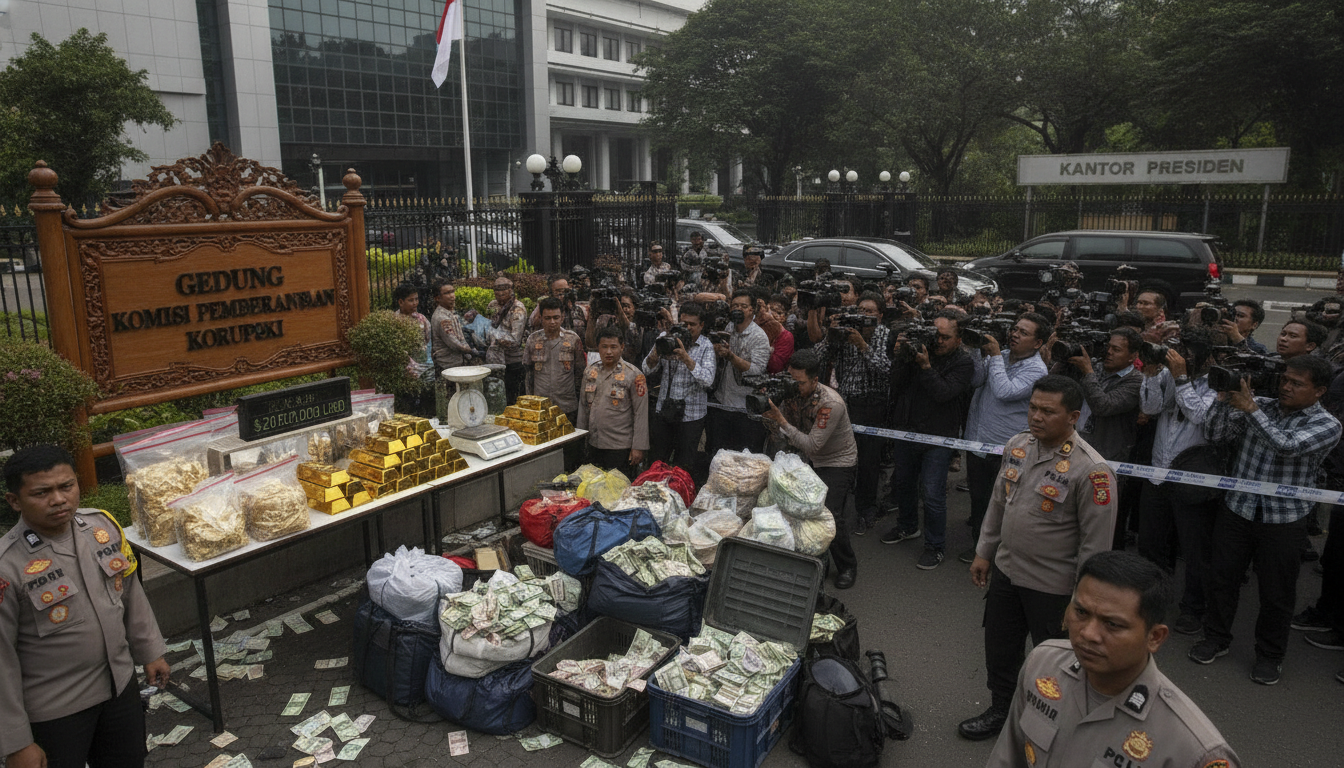
Indonesia prosecutor Febrie Adriansyah resigns after raids seized 74kg of gold and $20m
Febrie Adriansyah resigned on July 11, 2026 after police raids recovered 74kg of gold and roughly $20m in cash and multiple currencies, prompting wider corruption probes.
Indonesia’s top special crimes prosecutor, Febrie Adriansyah, announced his resignation on July 11, 2026 after police raids uncovered large amounts of gold and cash linked to an ongoing corruption inquiry. The Attorney General’s Office said he stepped down “to maintain the integrity, objectivity, and neutrality of law enforcement.” Authorities have not filed formal charges against Febrie.
Raids covered Jakarta, South Tangerang and Bogor over two days
Police and Jakarta investigators executed coordinated searches at least 12 locations on July 8 and 9, officials said, targeting properties and offices tied to the probe. Investigators interviewed 15 witnesses as part of the operation, according to law enforcement statements. A substantial portion of the seized assets was reported to have been found at a residence in Bogor associated with Febrie.
Seizure included 74kg of gold and $20m in multiple currencies
Spokesman Budi Hermanto told reporters the raids yielded 74 kilograms of gold bars and cash in Indonesian rupiah, US dollars, Singapore dollars and Saudi riyals totaling about $20 million. Authorities described the haul as part of evidence collection in a bribery and corruption investigation linked to disruptions at state facilities. Officials have begun cataloguing and securing the assets while inquiries proceed.
Investigations link probe to insurer scandals and power outages
Investigators say the inquiry is connected to major fraud cases at state insurers Asabri and the defunct Jiwasraya, both of which prompted national scrutiny in recent years. Authorities are also probing allegations that collusion between officials and mining suppliers led to the provision of poor-quality coal to state power plants. That supply issue has been cited by investigators as a possible cause of recent electricity blackouts in several regions.
Febrie denied wrongdoing and defended his record
Before stepping down, Febrie, 58, publicly denied any criminal conduct and said he did not understand why he was being investigated in relation to the blackouts. He had been appointed head of the special crimes division in 2022 after a long prosecutorial career and had overseen multiple high-profile cases. Legal commentators noted his resignation does not equate to admission of guilt and that he retains the right to defend himself through the legal process.
High-profile cases and political sensitivities under Febrie’s watch
As special crimes prosecutor, Febrie supervised investigations into a range of politically sensitive matters, including a corruption inquiry involving the National Nutrition Agency, which administers President Prabowo Subianto’s contested free school meals program. He also handled a widely criticized corruption case that led to a 10-year sentence for Nadiem Makarim, the founder of Gojek, drawing objections from international observers and rights groups. Other probes during his tenure included allegations against former trade minister Thomas Lembong and an illegal fuel import case at state energy firm Pertamina.
Attorney General’s Office frames resignation as procedural safeguard
In its July 11 statement, the Attorney General’s Office said Febrie’s resignation was intended to preserve perceptions of impartiality amid active police operations. Officials emphasized that the resignation would not halt investigations and that any decisions on charges would follow standard legal processes. Law enforcement agencies signaled they would continue gathering evidence and interviewing additional witnesses as needed.
Investigators face several practical steps before any charging decisions: forensic accounting of seized assets, formalization of witness statements and cross-referencing of financial records with procurement contracts at state entities. Legal experts say the complexity of the alleged schemes, which appear to cut across insurance fraud, procurement malfeasance and energy-sector corruption, will require sustained coordination among police, prosecutors and financial regulators.
The unfolding probe raises questions about governance at state institutions and the integrity of procurement practices tied to essential services. For now, Febrie Adriansyah’s resignation removes a senior figure from the courtroom but leaves the underlying investigations and potential institutional reforms very much alive.
