
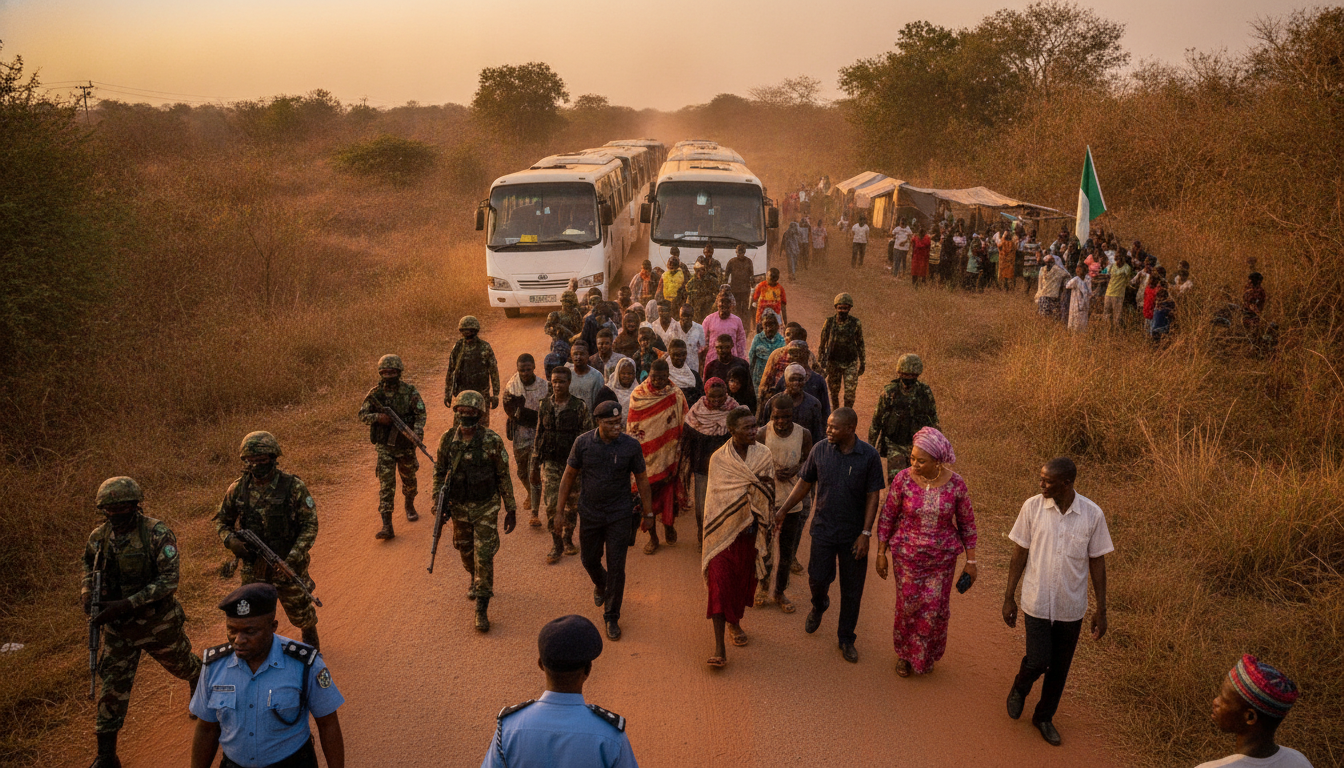
Dozens rescued in Oyo school kidnappings after 56 days, presidency says
Dozens of students and teachers taken in Oyo were rescued after 56 days, President Tinubu says; arrests reported and security forces credited on Friday.
The presidency announced on Friday that dozens of students and teachers seized in the Oyo school kidnappings have been freed after 56 days in captivity, saying security agencies carried out an operation that ended the standoff. President Bola Tinubu expressed relief and congratulated the armed forces, police and intelligence agencies for what the presidency described as a successful rescue effort. The announcement follows a wave of concern since the May 15 abductions from three schools in the southwestern state.
Rescues Confirmed by the Presidency
The presidential statement said all pupils and teachers taken from the schools have been recovered and reunited with their families, marking an end to a prolonged ordeal for those communities. Presidential spokesperson Bayo Onanuga posted that the rescued children and staff were safe, while the presidency credited security forces with bringing the incident to a close. Officials did not provide full operational details, saying only that arrests had been made and some assailants killed.
Scope of the May 15 Abductions
On May 15, attackers seized 46 students and staff from two primary schools and one secondary school in Oyo state, according to government accounts, with victims ranging in age from two to 16 years. The kidnappings included infants and teenagers and resulted in at least one teacher being killed shortly after the abduction, adding to the urgency of the recovery effort. Families and local officials had appealed repeatedly to authorities and the national spotlight turned to the southwest as investigators worked to locate the hostages.
Arrests, Casualties and Military Claims
The presidency reported that eight suspects have been detained in connection with the kidnappings and that an unspecified number of attackers were killed during the operation, reflecting an active military and police response. Defence Minister Christopher Musa earlier warned that the abductors intended to use the hostages as leverage to press for the release of detained commanders, signaling the kidnappers’ strategic aims. Authorities have so far not released the identities of those detained or the locations where arrests took place, citing ongoing investigations.
Operational Details and Denial of a Deal
Officials have said little about how the rescue unfolded, but the presidential office emphasized there was “no quid pro quo” in the recovery, rejecting suggestions that concessions were made to secure the hostages’ release. That assertion aims to address public concern about ransom payments or prisoner swaps, which have been a recurring feature of high-profile abductions in Nigeria. Families and advocacy groups have called for transparency about the tactics used, and security agencies have promised further updates as probes continue.
Link to Boko Haram and Ransom Dynamics
The federal government has attributed the Oyo kidnappings to Boko Haram, a designation that reflects worries about the spread of militant tactics beyond northeastern strongholds into the country’s southwest. Analysts and security briefings have linked recent school abductions to organized criminal and extremist groups seeking large ransoms or political leverage, and a 2024 report by SBM Intelligence estimated that gunmen collected more than $1.6 million in ransom payments that year. Such financial dynamics have incentivized both criminal gangs and militant cells to target schools and other soft targets.
Southwest Security Risks and National Reaction
The Oyo kidnappings represented a disturbing shift for many Nigerians because most mass school abductions historically occurred in the north, and the incident prompted fresh debate about the geographic spread of insecurity. Local leaders and parents in affected communities expressed relief at the rescues but warned that the trauma and security gaps remain unresolved, calling for strengthened protection for schools. The government has pledged intensified operations and intelligence-sharing to prevent similar attacks, while human rights groups urge accountability and support services for rescued children.
The presidency’s statement concluded with expressions of gratitude to the military, police and intelligence agencies and recognition of the emotional toll on families, even as questions persist over the full extent of the operation and the fate of any remaining suspects. As authorities continue investigations, officials have said they will provide further information on how the hostages were located and the legal steps to be taken against those apprehended. The rescues bring immediate relief to families in Oyo, but the episode underscores ongoing challenges in safeguarding schools and communities across Nigeria.
