
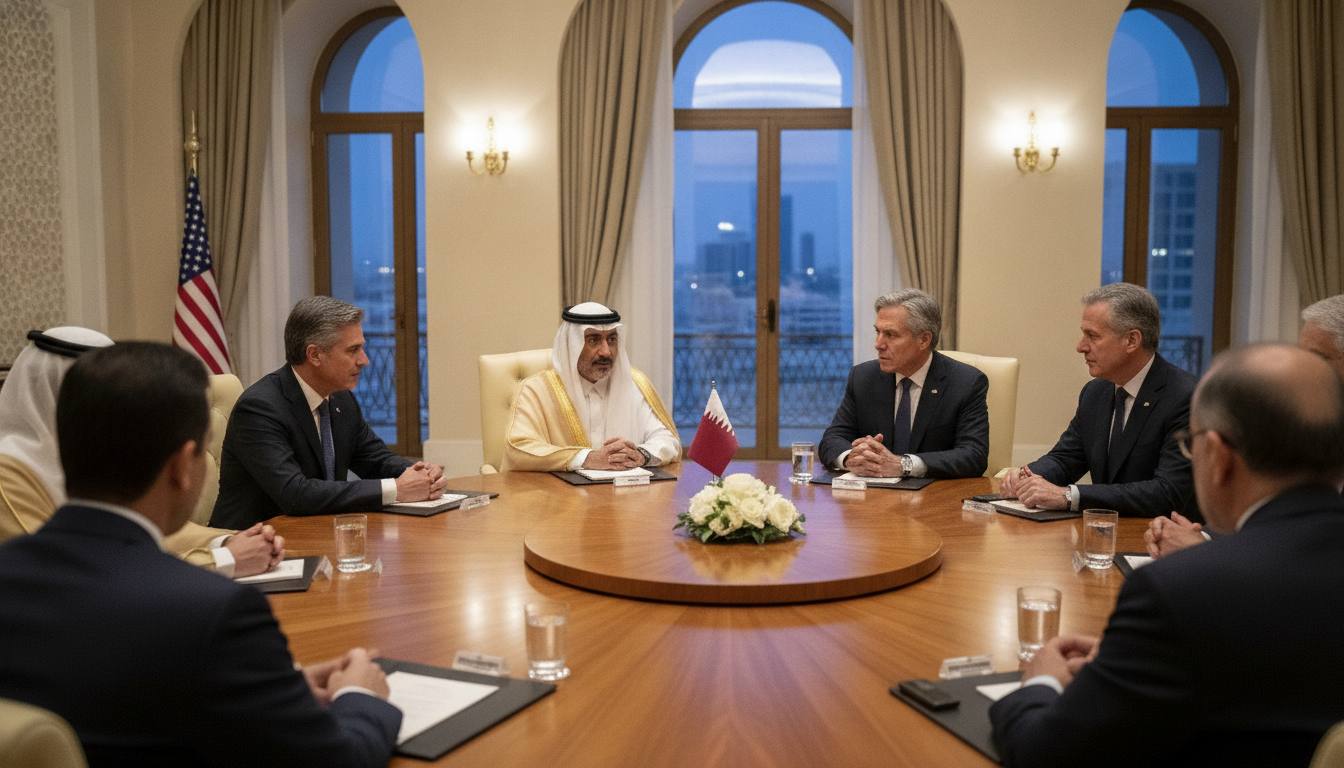
Regional mediators rush to defuse renewed U.S.-Iran strikes as tensions pause
Qatar leads urgent diplomacy to avert wider war after renewed U.S.-Iran strikes near the Strait of Hormuz, and mediation continues amid conflicting claims.
Regional mediators intensified shuttle diplomacy on Friday as renewed U.S.-Iran strikes settled into an uneasy pause, raising fears that the confrontation could spiral back into wider war. The latest exchanges, centered on attacks around the Strait of Hormuz, have prompted Qatar and several Gulf states to press both Washington and Tehran for de-escalation. Diplomats warned that the pattern of retaliation and counterretaliation risks becoming a recurring cycle unless a clearer framework for maritime security is agreed.
Mediators step up contacts to prevent escalation
Qatar has taken a leading role in recent talks, according to officials familiar with the discussions, engaging both U.S. and Iranian interlocutors in an effort to revive elements of last month’s truce. Those mediators are attempting to translate cease-fire language into concrete arrangements that would reduce the chance of miscalculation at sea. Diplomats described the situation as fragile, with each side probing limits while negotiators race to stabilize conditions on the water and ashore.
Qatar’s engagement and regional outreach
In addition to direct contact with Washington and Tehran, mediators have coordinated with other Gulf governments that host American forces, including Bahrain, Kuwait and Jordan. Those states have a direct stake in preventing large-scale confrontation because several reported being struck in recent days during the flare-up. Officials said the outreach has included military and diplomatic channels aimed at creating safeguards for bases and commercial shipping.
Pattern of tit-for-tat strikes creates recurring danger
Analysts note the recent incidents follow a familiar escalation pattern: attacks attributed to Iran on commercial vessels in the Strait of Hormuz, U.S. retaliatory strikes, and then Iranian counterattacks that produce a temporary stalemate. That friction has repeatedly tested the limits of last month’s truce and exposed ambiguities about implementation. Observers warn that without precise mechanisms for incident prevention and communication, similar cycles could resume quickly.
Strait of Hormuz dispute at the core of tensions
At the heart of the crisis is the Strait of Hormuz, a vital maritime corridor for global energy flows where competing claims and navigation practices have inflamed tensions. The United States has accused Iran of deliberately targeting commercial vessels, while Tehran insists that ships must follow designated routes through waters it controls. The truce’s language called for Iran’s assistance in arranging safe passage, but left key operational questions unresolved, complicating enforcement.
U.S. military strikes and reported casualties
U.S. forces said they struck more than 170 targets on the Iranian coast over a recent 48-hour period, an escalation officials characterized as intended to degrade Iran’s capacity to threaten shipping. Iran’s health ministry reported that the two days of attacks killed 14 people and injured 78, without providing detailed information about the victims. The timing of the strikes, which coincided with funeral ceremonies for a senior cleric, added to regional tensions and complicated diplomatic efforts to contain fallout.
Claims and counterclaims from Washington and Tehran
Leaders and spokespeople on both sides continued to trade hard-line rhetoric even as diplomats worked to lower the heat. Tehran warned it could expand operations against additional U.S. military facilities in the region if American strikes persisted, framing any further action as retaliatory. In the United States, senior officials characterized their operations as necessary to protect commercial navigation and regional partners, while also indicating that diplomatic channels remained open.
Impact on Gulf hosts and global shipping
Countries that host U.S. military assets reported incidents and damage in recent days, underscoring how the confrontation has spilled beyond contested waters into broader regional security concerns. The disruptions have added to commercial and insurance worries for shippers that rely on the Strait of Hormuz, and energy markets have remained sensitive to any signals of expanded conflict. Regional governments are balancing public concerns, alliance commitments and the economic imperative of keeping maritime traffic flowing.
Diplomats said the immediate goal of mediation is to re-establish predictable rules for maritime movement and to create communication lines that reduce the chance of inadvertent escalation. Whether those efforts succeed will depend on translating political assurances into verifiable actions on the water and meaningful restraint by military commanders. For now, the pause in visible fighting leaves open the risk that future provocations could reignite a broader confrontation.
