
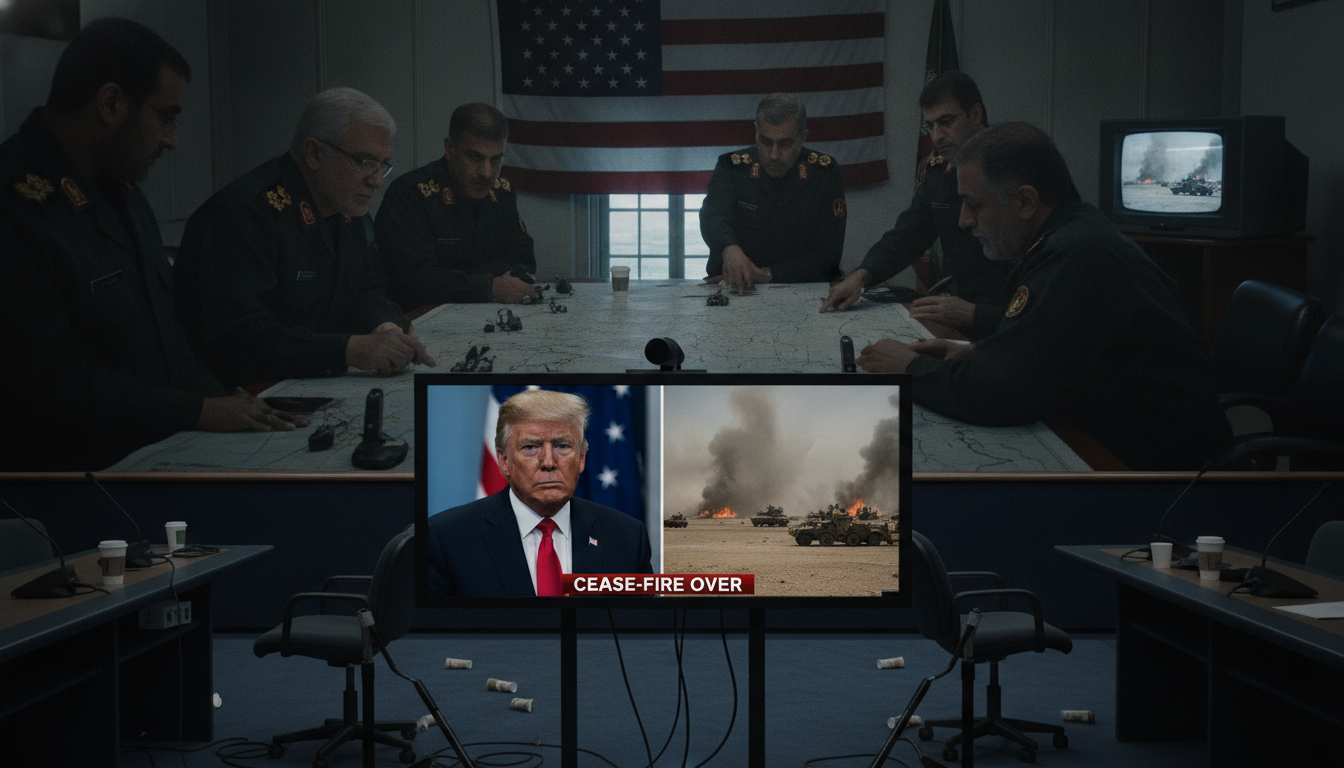
U.S. and Iran trade strikes again after Trump says cease-fire is ‘over’
U.S. and Iran trade strikes after President Trump said a temporary cease-fire was “over,” prompting fresh exchanges of fire and international concern over escalating hostilities.
The United States and Iran exchanged new rounds of strikes on July 9, 2026, hours after President Donald Trump publicly declared that a recent temporary cease-fire between the two countries had ended. U.S. officials and Iranian state outlets reported separate military actions, and President Trump’s remarks — including his claim that “we hit them 20 to 1” — appeared to precede the latest escalation. The developments have sharpened fears of an expanding confrontation across the Middle East and prompted urgent diplomatic commentary from regional and global capitals.
New strikes followed the president’s comments
Hours after President Trump said he believed the cease-fire was “over,” U.S. and Iranian forces carried out what both sides described as retaliatory strikes. U.S. statements characterized the operations as limited and targeted, while Iranian channels framed their actions as defensive measures in response to perceived U.S. aggression. The timing of the exchanges, coming so soon after the president’s remarks, underscored how rhetoric at the highest level contributed to a rapid deterioration in the situation.
Military authorities gave limited operational details
Both Washington and Tehran released guarded accounts of the incidents, providing few specifics about precise targets or damage assessments in the immediate aftermath. U.S. military spokespeople emphasized that strikes were calibrated to minimise civilian harm while degrading capabilities they said posed risks to American forces and partners. Iranian official sources described their responses as proportionate, but independent confirmation of targets and casualties was not immediately available.
Trump’s public statements framed U.S. posture
In his public remarks preceding the exchanges, President Trump signalled a harder posture and questioned Iran’s trustworthiness in any prospective deal. He asserted a policy of striking back decisively, summarizing the approach with the remark that the U.S. would respond at a higher scale than attacks against it. The president’s tone and explicit declaration that the temporary pause in hostilities had ended were cited by analysts as factors that may have influenced the rapid sequence of military actions on July 9.
Iran’s response and official messaging
Iranian leaders framed their actions as a response to what they described as continued U.S. pressure and unilateral measures in the region. Tehran’s statements stressed sovereignty and deterrence, warning that further escalation would carry risks for all parties involved. At the same time, Iranian officials signalled openness to diplomatic channels while insisting any talks must respect their security concerns and regional interests.
Regional and international reactions were swift
Governments across the Middle East and beyond called for restraint and urged both sides to avoid widening the confrontation. Allies of the United States reiterated support for protecting personnel and interests, while some regional capitals appealed for de-escalation and renewed diplomacy to prevent spillover into neighbouring states. International organisations and diplomatic missions signalled concern about the humanitarian and economic consequences of sustained hostilities in a strategically sensitive region.
Uncertainty over civilian impact and military posture
Initial reports in the immediate hours following the strikes did not confirm comprehensive casualty or damage figures, leaving a degree of uncertainty about the human toll. Military commanders on both sides indicated heightened alert levels for their forces, and analysts warned that even limited engagements could disrupt shipping lanes, energy markets, and regional security arrangements. Humanitarian agencies and neighbouring countries were monitoring the situation for signs of displacement or infrastructure damage requiring urgent assistance.
The exchange on July 9 exposes how volatile the situation between the United States and Iran remains and how quickly political statements can be followed by military action. With both sides signalling readiness to defend perceived interests, diplomatic channels and international pressure are likely to play a determining role in whether the latest strikes lead to a broader confrontation or a renewed search for negotiated restraint.
