
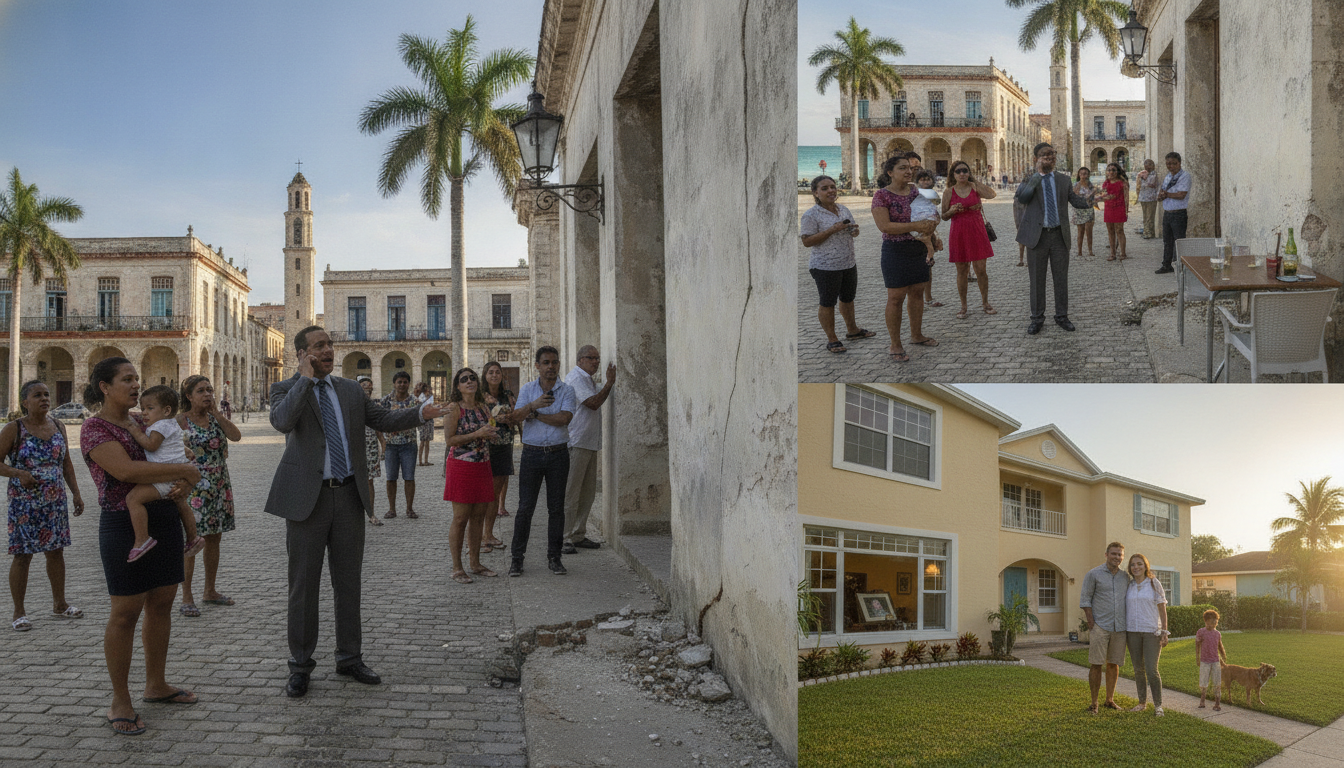
6.1-Magnitude Gulf of Mexico Earthquake Shakes Cuba Coast, Felt in South Florida and Cancun
A strong Gulf of Mexico earthquake of magnitude 6.1 struck on June 8, 2026, about 65 miles northwest of Mantua, Cuba, the United States Geological Survey reported, with shaking felt across South Florida and the Yucatán Peninsula. The quake occurred at approximately 2:00 p.m. Eastern and prompted localized evacuations and brief service interruptions though no widespread structural damage has been confirmed.
6.1-Magnitude Quake Strikes Offshore Cuba
The United States Geological Survey located the epicenter in the southeastern Gulf of Mexico, roughly 65 miles (105 kilometres) northwest of Mantua, Cuba. Initial agency data placed the magnitude at 6.1 and recorded the event at 2:00 p.m. Eastern on June 8, 2026, with shake-intensity maps showing weak to moderate ground motion across nearby coastal areas. Seismologists noted that the reported magnitude and intensity could be revised as additional seismic data are processed.
Shaking Felt Across South Florida and Cancun
Reports of light to moderate shaking reached cities and communities hundreds of kilometres from the epicenter, including Miami and parts of the Yucatán Peninsula such as Cancun. Emergency dispatch centers in Miami received multiple calls from residents describing tremors, and some occupants of high-rise buildings reported swaying. Public accounts indicate the quake was perceptible at significant distances, consistent with a submarine event of this strength.
Miami Authorities Confirm Precautionary Actions, No Major Injuries
Miami-Dade officials said several buildings were evacuated "out of an abundance of caution" and Metrorail service was temporarily halted while inspectors checked infrastructure. The county emergency management department reported no significant injuries or structural failures in the initial hours after the quake. Local agencies emphasized routine safety checks and urged residents to follow official advisories while aftershock assessments continue.
Seismologists Say Event Among Strongest Recorded in Gulf in a Century
U.S.G.S. historical records indicate the June 8 tremor ranks among the more powerful earthquakes recorded in the Gulf of Mexico over the past 100 years. Experts noted the region is inside the North American tectonic plate, where seismicity is less frequent than along active plate boundaries such as California’s San Andreas system. That intraplate setting explains both the rarity of large events in the Gulf and the occasional surprise when significant quakes occur.
Researchers and Monitoring Agencies Expected to Revise Data
Seismologists reviewing waveforms and station data cautioned that initial magnitudes and intensity maps are provisional and may be updated as more instruments report. Aftershock monitoring was underway, with U.S.G.S. analysts tracking any secondary events within 100 miles and the following days to refine shaking maps and hazard assessments. Officials stressed that magnitude revisions are routine and help improve emergency response and public guidance.
Regional Emergency Managers Urge Preparedness, Review of Procedures
Although no major damage was reported, emergency managers across Florida, Cuba and Mexico advised residents and businesses to review earthquake safety procedures and to prepare for potential aftershocks. Authorities recommended straightforward precautions: inspect buildings for visible damage, avoid crowded structures if cracks or instability appear, and keep lines of communication open with local emergency services. Coastal communities were also reminded that the recorded event produced no immediate tsunami warning, but any change in seismic parameters would be rapidly communicated by monitoring agencies.
The June 8 Gulf of Mexico earthquake underscores the potential for significant seismic events in regions not commonly associated with frequent shaking and highlights the role of scientific monitoring and local preparedness in reducing risk. Emergency officials and seismologists continue to collect and analyze data, and residents in affected areas are encouraged to follow updates from official sources as assessments are completed.
