
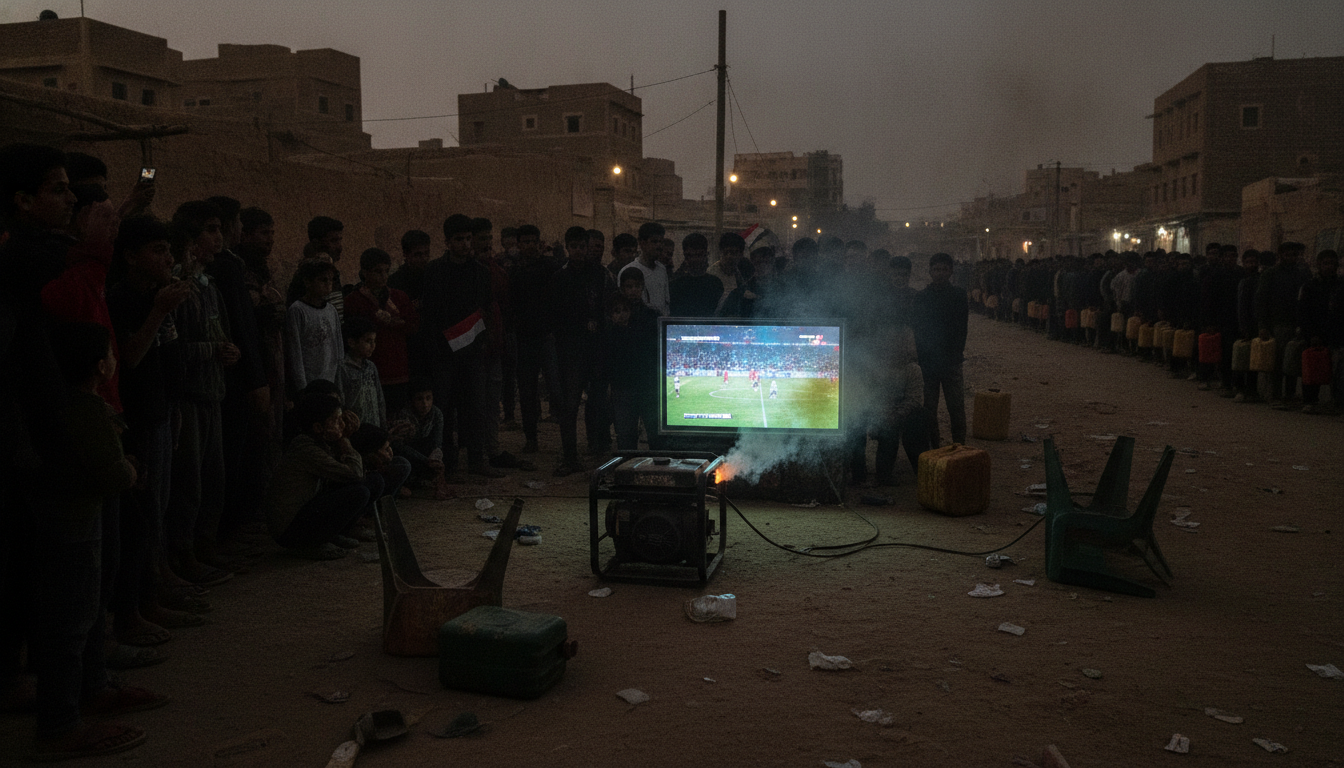
World Cup in Yemen: Power cuts and fuel shortages force fans to watch matches on public screens
Power outages, fuel shortages and deepening poverty are reshaping how Yemenis experience the World Cup in Yemen, with fans in Mukalla relying on public screens and generators to follow the tournament. A lifelong supporter says the disruptions have turned a personal ritual into a communal struggle to keep the sport alive.
Fan ritual survives despite blackout and fuel squeeze
Adel Mohsen, 56, is among the small handful of supporters who still treat the World Cup in Yemen as a seasonal ritual despite widespread hardship. Weeks before the tournament, his home backup battery failed and, without the $200 to replace it, he faced repeated blackouts that would keep him from watching matches at home. A concurrent fuel shortage limited his ability to ride his motorbike to cafés or friends’ houses, narrowing his options to a single, generator-powered courtyard screening.
Many like Adel now plan their viewing around when public venues can afford to run projectors and generators, or when neighbours can pool cash for streaming vouchers. The result is a sparser but more intense atmosphere at screenings: fewer spectators, but a deeper focus on the game and on keeping a fragile social ritual intact.
A lifetime of watching through upheaval
Adel’s attachment to the tournament stretches back to the 1982 World Cup in Spain, when television first reached parts of southern Yemen and matches were an event for families and neighbours. He remembers crowds gathering to watch taped broadcasts delivered by bus from the capital, and later following tournaments through periods of political turmoil and civil conflict. That continuity has made football a rare steady through decades of change.
Over the years he moved from backyard player to dedicated spectator and amateur analyst, tracking tactics and players across tournaments in Mexico, Italy and beyond. For many in Yemen, the World Cup has been not just entertainment but a way to learn, debate and briefly forget the pressures of daily life.
Public venues and generators step in
In Mukalla, municipal courtyards, small stadiums and cafés have become the default venues for World Cup screens. Before kickoff, the hum of diesel generators fills the air as operators fire projectors to life, sometimes only minutes before the match begins. Heat, humidity and sparse seating have not dampened the determination of those who turn up, often chewing qat as they watch and discuss each play.
These community screenings are improvisational and fragile. Equipment breaks, fuel runs out, or an operator cannot afford to keep the projector running for multiple matches. When games feature popular teams, attendance swells; for less-followed fixtures, only a handful of fans gather, making each screening a patchwork response to a failing public grid.
Economic hardship limits access to broadcasts
For many Yemenis, even modest costs put official broadcasts out of reach. Adel paid for a local subscription covering the tournament but could not afford the extra expense of internet vouchers to stream matches on his mobile or a replacement battery to guard against outages. Those choices force fans to prioritize essentials like food and transport over entertainment, making public screenings the default for those determined to watch.
The combined effect of inflation, unemployment and disrupted services means viewers are constantly recalibrating how they follow the tournament. Community solidarity can help — neighbours pooling funds or shopkeepers offering free entry — but those are stopgap measures amid deeper economic strain.
Conflict and service collapse shape viewing patterns
Yemen’s prolonged conflict has not only damaged infrastructure but also reshaped everyday life in cities such as Mukalla. While some neighbourhoods have avoided direct fighting, interruptions to fuel supplies, electricity and public services are routine. Even when fighting subsides locally, the ripple effects on employment and the cost of essentials persist and affect how people spend their time and money.
Local skirmishes and shifting control of resources at times have made travel between cities risky, further concentrating social life in neighbourhood hubs. That changing geography of leisure means that the World Cup in Yemen is often watched within walking distance of home, rather than in living rooms or larger urban venues.
Football as relief amid hardship
For Adel and other fans, watching the World Cup in Yemen is an act of resilience as much as recreation. He frames sport as a necessary relief from the pressures of daily life, a few hours when conversation and shared focus can push back against fear and uncertainty. Even critics who argue that sport is a luxury in a time of crisis are, for many viewers, countered by the simple human need for distraction and community.
At a courtyard screening, Adel shifts his gaze from the giant screen to friends as Mexico scores the opening goal and offers an analysis born of decades of watching. He predicts tournament outcomes with the same certainty he brings to memories of past tournaments, and pronounces a belief about the eventual winner — a small assertion of normalcy in a fractured setting.
Yemenis such as Adel continue to make the World Cup in Yemen a communal event, adapting to shortages and outages while preserving a ritual that has carried them through political transitions and conflict. The tournament’s matches remain, for many, a brief but vital respite from hardship and a reminder that shared passions survive even in the toughest circumstances.
