
West Bank settler violence escalates as Israeli forces demolish homes and settlers attack Burqa
West Bank settler violence surged as Israeli forces demolished homes in Birzeit and Nablus on Aug. 31, 2026, while settlers attacked the village of Burqa, prompting EU ministers to weigh measures.
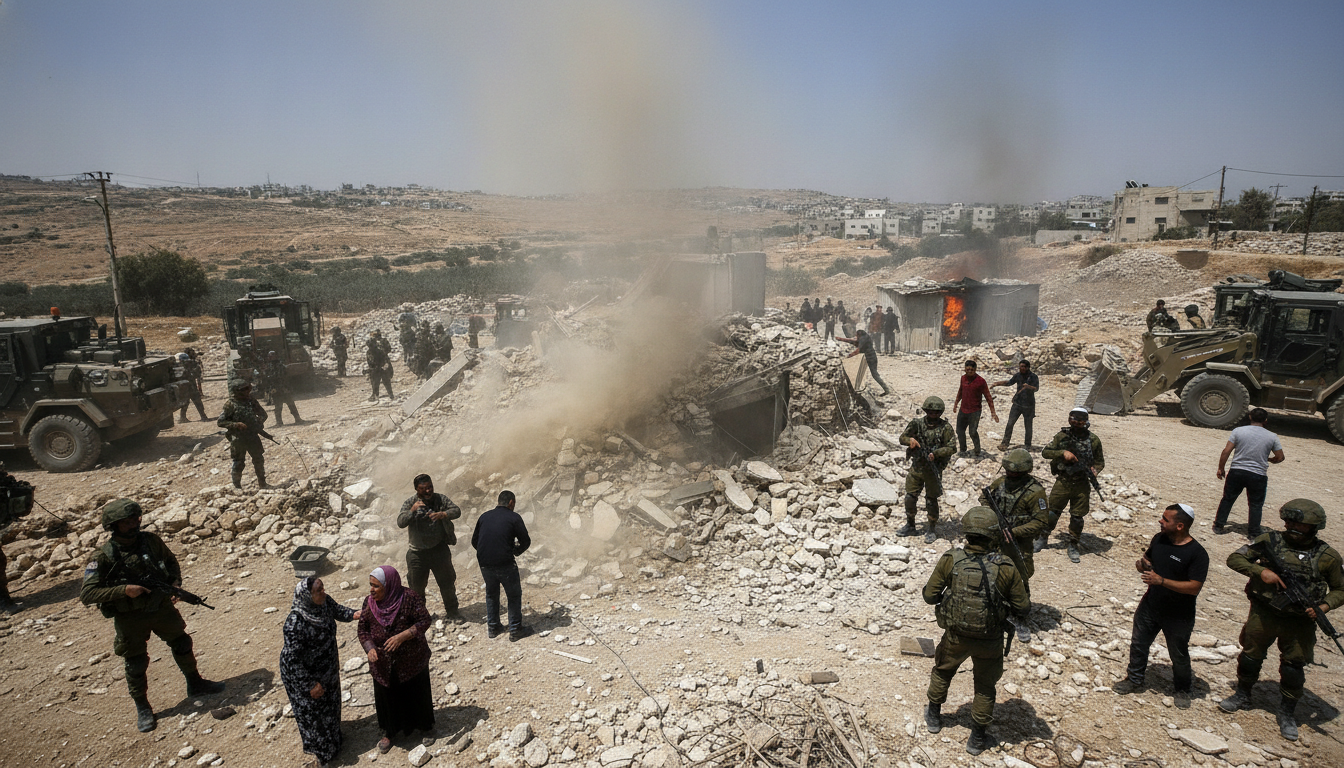
Israeli forces carried out demolitions in multiple West Bank towns on Aug. 31, 2026, as clashes between settlers and Palestinians intensified ahead of Israel’s October elections. Palestinian and international sources reported that soldiers demolished residential buildings in Birzeit and razed houses in Nablus, while a large group of settlers entered and attacked Burqa, witnesses and media said.
Homes demolished in Birzeit and Nablus
Two residential buildings in the town of Birzeit, north of Ramallah, were demolished after Israeli authorities said the structures lacked required permits, according to the Palestinian news agency Wafa. Local residents said the demolitions left families homeless and exacerbated long-standing tensions over planning and building restrictions under occupation.
In nearby Nablus, Israeli forces reportedly used a bulldozer to level a two-storey home and a three-storey building that was still under construction. Palestinian officials described the actions as part of an ongoing campaign of house demolitions that they say displaces civilians and undermines community stability across the occupied West Bank.
Settler raid on Burqa verified by video
Video footage verified by international media showed a sizeable group of settlers entering Burqa, east of Ramallah, on the night of Aug. 31 and engaging in violent confrontations with residents. The clips depict settlers and Palestinians throwing stones, with witnesses reporting attempts to set vehicles alight and reports of stolen livestock.
Residents said the attackers arrived from multiple directions and moved through the village before clashes erupted. Local sources called for protection as they lamented limited or delayed responses by security forces during the incident.
United Nations cites record levels of violence
The United Nations human rights office said in the month prior that settler violence had reached “an all-time high,” noting a pattern of attacks, new settlement approvals and instances where settlers and the Israeli military have acted in ways that deepen insecurity for Palestinian communities. International observers have warned that such incidents risk further destabilising a volatile situation already marked by repeated confrontations.
Humanitarian groups and rights organisations have repeatedly linked demolitions and settlement expansion to spikes in local violence, arguing that the policies underpinning those dynamics contribute to cycles of retaliation and fear among civilian populations.
Ireland leads EU agenda on settlement goods
The violence coincided with a two-day meeting of European Union foreign ministers in Ireland, which holds the rotating Council presidency. Dublin has pressed the bloc to consider coordinated action on goods produced in illegal settlements, having already taken national steps to ban settlement products within its own market.
Irish officials have urged fellow ministers to move beyond labelling rules and to adopt collective measures, arguing that unilateral approaches have failed to curb a trade that, they say, sustains settlement growth and rights violations.
Options on the table: licensing, tariffs or bans
European officials have been working from a confidential European Commission paper that reportedly outlines three possible policy responses: an import licensing system to track settlement goods, prohibitive tariffs to discourage trade, or an outright ban on products originating in occupied territory. The options reflect growing frustration within parts of the EU but also underscore deep divisions among the 27 member states over how to balance diplomatic relations with Israel and obligations under international law.
EU regulations already require goods from Israeli settlements in the occupied territories to be labelled as such rather than as products of Israel, but Brussels has historically left broader trade decisions to individual states. Some member governments oppose tougher collective measures, citing political and economic concerns.
Irish minister’s remarks draw sharp language
Neale Richmond, an Irish minister of state, told ministers that Israel’s occupation and its failure to curb settler violence constitute breaches of international law. In comments that sharpened the diplomatic debate, he criticised politicians who he said were supportive of settler actions and of the current Israeli government, saying Dublin could not be complicit.
Richmond’s remarks reflect growing frustration in some EU capitals and among rights groups at what they view as inadequate responses to settler-driven attacks and continued settlement expansion.
The events of Aug. 31 have added urgency to diplomatic discussions in Dublin, even as disagreements among EU members suggest that reaching a consensus will be difficult. As ministers consider technical options — licensing, tariffs or bans — communities across the West Bank face the immediate human cost of demolitions and attacks, raising questions about protection, accountability and the prospects for de-escalation.
