
Caracas park transformed into children’s hub after Venezuela earthquakes
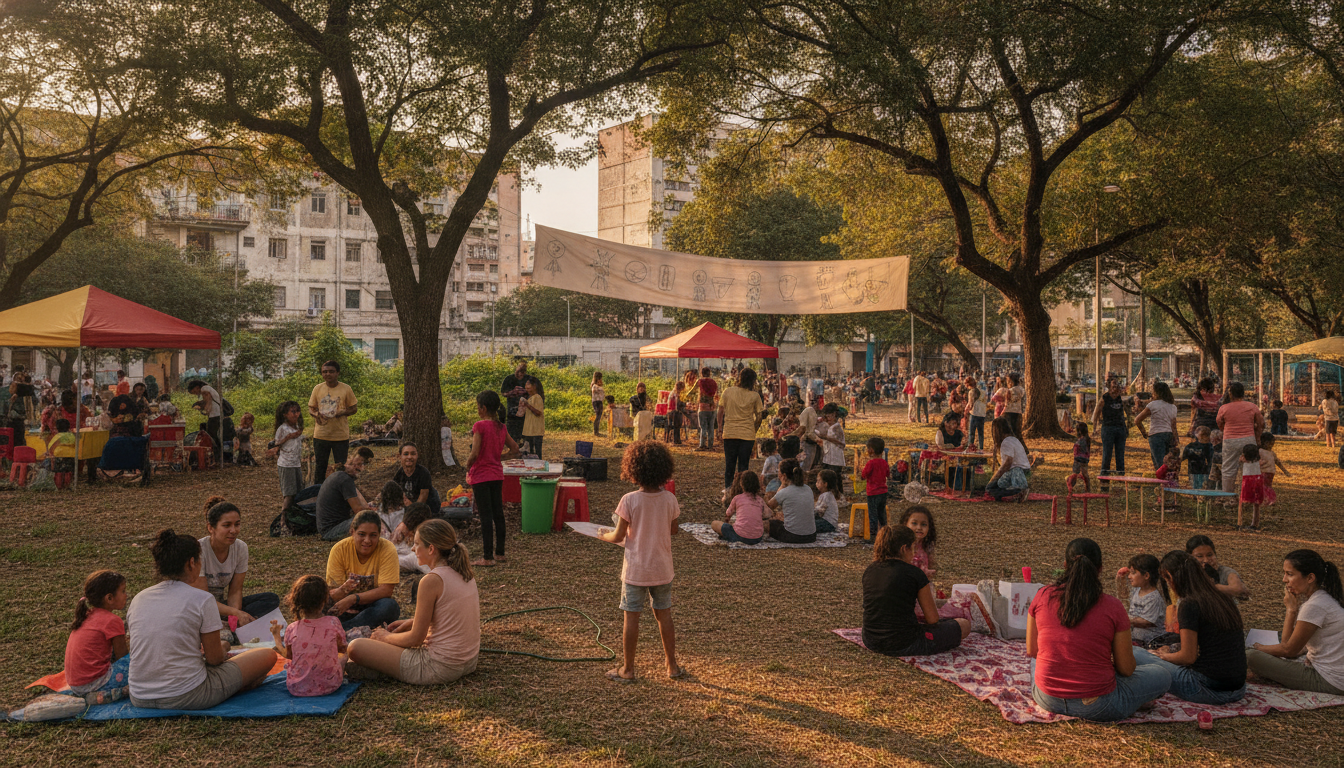
A public park in Caracas has been turned into a daily refuge for displaced families following the Venezuela earthquakes, where volunteers use play, dance and face painting to help children cope.
Park in Caracas becomes refuge for displaced families
A municipal park in Caracas has been repurposed as a gathering place for families forced from their homes by the recent Venezuela earthquakes, with tents, mats and improvised sleeping areas arranged beneath trees and near walkways. The site has evolved into a makeshift community centre where local volunteers and relief workers stage activities for children, seeking to restore routine and a sense of safety amid ongoing displacement. Organizers say the park’s open layout and proximity to neighbourhoods made it one of the few available public spaces large enough to accommodate dozens of families without triggering further congestion.
Volunteers focus on play, dance and face painting to ease trauma
Volunteers working at the park emphasize play-based approaches, combining simple games, group dances and face painting to engage children who have witnessed disruption and loss in the wake of the twin quakes. These activities are intended to reduce acute stress reactions, rebuild social connections and provide a predictable daily rhythm for youngsters whose lives have been suddenly upended. Aid coordinators note that play therapy and creative expression are short-term interventions that can stabilise behaviour, even as longer-term psychosocial support remains limited due to stretched resources.
Thousands remain displaced across affected areas
Authorities and relief groups estimate that thousands of families remain displaced across Caracas and neighbouring regions, continuing to rely on temporary shelters, relatives and public spaces for accommodation. Many of the displaced are living in precarious conditions without consistent access to clean water, sanitation or electricity, complicating efforts to protect children from disease and further harm. The concentration of families in parks and community centres has placed pressure on local services, and volunteers report frequent needs for basic supplies such as diapers, blankets and nutritious food.
Local and humanitarian response is patchwork and grassroots
The response on the ground has been a mixture of municipal teams, established humanitarian organisations and spontaneous volunteer groups, creating a patchwork of services that varies widely by neighbourhood. Some NGOs have deployed teams to provide psychological first aid and child-friendly spaces, while municipal staff coordinate debris removal and safety inspections of damaged buildings. However, gaps remain in logistics and funding, and aid providers say sustained support will be required if displacement continues into the coming weeks and months.
Children’s behaviours reflect acute disruption and resilience
Those running the activities at the park describe a range of reactions among children, from intense clinginess and nightmares to bursts of laughter and quick bonding during group games, underscoring both vulnerability and resilience. Staff and volunteers pay close attention to signs of withdrawal, aggression or regression in young children, referring more severe cases to mental health specialists where possible. The combination of structured play and everyday social contact has helped many children re-establish routines, a critical step toward longer-term recovery even as uncertainty persists for their families.
Families describe daily hardships and cautious hope
Parents and caregivers sheltering in the park say their foremost concerns are finding stable housing, earning enough to support their families and ensuring their children can return to school as soon as buildings are deemed safe. Many remain in limbo, moving between temporary sites while awaiting official damage assessments and any compensation or housing assistance that may be offered. Still, parents report that the children’s days at the park — filled with games and songs led by volunteers — provide brief periods of normalcy and relief from the stress of uncertain futures.
Debris, infrastructure and the road to recovery
Debris removal and infrastructure repair are ongoing challenges that authorities must address to permit safe returns and to reopen schools and health centres affected by the Venezuela earthquakes. Engineers and municipal inspectors are prioritizing assessments of buildings where families have lived, while public works crews focus on restoring utilities and clearing main roads to improve access for relief convoys. Recovery planners warn that rebuilding will be a lengthy process requiring coordinated investment, sustained humanitarian aid and clear timelines for families who need to transition from temporary shelter to permanent housing.
As the park in Caracas continues to serve as a child-focused relief hub, volunteers and local organisations stress that immediate psychosocial support and basic services are essential to prevent longer-term harm to a generation whose early months after the quakes will shape recovery prospects. Their work in playgrounds and makeshift activity tents is providing small but vital stabilizing routines, even as families await broader assistance to rebuild homes, reopen schools and re-establish the security that children need to thrive.
