
Venezuela earthquake aftershock shakes Caracas as death toll tops 1,500
A magnitude 4.6 aftershock rattled Caracas in the wake of the devastating Venezuela earthquake that killed more than 1,500 people; the U.S. has pledged $300M in aid.
A strong aftershock struck Venezuela’s capital early Monday, jolting residents and renewing fears in a country still reeling from a catastrophic double quake days earlier. The Venezuela earthquake sequence now includes the two major tremors that hit midweek and a significant M4.6 event centered off the coast near Caraballeda. Authorities and aid organizations say urgent humanitarian needs are growing as rescue teams race to reach damaged neighbourhoods.
Aftershock rattles Caracas and La Guaira
The U.S. Geological Survey measured Monday’s tremor at magnitude 4.6, with the epicentre about 27 kilometres north of the coastal town of Caraballeda. The shock was widely felt across Caracas and neighbouring La Guaira, prompting alarms and brief evacuations in apartment blocks and public buildings. Official spokespeople reported no major immediate damage within the first hour, but officials cautioned that assessments were still under way.
Death toll climbs after twin 7.2 and 7.5 shocks
The death toll from the earlier, far more powerful double quake continues to rise, with local authorities reporting more than 1,500 fatalities so far. The United Nations has estimated up to 50,000 people are missing or unaccounted for across the hardest-hit regions. Experts warn that the likelihood of finding survivors falls sharply as days pass, making rapid search-and-rescue operations critical.
Widespread building damage reported
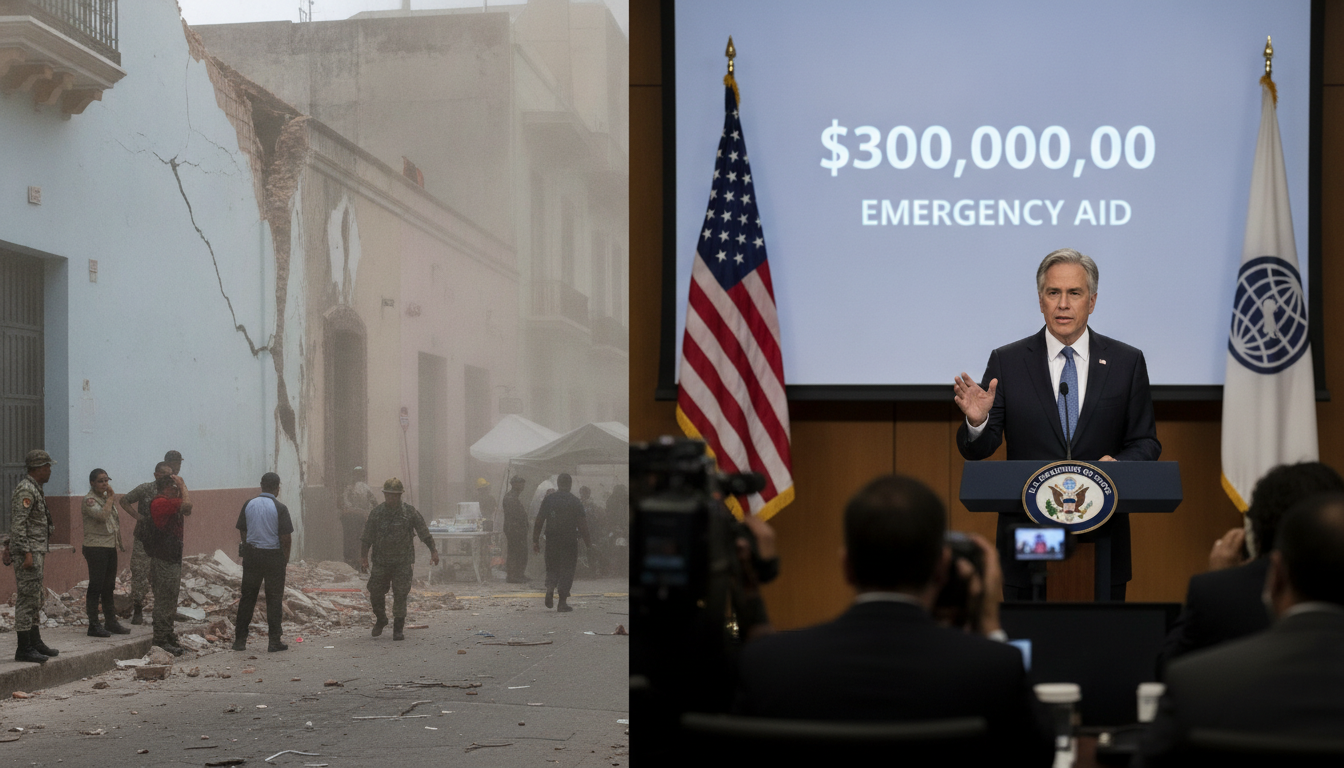
Preliminary official counts indicate 774 buildings sustained damage during the twin temblors, including 189 structures that collapsed completely. Residential towers, older apartment blocks and coastal infrastructure bore much of the impact, leaving many families homeless or living in precarious conditions. Utilities and transport links have been disrupted in multiple municipalities, hampering relief deliveries and increasing short-term risks for affected communities.
United States announces $300 million in emergency assistance
The U.S. State Department said Monday it would provide $300 million in humanitarian aid for Venezuela, double an earlier commitment made days ago. The funds are earmarked for emergency medical care, food assistance, clean water and sanitation, shelter and protection services, and logistical support to speed relief operations. Washington indicated the money will flow through international and non-governmental partners including the World Food Programme, the Red Cross, Samaritan’s Purse, Catholic Relief Services and the International Organization for Migration.
Search-and-rescue teams and military support deployed
Several hundred U.S. military personnel have been deployed to assist in search-and-rescue efforts, including specialised canine brigades tasked with locating survivors under rubble. International and local rescue teams are coordinating operations amid difficult conditions, with aftershocks and unstable structures complicating access. Humanitarian agencies stressed the need for more heavy equipment, medical supplies and safe corridors to move injured people to treatment.
Humanitarian needs mounting as responses scale up
Aid agencies say the immediate priorities are restoring medical services, preventing outbreaks through improved sanitation, and delivering food and clean water to cut-off communities. Shelter is a pressing concern for thousands made homeless by collapses and unsafe buildings, and protection services are being expanded to assist vulnerable groups. Logistics remain a bottleneck: damaged roads and congested ports are slowing the flow of relief goods into the most affected zones.
Washington and Caracas have taken steps to restore formal ties in recent months, and the easing of some sanctions has facilitated a faster channeling of international assistance. Venezuelan officials are leading domestic coordination, while international partners work to bolster capacity in devastated municipalities. Agencies on the ground emphasise transparency and accountability as funds and supplies move in, to ensure aid reaches those most in need.
The full scale of recovery will emerge only after detailed engineering assessments and longer-term planning, including how to rebuild housing and critical infrastructure to greater seismic standards. Experts say reconstruction will require sustained international support and robust oversight to manage the complex mix of immediate relief and long-term rebuilding. For now, the priority remains search-and-rescue and stabilizing conditions for the displaced.
As aftershocks continue, families and first responders face a race against time to find survivors and stem a widening humanitarian crisis triggered by the Venezuela earthquake sequence. Continued international aid and speedy logistical support will be essential in the coming days if recovery efforts are to prevent further loss of life and begin the long process of rebuilding.
