
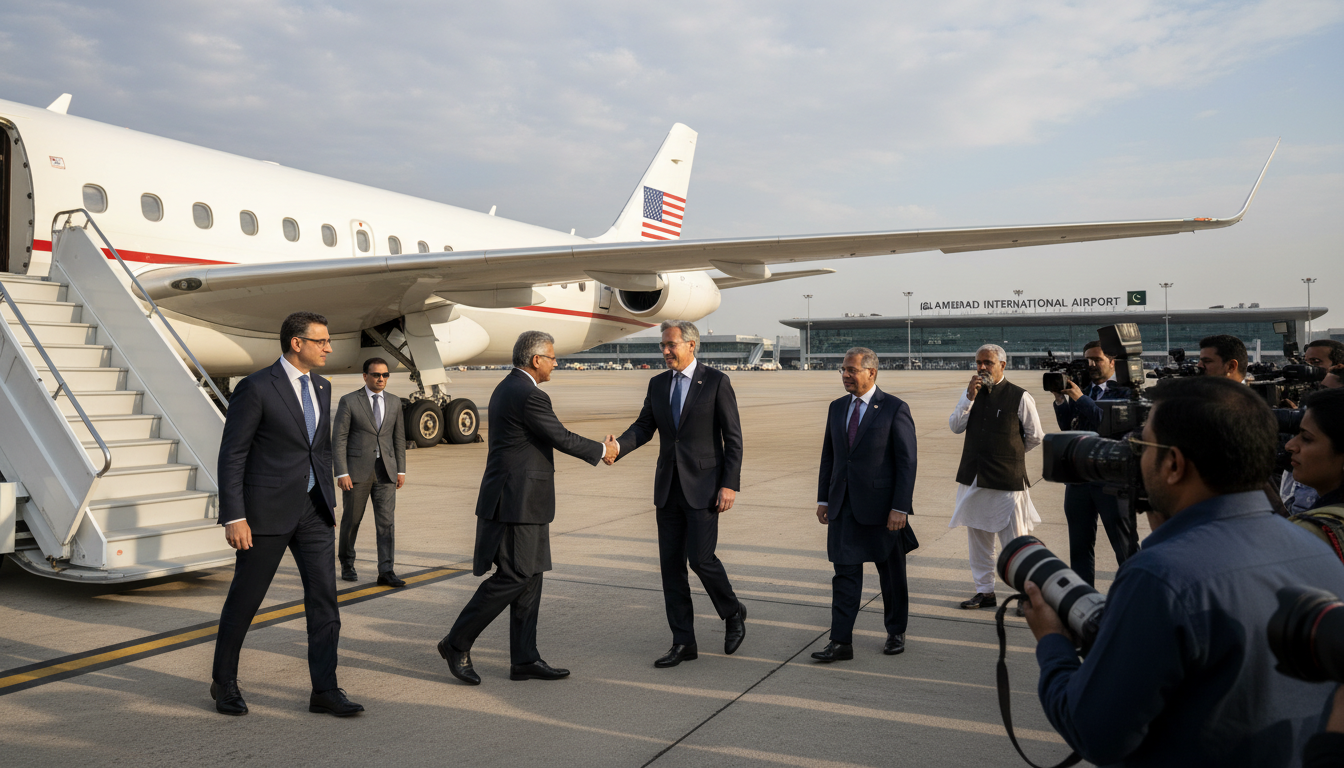
Islamabad talks expected to resume as US envoys meet Iranian delegation amid fragile Lebanon ceasefire
US envoys are due in Islamabad for Islamabad talks aimed at reviving negotiations to end the wider Middle East conflict, while a fragile truce in Lebanon is strained by new Israeli strikes.
Opening summary
US envoys Steve Witkoff and Jared Kushner were expected in Islamabad on Saturday to join talks with an Iranian delegation and Pakistani mediators, part of efforts to restart negotiations intended to bring a durable end to the regional war.
The Islamabad talks occur against a backdrop of fragile ceasefires and recent deadly strikes in southern Lebanon that have kept the risk of renewed fighting high.
Iranian delegation meets Pakistan’s top leaders
Iran’s foreign minister, Abbas Araghchi, arrived in Islamabad Friday night and held talks with Pakistan’s military chief, Asim Munir, and Prime Minister Shehbaz Sharif.
According to Iranian statements, Araghchi presented Tehran’s positions on the ceasefire and on conditions for a complete end to hostilities, and Pakistan is acting as an intermediary for transmission of those positions.
No planned direct Iran–US meeting, officials say
Iranian spokespeople reiterated that no direct meeting was scheduled between Tehran and Washington, and that Iran’s positions would be relayed through Pakistani mediators.
The White House, however, said the US envoys would meet with representatives of the Iranian delegation in Islamabad, and that Vice‑President J.D. Vance — who led an earlier US team — could join discussions subsequently.
Ceasefire in Lebanon remains precarious
A ceasefire between Israel and Hezbollah that was extended for three weeks remains under strain, with renewed Israeli strikes reported in the Nabatiyé district and elsewhere in southern Lebanon.
Lebanese health officials reported multiple deaths in recent days, and imagery from the region showed large plumes of smoke rising above affected villages, underscoring how fragile the truce has become.
Casualties and accusations escalate on both sides
The wider conflict, which followed an attack by the United States and Israel on Iran on February 28, has resulted in thousands of deaths primarily in Iran and Lebanon and inflicted serious economic disruptions.
Israeli authorities said they targeted Hezbollah positions and accused the movement of seeking to sabotage the negotiation process, while Hezbollah has urged Lebanon to withdraw from direct talks and denounced continuing Israeli hostilities.
Maritime blockade and regional tensions persist
Iran has warned of a military response if the United States continues to enforce a blockade of Iranian ports, denouncing the interdictions as acts of “piracy.”
The Strait of Hormuz remains effectively closed to commercial traffic, interrupting a corridor that previously carried about one‑fifth of the world’s seaborne oil and liquefied natural gas, compounding global economic ripple effects.
Diplomatic movement and domestic developments in Iran
After Islamabad, Araghchi is expected to continue a regional tour that includes Oman and Russia as Tehran seeks broader diplomatic support for any negotiated settlement.
Domestically, Iranian state media announced the reopening of Tehran’s international airport with flights resuming to destinations including Medina, Muscat and Istanbul, even as authorities carried out a new execution tied to past anti‑government protests.
Immediate humanitarian toll in southern Lebanon
Lebanese health officials reported four additional deaths from Israeli strikes in the Nabatiyé district on Saturday, following earlier reports of fatalities in the same region.
Israeli forces repeated warnings to residents of dozens of southern Lebanese localities not to return, citing ongoing security operations and recent strikes on what they described as Hezbollah rocket positions.
The arrival of US envoys in Islamabad, the mediation role played by Pakistan, and Tehran’s insistence on indirect channels underline the complexity of brokering an end to the conflict.
With the ceasefire in Lebanon fragile and maritime bottlenecks continuing to disrupt energy flows, diplomats say any breakthrough will require careful sequencing, verified commitments and the willingness of the principal parties to accept mediated arrangements.
