
Ukraine children’s books surge as authors and parents turn stories into tools for wartime coping
Ukraine children’s books have surged since Russia’s full-scale invasion in February 2022, offering parents and schools story-based tools to help children process loss and wartime fear.
Authors channel trauma into children’s books
When Russia launched its full-scale invasion in February 2022, many Ukrainian parents found themselves facing questions no child should have to ask. Psychologist Alina Otzemko turned those questions into a children’s book after her husband joined the Ukrainian Army and went to the front. Her first title, Why Isn’t Dad at Home? (Teacher, 2024), recounts wartime life through the eyes of her toddler and was later followed by Why Did Dad Die? (Teacher, 2025) after her husband was killed on June 7, 2024.
Otzemko says the books were written to give parents language and structure to explain sudden absences, damaged cityscapes and the mechanics of grief to young children. Her work is one of many recent titles that aim to bridge private trauma and public conversation in families across Ukraine.
Themes range from loss and exile to military life
Publishers and authors have produced a wide array of topics: some books confront death and separation directly, while others use animals, fable and magical figures to soften the telling. Titles such as Rocket the Raccoon and Other Heroes (The Old Lion Publishing House, 2024) use animal protagonists to express fear and resilience, and Ommm. The Spirit of the Irpin Forest (The Black Sheep, 2023) retells an occupied town’s ordeal through a guardian spirit.
At the same time, encyclopedic and informational volumes teach children about weapons, tactics and veterans, reflecting how the war has entered everyday life. Little Travel Book. Armed Forces of Ukraine (The Old Lion Publishing House, 2025) and similar primers introduce drones, air-defence systems and the role of women in the military in age-appropriate terms.
Educators stage readings and use stories therapeutically
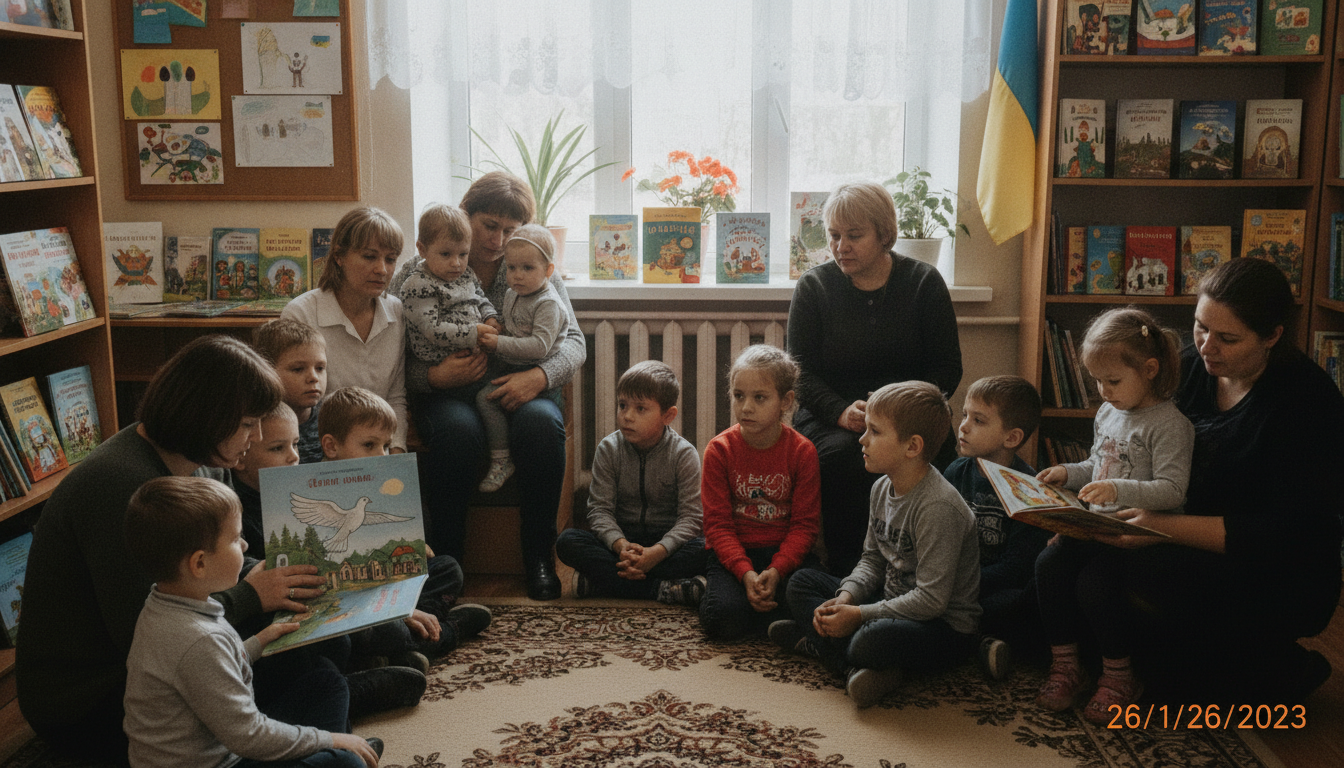
Across Kyiv suburbs and towns such as Irpin, school directors and teachers have integrated wartime books into classrooms and staged theatrical readings to encourage conversation. Nataliia Cheredniuk, author of the Irpin forest tale, described using her book in schools to prompt children to speak about wishes, fears and the idea of protection after occupation and loss.
Academics and child specialists say the stories provide a framework for emotional processing rather than leaving trauma unspoken. Emily Finer, a senior lecturer in children’s literature, counted nearly 200 new titles since the conflict’s beginning and described the phenomenon as unparalleled; she notes many books deliberately use metaphor and gentle imagery to make traumatic subjects accessible to youngsters.
Parents adopt books to explain weapons, defence and identity
For some families, informational books have become practical tools for answering children’s questions about modern warfare. In Kyiv, telecommunications manager Iryna Bilan bought volumes for her sons that explain fighter jets, missiles and how air-defence systems operate to intercept incoming threats. She says learning about these systems helped her 10-year-old feel less helpless and offered a way to balance fear with an understanding of defence.
Other parents emphasize civic education and a sense of belonging. War veteran Lera Burlakova selected a children’s army encyclopedia for her son to teach him about veterans, prosthetics and the changing role of service in Ukrainian society. These titles are used not just to inform but to shape young people’s sense of national identity amid prolonged conflict.
Industry scale and cultural consequences
The rapid expansion in Ukraine children’s books reflects a broader cultural shift in how Ukrainians address suffering and survival. Researchers and librarians point to the sheer volume of new material — roughly 196 titles catalogued by some scholars — as evidence that the market and civil society are responding to a generation that has known war as a constant background.
Publishers report steady demand from parents, schools and NGOs, and creators say the books perform civic as well as therapeutic functions: teaching terminology, memorializing experience and helping families translate news and radio reports into child-centered conversations. The result is a body of literature that is reshaping childhood in Ukraine.
These books do not erase pain, but parents, teachers and authors say they can prevent trauma from becoming unspoken baggage. As the conflict continues to affect daily life, the emergence of story-based tools has become a notable part of Ukraine’s cultural and social response to war.
