
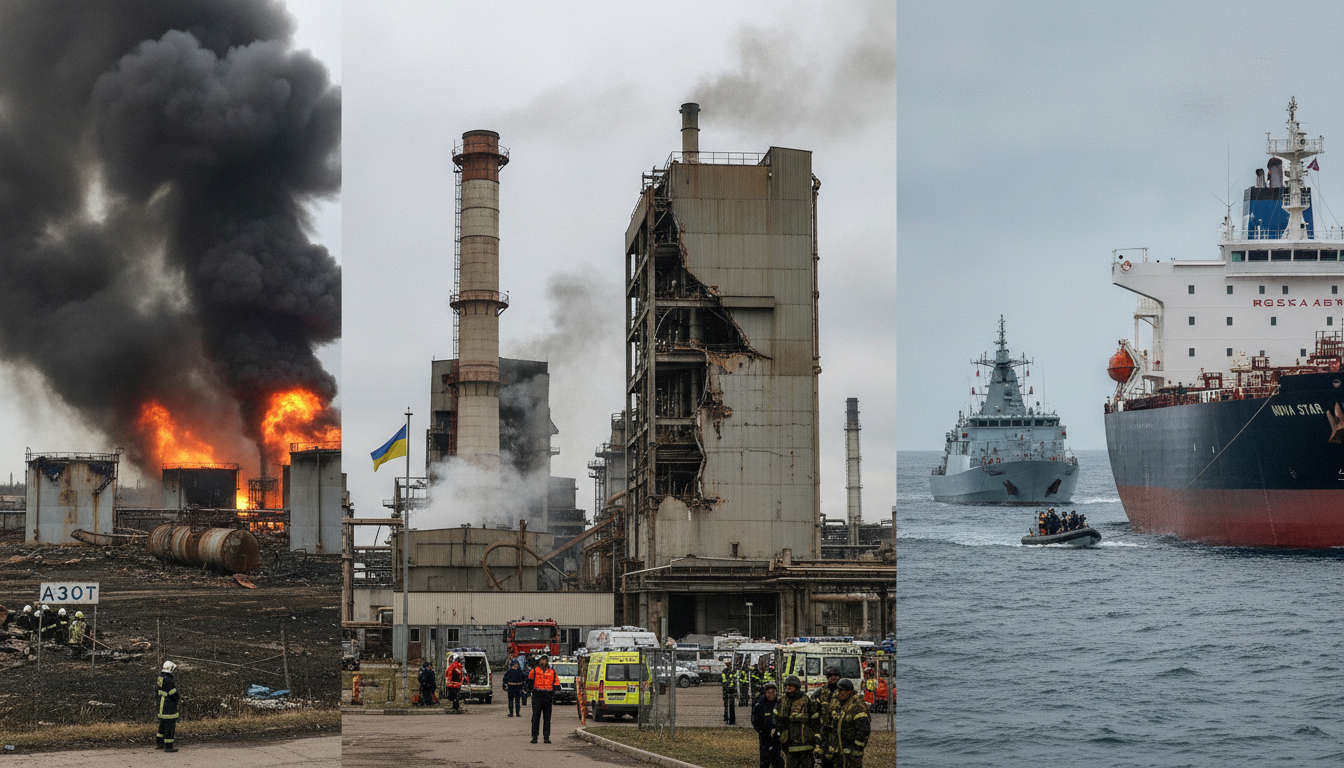
Ukraine strikes oil field and Azot plant; UK intercepts sanctioned tanker Smyrtos
Ukraine strikes a Yaroslavl oil field and Tula’s Azot plant; Britain intercepts sanctioned tanker Smyrtos in the English Channel on June 14, 2026 and NATO.
A series of cross-border operations on June 14, 2026 saw Ukraine strike a Russian oil field in Yaroslavl and the Azot chemical plant in Tula, while British forces intercepted a sanctioned tanker in the English Channel. The coordinated sequence of events highlights an intensification of strikes inside Russia and a parallel effort by Western authorities to clamp down on revenue streams they say finance Moscow’s war. Ukrainian President Volodymyr Zelensky framed the strikes as part of a long-term campaign of targeted missions against military-industrial and logistical nodes.
Strike claims and target significance
President Zelensky announced the strikes on social media, identifying the Azot chemical works as a facility tied to Russian explosives production. Officials in Kyiv described the operation as a deliberate move against infrastructure that supports Russian munitions and logistics. The Tula plant and the Yaroslavl fuel sites were singled out as strategic targets intended to disrupt supply chains serving frontline forces.
Local authorities report drone attack in Yaroslavl
Yaroslavl regional authorities reported a large-scale drone attack overnight that struck fuel depots after most incoming drones were intercepted. Governor Mikhail Evryaev said air defenses shot down the majority of the drones but that a number nevertheless hit storage facilities and triggered a sizable fire. Evryaev warned residents to expect additional drone activity during the day and urged caution near affected areas.
Ukrainian long-range capabilities and tactics
Since early 2026 Ukraine has progressively deployed drones and missiles capable of reaching targets well inside Russian territory, and Kyiv has publicly described these operations as a calibrated response to Moscow’s refusal to cease hostilities. Ukrainian officials say the focus has been on oil refineries, military-industrial sites and key logistical nodes that sustain Russian operations. Analysts say such strikes are intended to degrade materiel flows while complicating Russia’s rear-area security posture.
Royal Navy and NCA interception of the Smyrtos
On the same day, British forces carried out a maritime interception in the English Channel, boarding the tanker Smyrtos, a vessel identified with Russia’s so-called “ghost fleet” and sailing under the Cameroonian flag. Commandos from the Royal Marines, supported by the National Crime Agency and aerial assets including Chinook helicopters, executed the operation in the early hours of June 14, 2026. The government said the action targeted a sanctioned vessel and aimed to prevent oil revenues from reaching entities tied to Russia’s war effort.
Operational details and diplomatic coordination
The Smyrtos was taken under control with support from a Royal Navy frigate and a minehunter, then held off the south coast of England while authorities opened an investigation. British officials said the interception was conducted in close coordination with French authorities, underlining an allied push to enforce sanctions and disrupt illicit shipping networks. Prime Minister Keir Starmer described the operation as a message to those who facilitate the financing of the conflict in Ukraine.
Implications for sanctions enforcement and maritime policing
The interception marks an assertive step by Western states to extend sanctions enforcement into maritime corridors, increasing the operational risk for flagged vessels connected to sanctioned interests. Legal and commercial implications could follow as investigators determine ownership, cargo provenance and compliance with sanctions regimes. Observers say the move signals a willingness among allies to use naval and law enforcement tools to target revenue streams as part of a broader pressure campaign.
Risks of escalation and civilian impact
Military and maritime maneuvers on both sides raise questions about escalation and the potential for collateral harm. Strikes on industrial sites and fuel depots carry environmental and humanitarian risks, while naval interdictions can complicate commercial shipping operations and insurance arrangements. Officials on all sides have emphasized efforts to avoid civilian casualties and unintended maritime incidents, but the expanding scope of operations increases the likelihood of miscalculation.
The unfolding events on June 14, 2026 represent a convergence of Kyiv’s long-range strike campaign and allied efforts to choke off financial support for Moscow’s war machine, and they will be closely monitored for their operational, legal and diplomatic consequences.
