
Lawsuit Seeks to Block UFC Fight on the White House South Lawn
A federal lawsuit filed Saturday aims to stop the planned UFC fight on the White House South Lawn scheduled for June 14, arguing the event violates National Park Service rules and lacked required reviews.
Lawsuit Seeks Immediate Court Intervention
The complaint, brought by the Public Integrity Project on behalf of two Virginia residents, asks a federal court to halt construction and the scheduled mixed martial arts show. Plaintiffs argue the administration’s authorization of the UFC fight on the White House South Lawn was unlawful and that immediate judicial relief is necessary to prevent irreparable harm.
The filing contends the June 14 event — timed to coincide with the president’s 80th birthday and the nation’s 250th anniversary celebrations — represents a private, commercial use of public parkland without proper authorization. Lawyers for the plaintiffs frame the challenge as a defense of public space and legal process.
Plaintiffs’ Core Legal Claims
Central to the lawsuit are alleged violations of National Park Service regulations that plaintiffs say prohibit sporting events on federal parklands without specific permission. The complaint also asserts construction was undertaken without an environmental review required for alterations to the grounds.
The plaintiffs additionally challenge the placement of a large decorative arch overlooking the event area, saying Congress did not consent to that permanent or semi-permanent structure. Their lawyers argue those features turn the South Lawn into a commercial venue in ways the law does not permit.
White House Calls Challenge Baseless
The White House issued a statement dismissing the legal challenge as “an obstructionist, baseless, and dilatory” attempt to stop the celebration. Officials said the UFC fight on the White House South Lawn is comparable to other White House-hosted gatherings and permitted events hosted on the Ellipse and National Mall.
White House representatives emphasized that the event has been planned as a public celebration tied to broader commemorations, and they defended the permitting and planning process. UFC did not immediately respond to a request for comment, according to the filing.
Logistics of the Event and Public Access Plans
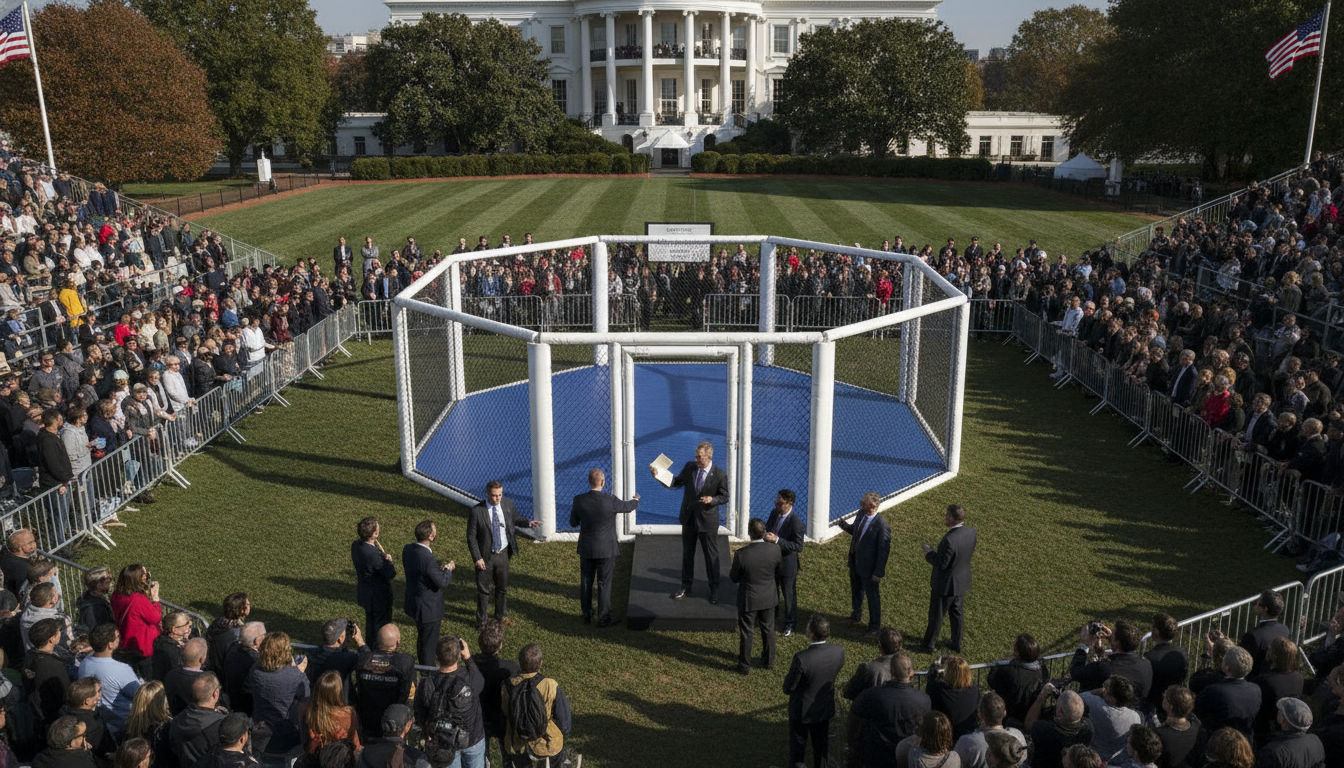
Photos and descriptions accompanying the complaint and public statements indicate crews are erecting an octagon-shaped cage and infrastructure to support what organizers have called a 5,000-seat arena on the South Lawn. Large screens are slated for the nearby Ellipse to accommodate additional viewers.
Organizers have reportedly said they plan to issue up to 85,000 free tickets to make the fights accessible to a broad audience across the South Lawn and adjacent park space. The scale of the setup and the number of expected spectators are central to the plaintiffs’ concerns about crowding, environmental impact and the altered character of the federal landscape.
National Park Service Rules and the Arch Dispute
Legal analysis in the complaint focuses on the National Park Service’s regulations and longstanding protections for federal parklands that limit commercial sporting uses. Plaintiffs assert officials failed to follow those rules when permitting and constructing the event infrastructure.
The dispute over a prominent arch structure above the event site is described in the filing as especially contentious. Plaintiffs say the arch was erected without statutory authorization from Congress and alters the view and historic character of the South Lawn in ways that federal law is designed to prevent.
Possible Court Outcomes and Broader Implications
If the court grants a temporary restraining order or preliminary injunction, the UFC fight on the White House South Lawn could be delayed or relocated while the case proceeds. Plaintiffs seek a judicial determination that would require agencies to conduct environmental and procedural reviews before similar projects move forward.
Legal experts say the case could set a precedent regarding how far executive branch officials may go in repurposing public ceremonial spaces for large-scale private or commercial events. Observers on both sides note that a court ruling will likely examine statutory text, agency regulations and the administrative record behind the permitting decisions.
The unfolding litigation also raises questions about balancing celebratory programming with preservation of public lands, and whether routine permitting practices for national events require more rigorous oversight. The resolution of the case may influence how future large-scale gatherings are proposed and vetted on federal landscapes.
The lawsuit frames the fight as more than a sporting event, saying it tests the limits of permissible activity on some of the nation’s most symbolic grounds, and a court ruling is expected to shape both immediate plans and longer-term policy for the use of the South Lawn.
