
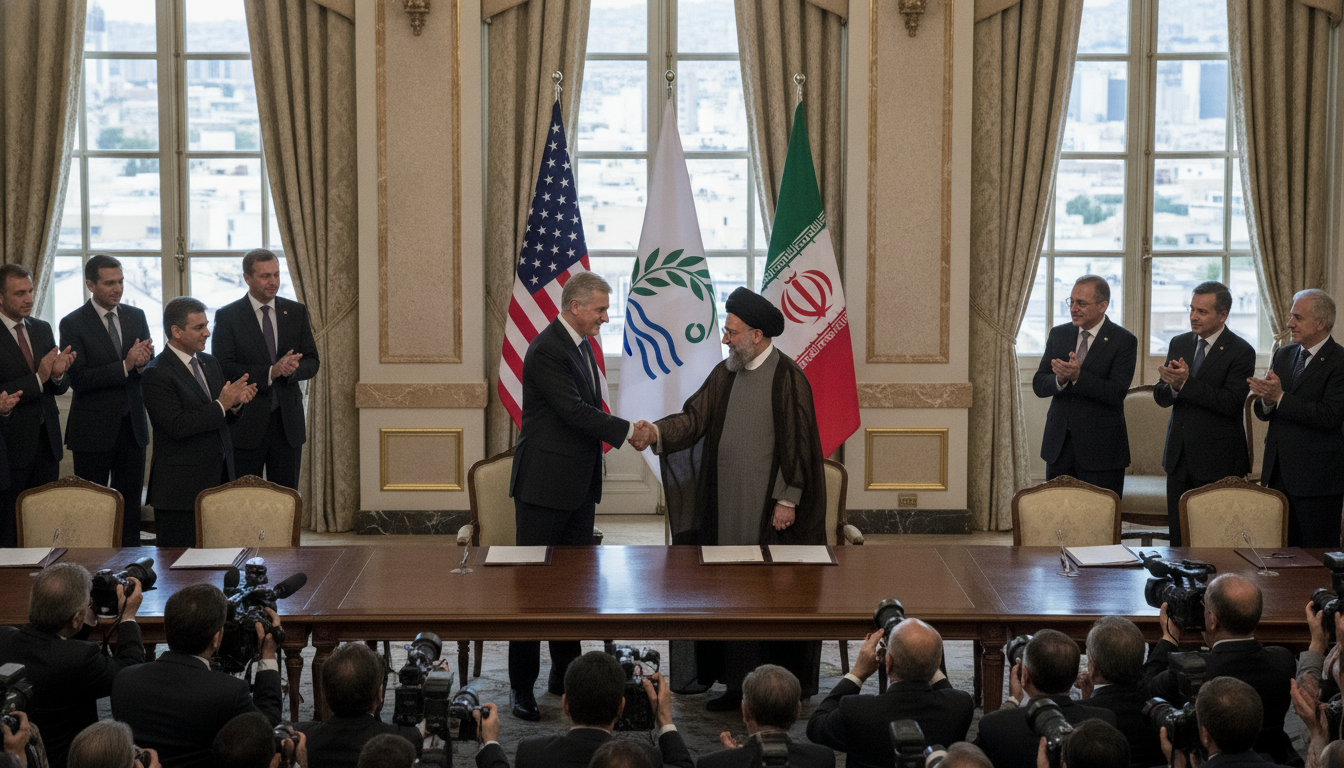
U.S.-Iran peace framework reached; Strait of Hormuz set to reopen
U.S.-Iran peace framework reached on June 15, 2026, aims to lift a months-long blockade of the Strait of Hormuz, curb Iran’s nuclear ambitions and establish verification measures.
The United States and Iran announced a framework for peace on Sunday that, according to U.S. officials, will immediately reopen the Strait of Hormuz and end a months-long naval blockade that disrupted global shipping. The U.S.-Iran peace framework also includes provisions intended to prevent Iran from acquiring a nuclear weapon, marking a sharp de‑escalation after weeks of heightened tensions.
Agreement to Reopen the Strait of Hormuz
The central operational element of the agreement is the lifting of the naval restrictions that had impeded passage through the Strait of Hormuz, a strategic chokepoint for global energy shipments. Washington said the move would restore commercial transit and naval freedom of navigation that had been curtailed during the blockade.
Shipping companies and insurers are expected to reassess route risk once formal arrangements are implemented, a shift that could lower freight premiums and ease delays at key maritime hubs. Port authorities and regional carriers have signalled cautious relief while awaiting concrete timelines for resumption.
Provisions on Iran’s Nuclear Program
A key diplomatic objective in the framework is the prevention of Iran developing a nuclear weapon, with language that U.S. officials described as binding on Tehran’s long-term capabilities. The agreement reportedly includes technical restrictions and oversight mechanisms intended to limit sensitive enrichment activities.
Iran’s public statements framed the accord as a recognition of its rights while denying any intent to pursue weapons, and the framework seeks to translate both positions into enforceable steps. International monitors are expected to play a role in confirming compliance with the agreed limitations.
Negotiations and Diplomatic Track
Officials said the framework was the product of an intensive diplomatic push in recent weeks, combining direct contacts and intermediated discussions to bridge longstanding gaps. The negotiating track reportedly prioritized swift measures to reduce immediate military tensions while laying out a phased process for verification and confidence-building.
Diplomats emphasised that the framework is a preliminary political accord rather than a full treaty, meaning detailed technical annexes and timelines must still be negotiated. Governments involved in backchannel facilitation will likely remain engaged to iron out the operational and legal particulars.
Regional and International Reactions
Reaction among regional capitals and global partners was mixed, with relief at the prospect of de‑escalation tempered by calls for robust verification. Several governments welcomed the cessation of the blockade as a practical step to restore normal commerce, while others urged careful monitoring to ensure Tehran’s commitments are upheld.
International organisations and markets will watch for definitive implementation steps, as the credibility of the framework hinges on transparent inspections and enforceable consequences for violations. The agreement is likely to redraw diplomatic postures across the Middle East, at least temporarily easing immediate security fears.
Impact on Shipping, Energy and Markets
A confirmed reopening of the Strait of Hormuz could quickly lower shipping costs and alleviate supply-chain bottlenecks that raised insurance rates and shipping delays during the blockade. Crude oil flows through the strait account for a significant share of seaborne global oil transport, so renewed passage may calm energy markets.
Traders have historically reacted strongly to disruptions in the strait, and even an interim assurance of safe transit could reduce volatility in oil and freight markets. Energy ministers and commodity analysts will be watching for concrete timing and enforcement measures that shape medium-term market expectations.
Verification, Enforcement and Next Steps
The framework sets out a sequence of verification steps designed to demonstrate compliance before full concessions are implemented, though officials cautioned that technical protocols remain to be finalized. Multilateral monitoring, inspection access and routine reporting are expected to form the backbone of the verification regime.
Observers emphasise that the credibility of the agreement will depend on rapid, impartial verification and on agreed triggers for reinstating restrictions if breaches occur. Both sides have signalled a willingness to continue talks to translate political commitments into legally binding instruments that can be monitored.
The coming days will be critical as teams from the United States, Iran and international partners move from a high‑level political accord to detailed technical arrangements, with implementation timetables and verification protocols expected to shape the durability of the peace framework.
