
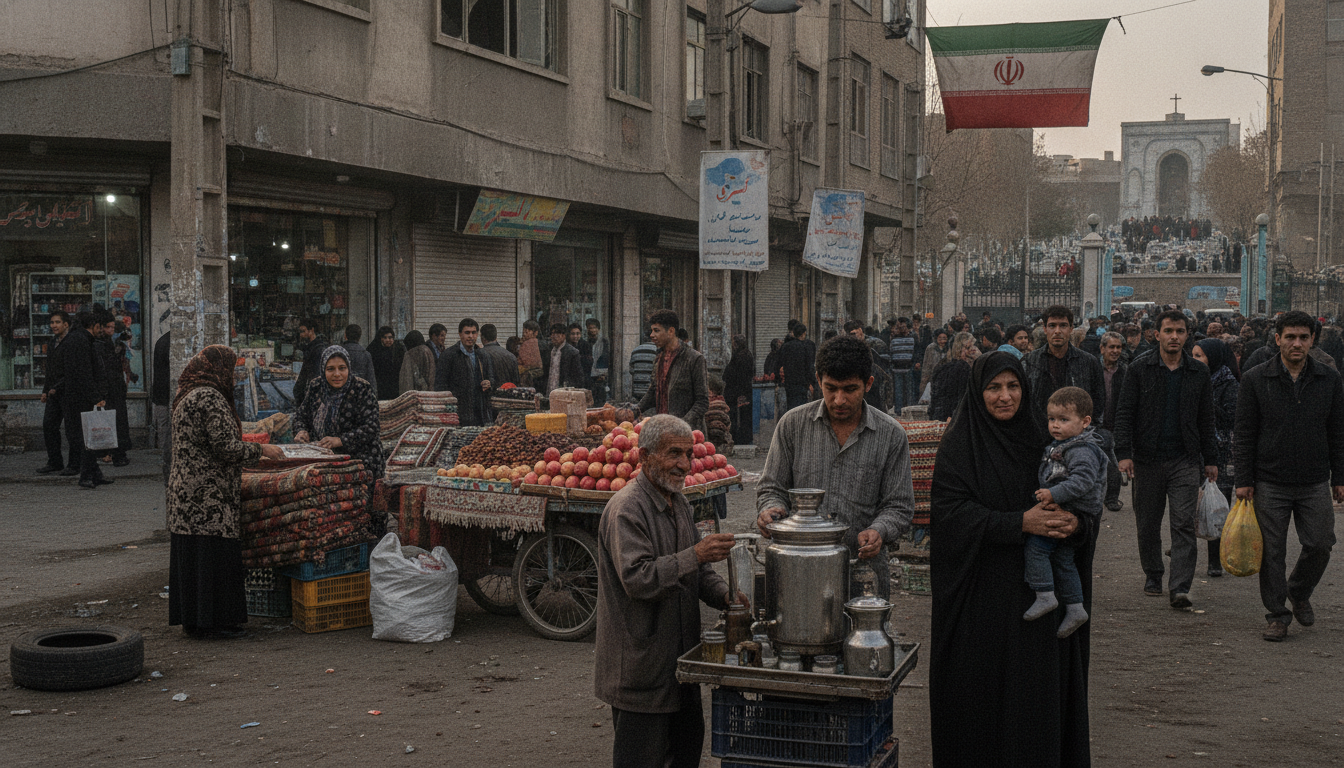
Tehran street vendors return to disrupted markets amid protests, war and national mourning
Tehran street vendors face repeated closures from protests, war and national mourning; many return to the sidewalks for income, identity and community.
Tehran street vendors are back on the capital’s sidewalks after a year of repeated closures tied to protests, conflict and national mourning, a pattern that has reshaped daily trade and public life. The vendors say earning income remains essential, but many describe deeper reasons for returning to the streets, including community ties and preserving a sense of normalcy. Foreign journalists granted limited access to parts of the city, accompanied by government-provided translators, documented these returns and the tensions that accompany them.
Street Commerce Disrupted by Protests and Mourning
Widespread protests earlier in the year forced large sections of Tehran’s informal markets to shut for days or weeks at a time. Funeral observances for the country’s recently slain supreme leader and the broader national response prompted additional closures and altered pedestrian flows in key districts.
Those interruptions hit vendors suddenly, with little advance notice and limited compensation, leaving many to ration savings or reduce household expenditures. The rhythm of weekday trade has been punctuated by unpredictable shutdowns, complicating vendors’ ability to plan inventory and meet client demand.
Vendors Return Despite Economic and Security Risks
Despite the risks and ongoing uncertainty, many vendors have resumed work on major thoroughfares and side streets. For them, street vending is not only a source of day-to-day earnings but also a practical response to lost wages and shrinking formal employment opportunities.
Returnees cite both financial necessity and intangible reasons for reopening stalls: maintaining relationships with regular customers, preserving a visible presence in neighbourhood life, and asserting a measure of autonomy in the face of disruption. This calculus often outweighs fears of further closures or confrontations with security forces.
Voices from the Pavement
Several vendors interviewed in public spaces described careful calculations about when and where to trade, opting for locations they considered safer or more consistent with foot traffic. They emphasized that predictable daily turnover matters as much as total revenue, because small, steady sales cover immediate expenses like rent and food.
Others spoke about the psychological importance of work, saying that being visible in the neighbourhood helps sustain dignity and social ties. These sentiments reveal that the street economy functions as both a financial lifeline and a social fabric for many households.
Government Oversight and Media Access
Journalists who observed the scene did so under tight constraints, often accompanied by government-provided translators and limited to specific neighbourhoods and interactions. Those conditions shaped the conversations vendors were willing to have and the scope of what could be independently verified on the ground.
Official messaging has framed some closures as necessary for security or public order, while municipal authorities have at times launched targeted enforcement campaigns against unlicensed vending. The presence of state actors underscores the political dimension of what may otherwise appear as purely economic activity.
Local Economy Under Strain
The repeated interruptions have ripple effects across Tehran’s informal and formal economies, from delivery services and small suppliers to nearby storefronts that rely on consistent pedestrian traffic. Suppliers who stock items for street vendors report delayed orders and smaller shipments, reflecting a tightening cash flow across the supply chain.
Households that depend on daily sales face a narrow margin for error; missing several trading days can push families into debt or force reduced consumption. The volatility also dampens investment in carts, stock, and modest improvements vendors might otherwise make to expand their businesses.
Outlook for Vendors and Urban Markets
Vendors and analysts say the future of Tehran’s street markets will depend on the interplay of political stability, municipal policy, and broader economic conditions. If closures recur or enforcement intensifies, many traders could shift to more precarious or hidden forms of work, undermining both safety and livelihoods.
Conversely, a sustained easing of restrictions and targeted local support — whether through temporary permits, microcredit or designated market zones — could help vendors stabilize incomes and rebuild customer networks. For now, most vendors remain cautious but determined to keep trading as circumstances allow.
For the people who sell goods along Tehran’s sidewalks, the decision to return is rarely simple; it is shaped by immediate survival needs and a desire to preserve everyday routines that anchor families and communities.
