
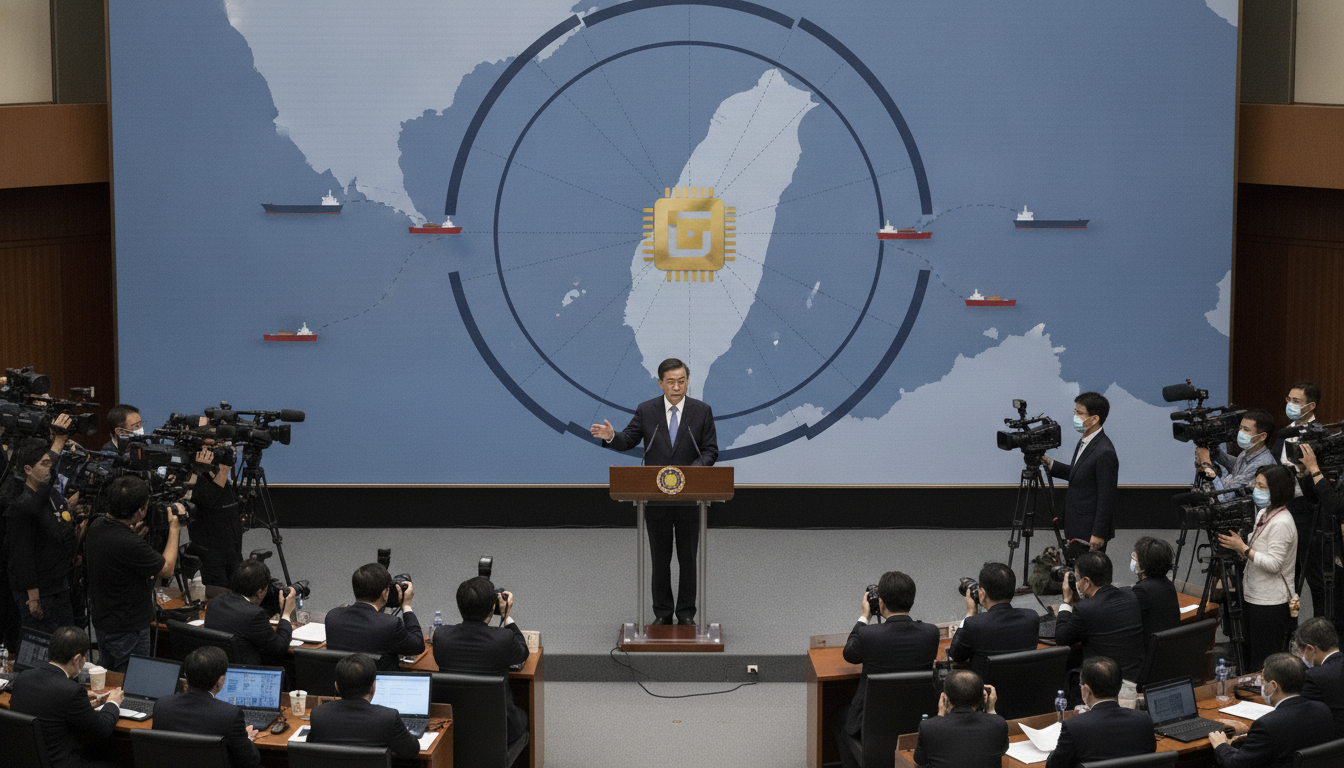
Taiwan ramps up defences against a possible maritime blockade by China
Amid conflicts in Iran and Ukraine, Taiwan braces for a possible maritime blockade by China, bolstering defences to protect civilians and semiconductor exports.
Taiwan has long planned for the possibility of a Chinese invasion, but recent wars in Iran and Ukraine have sharpened concerns about a Taiwan maritime blockade and new tactics that could be used to isolate the island. Military planners and civilian authorities are intensifying preparations for sustained disruption at sea, while policymakers warn a blockade would have global economic repercussions. The prospect of the United States being preoccupied with other conflicts has added urgency to Taipei’s readiness efforts.
Escalating global conflicts reshape threat perceptions
Strategists say events in the Strait of Hormuz and the Black Sea have changed how Taiwan views the timing and methods of coercion. Iran’s recent tactics of closing vital shipping lanes and Russia’s campaign in Ukraine demonstrated how maritime and hybrid measures can be used to exert pressure without full-scale invasion. Those examples have fed worries that China might adopt similar methods in the Taiwan Strait to sever routes and force political concessions.
Analysts caution that a blockade need not begin with a classic naval cordon; it could combine cyberattacks, mining, long-range missile strikes and legal or diplomatic maneuvers to disrupt commerce. Taiwanese officials, military analysts and industry leaders now assess how layered threats could be sequenced to create prolonged economic and social strain. The evolving threat picture has prompted Taipei to review contingency plans for critical imports and exports.
Military and civilian preparations for a blockade
Taiwan’s armed forces have been modernizing for years with an eye to countering an amphibious assault, but planners are now placing greater emphasis on denying sea control and sustaining civilian life under blockade conditions. Measures reportedly being expanded include coastal missile deployments, mine-clearing capabilities, expanded maritime patrols and exercises to interdict hostile shipping. Civil defence drills, stockpiling of essentials and decentralization of critical infrastructure are also being reinforced.
Authorities are updating plans to keep ports, fuel supplies and food chains resilient in the event of prolonged disruption. Emergency logistics, alternate routes and reserve energy stocks are becoming priorities for municipal and national agencies. Government spokespeople have stressed the need for civilian preparedness while continuing diplomatic efforts to deter escalation.
Semiconductor production and global supply chains at risk
Taiwan’s semiconductor industry sits at the heart of the blockade concern: the island produces a disproportionate share of the world’s most advanced chips that power phones, servers and automobiles. Industry experts warn that even a partial disruption to chip fabrication or exports would ripple across global manufacturing and consumer markets. Companies worldwide have been urgently re-evaluating spare inventories and contingency sourcing because of the strategic concentration of advanced semiconductor capacity.
Supply-chain managers say lead times for replacing lost Taiwanese capacity would be measured in years and require massive investment. That reality has injected economic leverage into what might otherwise be a conventional military standoff, making a Taiwan maritime blockade as much an economic weapon as a military one. Financial markets and technology firms are watching closely for signals of whether commercial flows could be shielded in a crisis.
Allied deterrence and diplomatic options
Policy specialists say preventing a blockade will depend on a mix of military deterrence, economic countermeasures and diplomatic pressure from partners in the region and beyond. The United States, Japan, Australia and European partners have signalled varying levels of commitment to defending maritime freedom, but planners note those commitments could be complicated if other theaters demand attention. Multilateral coordination to keep sea lanes open and to penalize attempts to choke trade is part of current contingency planning.
Experts also point to non-military levers: sanctions, insurance and corporate relocation strategies could raise the political and financial costs of a blockade. Yet deterrence calculations hinge on credibility—whether adversaries believe outside powers will act and how quickly. That uncertainty is driving Taipei to prepare for scenarios in which it must hold out without immediate external intervention.
Community resilience and civilian resolve
Across towns and cities, Taiwanese residents are taking part in preparedness exercises and local civil-defence training designed to sustain daily life in a blockade scenario. Many citizens interviewed by municipal officials describe a determination not to concede sovereignty, and community groups are organizing to maintain food distribution and medical services under stress. These grassroots measures are intended to buy time while military and diplomatic channels play out.
Business leaders and civic organizations are also coordinating to safeguard employees and critical facilities, including semiconductor plants, with contingency staffing and physical protections. The aim is to keep essential functions operational for as long as possible and to reduce the immediate humanitarian impact on the population. Public communications emphasise orderly preparedness rather than panic.
As Taiwan sharpens its plans for a potential maritime blockade, the island faces a test that blends military readiness, civilian resilience and global economic stakes. How governments and industries respond in the coming months will shape whether deterrence holds or whether new forms of maritime coercion become part of a broader era of strategic competition.
